<?xml version="1.0" encoding="utf-8"?><feed xmlns="http://www.w3.org/2005/Atom" ><generator uri="https://jekyllrb.com/" version="3.10.0">Jekyll</generator><link href="https://impactful-research.github.io/feed.xml" rel="self" type="application/atom+xml" /><link href="https://impactful-research.github.io/" rel="alternate" type="text/html" /><updated>2026-05-06T09:32:19+00:00</updated><id>https://impactful-research.github.io/feed.xml</id><title type="html">Impactful Research</title><subtitle>A blog by Impactful Research.</subtitle><author><name>Impactful Research</name><email>impactful.research.blog@gmail.com</email></author><entry><title type="html">Impactful Research诚邀您的参与Call for Proposals</title><link href="https://impactful-research.github.io/2026/05/04/call-for-proposals/" rel="alternate" type="text/html" title="Impactful Research诚邀您的参与Call for Proposals" /><published>2026-05-04T02:00:23+00:00</published><updated>2026-05-04T02:00:23+00:00</updated><id>https://impactful-research.github.io/2026/05/04/call-for-proposals</id><content type="html" xml:base="https://impactful-research.github.io/2026/05/04/call-for-proposals/"><![CDATA[<p lang="zh"><em>本文于 2026 年 5 月 4 日同日发布于微信公众号 Impactful Research 与本网站。本征集提案通知常年有效，欢迎参与。</em></p>

<p lang="en"><em>Published on 2026-05-04 on both the WeChat official account Impactful Research and this website. This Call For Proposals is open year-round; we welcome your participation.</em></p>

<p><img src="/assets/images/posts/call-for-proposals/img-01.png" alt="" /></p>

<p lang="zh">来源：Google 图文</p>

<p lang="en">Source: Google Images</p>

<p lang="zh"><strong>好的经济学者们一直在做一件事：把好的研究讲清楚，把重要的问题讲明白。</strong></p>

<p lang="en"><strong>Leading economists have long been engaged in one essential task: to make good research clear and to make important questions understandable.</strong></p>

<p lang="zh"><strong>但我们也逐渐意识到，仅仅解读论文还不够。很多真正关键的内容，其实来自于研究者本人的思考：为什么会做这个问题？这个研究背后的直觉是什么？他们如何看待这个领域未来的发展？</strong></p>

<p lang="en"><strong>Yet, we have realized that simply interpreting papers to readers may not be enough. Many of the most important insights do not fully appear in the paper itself, but rather come from the researcher’s own thinking: Why was this idea chosen? What is the intuition behind the research? How do they view the future of this field?</strong></p>

<p lang="zh"><strong>因此，Impactful Research 一直在做的事情是通过与学者的深度对话，持续解读研究的同时，呈现研究背后的思考过程与判断逻辑。</strong></p>

<p lang="en"><strong>At Impactful Research, we aim to present the thinking process and judgment behind research through in-depth conversations with scholars.</strong></p>

<p lang="zh"><strong>而这一次，我们希望把采访权交给您。</strong></p>

<p lang="en"><strong>Today, we invite you to take part.</strong></p>

<p lang="zh"><strong>一、我们在征集什么</strong></p>

<p lang="en"><strong>I. What We Are Looking For</strong></p>

<p lang="zh"><strong>我们希望您提交一个采访提案（proposal），内容包括：</strong></p>

<p lang="en"><strong>We invite you to submit an interview proposal, including:</strong></p>

<div lang="zh">
  <p>1. 您想采访谁：学者姓名 + 所在机构；简要说明其研究方向或代表性工作</p>

  <p>2. 为什么是他 / 她，我们更看重这一部分。请回答：您和他/她的学术交集？<strong>这个学者”impactful”在哪里？</strong> 他/她的研究对现实世界有什么重要意义？为什么现在值得做这次采访？</p>

  <p>3. 您想问什么问题，请提供 5–8 个核心问题，问题需要体现：<strong>对研究本身的理解（不是泛泛提问）；对机制/方法/影响的思考；有潜力引出”论文之外”的内容</strong></p>

  <p>4. 您将如何完成这次采访，简单说明：您是否有相关学术背景；您预计如何推进采访（线上/面对面等）</p>

  <p>我们将从选题判断力、问题质量和执行能力等角度进行筛选。</p>
</div>

<div lang="en">
  <p>1. Who you would like to interview: name of the scholar and affiliation; a brief introduction to their research area or representative work</p>

  <p>2. Why this scholar — this is the most important part. Please address: What is your academic connection (if any) with the scholar? <strong>In what sense is he/she “impactful”?</strong> What is the real-world significance of his/her research? Why is now the right time for this interview?</p>

  <p>3. What questions you would ask. Please provide 5–8 core questions that demonstrate: <strong>understanding of his/her research; your thoughts on mechanisms, methods, and implications; your potential to elicit insights beyond the paper</strong></p>

  <p>4. How you will conduct the interview. Briefly describe your relevant background and your plan for conducting the interview (e.g. online or in person).</p>

  <p>We will evaluate proposals based on topic, question quality, and execution ability.</p>
</div>

<p lang="zh"><strong>二、协作须知（请务必阅读）</strong></p>

<p lang="en"><strong>II. Collaboration Guidelines (Please Read Carefully)</strong></p>

<p lang="zh"><strong>为了保证采访质量，以及避免对学者造成不必要的打扰，共建高效合作流程，敬请共同遵守以下约定：</strong></p>

<p lang="en"><strong>To ensure interview quality and avoid unnecessary requests to scholars, we kindly ask all participants to follow these guidelines:</strong></p>

<div lang="zh">
  <p><strong>1. 提案先行审核</strong></p>

  <p>· 所有采访提案须经 Impactful Research 编辑团队审核确认后，方可使用平台名义联系学者。</p>

  <p>· 未经审核自行对接的提案，暂不纳入合作范围。</p>

  <p><strong>2. 筛选通过后开展对接</strong></p>

  <p>· 提案入选后，我们将共同确定最终采访方案，编辑部同步提供学者沟通建议，协助推进对接工作。</p>

  <p><strong>3. 全程沟通同步留痕</strong></p>

  <p>· 与学者往来的邀约邮件及后续沟通，均需抄送官方邮箱：📮 impactful.research.blog@gmail.com，保持流程透明规范，相关要求我们也将同步告知受访学者。</p>

  <p><strong>4. 统一授权规范使用</strong></p>

  <p>· 未经平台授权，请勿私自以本公众号名义开展采访及对外联络。</p>

  <p>· 所有采访内容，需经编辑团队审核后方可发布。</p>
</div>

<div lang="en">
  <p><strong>1. Proposal must be approved before outreach</strong></p>

  <p>· All proposals must be reviewed and approved by the Impactful Research editorial team before you contact any scholar on behalf of the platform.</p>

  <p>· Proposals without prior approval will not be considered.</p>

  <p><strong>2. Outreach after approval</strong></p>

  <p>· Once selected, we will jointly finalize the interview plan. The editorial team will provide guidance on communication and assist when necessary.</p>

  <p><strong>3. Transparency</strong></p>

  <p>· All invitation emails and follow-up correspondence with the scholar must cc our official email: 📮 impactful.research.blog@gmail.com.</p>

  <p>· This ensures a transparent and standardized communication process (we will also inform the interviewee accordingly).</p>

  <p><strong>4. Proper use of the platform name</strong></p>

  <p>· Please do not use the name of Impactful Research for any outreach without authorization.</p>

  <p>· All interview content will be reviewed by the editorial team before publication.</p>
</div>

<p lang="zh"><strong>三、合作支持</strong></p>

<p lang="en"><strong>III. What We Provide</strong></p>

<p lang="zh"><strong>对于入选的提案，我们将提供：</strong></p>

<p lang="en"><strong>For selected proposals, we will offer:</strong></p>

<div lang="zh">
  <p>· 采访框架与问题优化建议</p>

  <p>· 与学者沟通的支持，必要时由编辑团队协助</p>

  <p>· 后期内容编辑与发布</p>

  <p>· 在 Impactful Research 平台署名发表，面向超过 12,000 名读者传播</p>
</div>

<div lang="en">
  <p>· Guidance on interview structure and question design</p>

  <p>· Support in communicating with the scholar</p>

  <p>· Editing and publication support</p>

  <p>· Publication under your name on the Impactful Research platform, reaching over 12,000 subscribers</p>
</div>

<p lang="zh"><strong>四、如何提交</strong></p>

<p lang="en"><strong>IV. How to Submit</strong></p>

<p lang="zh"><strong>本征稿通知长期有效。</strong></p>

<p lang="en"><strong>This Call for Proposals is open year-round.</strong></p>

<p lang="zh"><strong>请将您的 proposal 发送至：📮 impactful.research.blog@gmail.com</strong></p>

<p lang="en"><strong>Please send your proposal to: 📮 impactful.research.blog@gmail.com</strong></p>

<p lang="zh"><strong>邮件标题格式：Interview Proposal – [您的姓名] – [学者姓名]</strong></p>

<p lang="en"><strong>Subject title format: Interview Proposal – [Your Name] – [Scholar’s Name]</strong></p>

<p lang="zh"><strong>最后，我们想说：好的采访，不只是”问问题”，而是一次对研究的再理解。</strong></p>

<p lang="en"><strong>Final note: a good interview is not just about asking questions. It is an opportunity to rethink research itself.</strong></p>

<p lang="zh"><strong>如果您有一个一直想问的问题，或者有一位您认为”值得被更多人理解”的学者，欢迎把这个想法变成一个 proposal。</strong></p>

<p lang="en"><strong>If you have a question you have always wanted to ask, or a scholar you believe deserves to be better understood, we invite you to turn that idea into a proposal.</strong></p>

<p lang="zh"><strong>我们一起，把它变成一篇真正有价值的对话。</strong></p>

<p lang="en"><strong>Together, we can make it into a truly meaningful conversation.</strong></p>

<div lang="zh">
  <p>Impactful Research 公众号编委会（按姓氏排列）<br />
戴若尘（中央财经大学）<br />
韩亚婕（复旦大学）<br />
李明（香港中文大学（深圳））<br />
秦雨（新加坡国立大学）<br />
阮天悦（新加坡国立大学）<br />
张帆（暨南大学）</p>
</div>

<div lang="en">
  <p>Impactful Research Editorial Board (in alphabetical order)<br />
Ruochen DAI (Central University of Finance and Economics)<br />
Yajie HAN (Fudan University)<br />
Ming LI (CUHK-Shenzhen)<br />
Yu QIN (National University of Singapore)<br />
Tianyue RUAN (National University of Singapore)<br />
Fan ZHANG (Jinan University)</p>
</div>]]></content><author><name>Impactful Research</name><email>impactful.research.blog@gmail.com</email></author><category term="announcements" /><summary type="html"><![CDATA[公开征集采访提案，常年有效，欢迎参与!An open call for interview proposals, year-round.]]></summary></entry><entry><title type="html">殳蕴钰教授谈在加纳开展可可豆系列研究Yunyu Shu on Cocoa Field Research in Ghana</title><link href="https://impactful-research.github.io/2026/02/11/yunyu-shu/" rel="alternate" type="text/html" title="殳蕴钰教授谈在加纳开展可可豆系列研究Yunyu Shu on Cocoa Field Research in Ghana" /><published>2026-02-11T01:01:27+00:00</published><updated>2026-02-11T01:01:27+00:00</updated><id>https://impactful-research.github.io/2026/02/11/yunyu-shu</id><content type="html" xml:base="https://impactful-research.github.io/2026/02/11/yunyu-shu/"><![CDATA[<p><em>本文最初于 2026 年 2 月 11 日 发布于微信公众号 Impactful Research；2026 年 4 月 28 日 同步至本网站。</em></p>

<p><em>Originally published on the WeChat official account Impactful Research on 2026-02-11; mirrored to this website on 2026-04-28.</em></p>

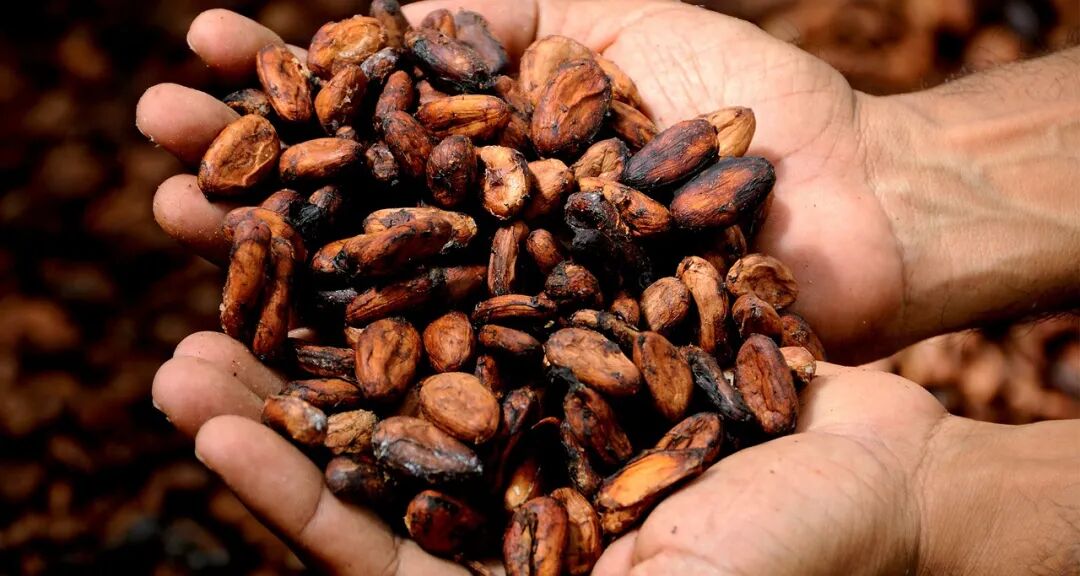
<p><img src="/assets/images/posts/yunyu-shu/img-01.jpeg" alt="" /></p>

<p>来源：Pixabay</p>

<p><strong>Impactful Research 的读者朋友们，大家好！</strong></p>

<p><strong>过去一年里， “反内卷”成为中国经济领域的高频词。学术研究如何“反内卷”，也是我一直在思考的问题。从这一期开始，我们将采访一批勇于开拓学术蓝海的青年学者，期待通过他们开辟新方向、打造新议题的经历，为大家带来启发与力量。</strong></p>

<p><strong>值此新春之际，也祝各位读者在即将到来的马年里，在学术的疆场上策马扬鞭、奔赴理想，一往无前。新春快乐！</strong></p>

<p>作为本系列的首篇推文，我们邀请到了上海财经大学经济学院的助理教授殳蕴钰，分享她在非洲开展田野实验的研究经历，并分享一些供年轻学者与博士生尝试实地研究参考的建议。殳蕴钰于2025年获得布朗大学经济学博士学位，研究方向为发展经济学与环境经济学，关注发展中国家微观主体的气候适应与绿色能源转型等议题，并在加纳、肯尼亚、乌干达等开展相关田野实验研究与合作。她的job market paper “Informed Climate Adaptation: Input and Output Subsidies for Shaded Cocoa” 聚焦加纳可可产业，探究政府的不同补贴政策与信息干预的交互作用如何推动农民采用绿色的气候适应行为。</p>

<p>本文正文内容约一万五千字，全文阅读需约40分钟</p>

<p>#本期访谈主要问题</p>

<p>1. 今天的采访不是针对某一篇文章，更多的是想分享你做研究的整个思路，以及怎么在不确定的环境下开辟出属于自己的领域。</p>

<p>2. 你当时在探索这篇和可可相关的研究时是否还有其他备选？如果有的话，你是如何权衡并最终决定探索非洲这条线路的？</p>

<p>3. 作为女性研究者远赴非洲开展田野调查，无疑需要极大的勇气。你当时是否曾有过顾虑或权衡过程？</p>

<p>4. 你到了非洲后是怎么开始开展研究的？</p>

<p>5. 如果当时没有巧合遇到这位热心的行政人员，你觉得研究会怎么开展？</p>

<p>6. 作为一个博士生，你在那能够开拓的时间也不长。在什么情况下你可能会放弃这个 idea？</p>

<p>7. 你在加纳的可可地里是如何通过观察与农民接触的？又是如何取得农民和官员的信任，从而让你能够持续开展更多研究的？</p>

<p>8.你从第一个idea 做到后面，是怎么把一个项目扩展成较多的系列研究的？</p>

<p>9.你现在在加纳的团队有多大？</p>

<p>10.所以实际上，在整体的规划上你是非常亲力亲为的？</p>

<p>11.对于那些想要尝试RCT的学者或是博士生，你是否可以给一些建议？</p>

<p>12.可能很多博士生最直接面临的是资金问题，你是否可以给点建议？</p>

<p>13.是不是有领导才能的人才更适合组织RCT？</p>

<p><strong>Part 1: 做Field研究的整个思路</strong></p>

<p><strong>Q1：</strong><strong>今天的采访不是针对某一篇文章，更多的是想分享你做研究的整个思路，以及怎么在不确定的环境下开辟出属于自己的领域。</strong></p>

<p><strong>Q1: Today’s interview isn’t about any specific paper; it’s more about sharing your overall research philosophy and how you’ve carved out your own niche in an uncertain environment.</strong></p>

<p><strong>对我来说可能是两块，有一定的契机，但核心还是源于研究兴趣。</strong> 去布朗之前，我就很确定自己想研究发展中国家的环境议题——这从博士阶段开始就一直在我脑海里。只是当时可能更多依托观测数据来开展相关研究。同时，我也会有意识地关注其他发展中国家环境问题的更广泛议题，比如通过新闻和媒体报道了解这些问题的现实进展。</p>

<p><strong>For me, it was probably a combination of two things: there was a certain opportunity, but it was primarily driven by my research interests.</strong> Even before going to Brown, I was already certain that I wanted to work on environmental issues in the developing context—this had been in my mind since the beginning of my PhD. At that time, however, my work was more grounded in an observational-data approach. At the same time, I was also open to broader environmental topics in developing countries, for instance by following relevant news and media coverage, or reading The Economist.</p>

<p><strong>契机的话我觉得应该是三点。</strong></p>

<p><strong>I think there were three key factors.</strong></p>

<p><strong>第一，博士就读初期，我导师跟我讲，你得提前思考一下作为一名来自中国的年轻研究者，你未来的学术标签到底是什么，属于你自己的个人标识是什么，如何在现在非常竞争的学术环境下去思考你的独特性。</strong> 他当时确实给了我一定的启发：他觉得很多来自中国的学生技术功底很强，能做很扎实的研究，但有时或多或少会更谨慎一些，不太敢从零开始去“闯”新的想法。比如当时（大概5年前），国内学者（包括博士生）中做非中国议题的并不多，而从零开始自己收集数据，做随机对照试验（RCT）的更少。他鼓励我，既然我当时还没有完全确定研究方向或求职论文要做什么，不妨尝试走出去看看。<strong>好的、兼具创新性和普适性的研究问题，往往来自对现实生活的敏锐捕捉；多国调研、观察与比较本身也有助于在学术上讨论一个问题的普适性。</strong> 因此，我当时开始尝试提出一些非中国语境的想法。虽然研究方案很不完善，但至少让我带着对问题的好奇，开启了他国调研的旅程。</p>

<p><strong>First, early in my PhD, my advisor told me that as a junior researcher from China, I should think ahead about what my academic “brand” would be—what my own unique name tag would be, and how to define my uniqueness in such an increasingly competitive academic market.</strong> He did give me some inspiration at the time. He found that many students from China are technically very strong and can do solid research, but sometimes they can be a bit cautious—less willing to “venture out” and try fresh new ideas from scratch. At that time (about five years ago) , there were relatively few Chinese scholars (including PhD students) working on non-China contexts, and even fewer who did primary data collection or ran RCTs (randomized controlled trials). He encouraged me that since I hadn’t fully determined my research direction or my job market paper yet, I could try going out and exploring. <strong>Great research questions that are both innovative and broadly relevant often come from real life, and cross-country field exposure can also help when arguing for the generalizability of a research question.</strong> So I began proposing some non-China ideas. Although the designs were still rough, they at least gave me the curiosity to start field exposure beyond China.</p>

<p><strong>第二是受到我很多布朗同学的影响。</strong> 我的博士一、二年级是疫情期间，因此 Development Tea 也变成了线上。它有点像国内的组会，是发展经济学同领域师生交流新研究想法、讨论进展瓶颈的地方。当时每周的Zoom会议几乎成了一个“联合国”(笑)：师兄师姐各自讨论在不同国家的调研进展。有一位师姐是在学校里做实验，跟我们分享如何在封校之前有惊无险地抢回最后一组数据。还有一个同学去了莫桑比克做一个关于跨群体讨论如何帮助族群融合的课题，他所在的地方甚至还有战乱。当时我有一种被“打鸡血”的感觉，觉得可以开始进行这种尝试。</p>

<p><strong>Second, I was influenced by many of my classmates at Brown.</strong> My first and second years of the PhD were during the COVID-19 pandemic, so our Development Tea—like a research group seminar where people share ideas and discuss research bottlenecks—moved online. Those weekly Zoom meetings turned into a kind of “United Nations meeting”: senior students were sharing field progress across different countries. One senior classmate talked about how she managed to complete an endline survey right before the campus lockdown. Another classmate went to Mozambique to work on a project about how intergroup discussions can foster ethnic integration; the area he was in even had ongoing conflict. I felt incredibly inspired by this and felt I could start attempting similar research myself.</p>

<p><strong>第三个契机是 2022 年前后，美国有一系列关于巧克力的报道，以及我和生态学专业朋友的一些闲聊。</strong> 无论是玛氏还是雀巢，都开始推行所谓的“可持续可可”(sustainable cocoa)。因为我很喜欢吃巧克力，自然也会被一些类似“气候变化正在吞噬全球巧克力”、“到 2050 年全球可可供应可能下降三分之一”之类的媒体标题吸引，于是开始检索这背后潜在的环境切入点。我发现他们之所以推行这些，一方面是气候变化在媒体关注下非常热门，另一方面巧克力产业确实会受到气候变化的影响。偶然和生态学朋友聊天，她提到“荫蔽种植”可能是一种自然解决之道（nature-based solution）。做了一些调研后，我们发现科特迪瓦 （Côte d’Ivoire） 和加纳（Ghana）是世界两大可可生产国：科特迪瓦很早就进行了市场自由化，相关文献也比较多；而加纳在这一主题上还没有太多人涉足。所以我决定和小伙伴（也是我后来的长期合作者）一起利用博士三年级暑期去加纳看看“可持续可可”，以及在推行过程中可能面临哪些挑战。</p>

<p><strong>The third opportunity arose in 2022, when a series of reports in the US about chocolate coincided with conversations I had with friends in ecology.</strong> Both Mars and Nestlé began promoting what they called “sustainable cocoa.” Since I love chocolate, I was naturally drawn to headlines such as “Climate change is threatening cocoa globally” or “Global cocoa supply may decline by one-third by 2050” and I started looking into the environmental angles behind these narratives. In a casual conversation, a friend in ecology mentioned “shade-grown practices” as a possible nature-based solution. I found that chocolate companies were promoting this because climate change was a very hot topic in the media, and chocolate is significantly affected by climate change. After some initial research, I found that Côte d’Ivoire and Ghana are the world’s two largest cocoa-producing countries. Côte d’Ivoire liberalized its market early and has a relatively larger literature, while Ghana had received less attention on this topic. Therefore, I decided to use the summer break of my third year—together with a collaborator who later became my long-term coauthor—to go to Ghana and investigate sustainable cocoa and the challenges involved in its implementation.</p>

<p><strong>我当时带着两个疑问：第一，可可受到气候变化的影响是否真的这么大？第二，他们提到的“可持续适应性技术”（如遮荫种植）在加纳当地的认知是什么样的，是农户不了解，还是执行过程中存在怎样的障碍？这两点对它是否能成为一个可行的研究课题非常重要。</strong> 最开始我主要是带着这个角度去的加纳，后来在实地调查中发现了各种各样的有趣事实，才促成了我的第一篇基于田野调查的研究，也就是我后来的求职市场论文。</p>

<p><strong>I had two questions at the time: First, is cocoa really affected so significantly by climate change shocks? Second, what is the perception of their “sustainable cocoa” (shade-grown cocoa) among local people in Ghana? Do farmers not know about it, or are there any frictions in the implementation process? These two points were crucial in determining whether it could become a valid research question.</strong> Initially, I approached it primarily from this perspective, but later, I discovered various facts in the field, which ultimately led to this becoming my first field-based project, that is my job market paper.</p>

<p><strong>Q2：你当时在探索这篇和可可相关的研究时是否还有其他备选？如果有的话，你是如何权衡并最终决定探索非洲这条线路的？</strong></p>

<p><strong>Q2: Back when you were exploring this study on cocoa, did you have any alternative candidates in mind? If so, how did you weigh the pros and cons, and what ultimately led you to focus on the African trajectory?</strong></p>

<p>我觉得当时反反复复考虑非常多次。最开始因为需要资金去非洲调研，所以当时看到PEDL Call For Proposals时，我跟合作者逼自己在一周内写了一个研究计划，但那个研究计划跟我现在求职论文呈现的样子截然不同。（我们）当时的想法是，美国、欧洲等发达国家的巧克力市场已经存在针对绿色偏好（green taste）的绿色溢价（green premium），这是存在于产品终端的。既然终端消费者愿意支付溢价，那这部分溢价在多大程度上能到达生产端的农户手中？<strong>所以我们最开始提交给PEDL项目资助方的研究问题是从可可产业链的视角来看绿色偏好是如何沿供应链传播（Propagation of Taste for Climate Resilience: Evidence from Cocoa Supply Chain）。</strong> 说实话，当时我们更关心的是农业市场的产业组织（IO）问题，想看在供应链中存在怎样的摩擦，是否这部分溢价因为被中间商吃掉了，而农民是否并不知道国际市场的价格，才导致他们没有进行相应的调整。</p>

<p>There was a lot of back and forth at the time. Initially, I needed some funding to support my field visits in Africa. When we saw the PEDL’s open call for proposals, we pushed ourselves to put together a grant application within a week, but that proposal was completely different from what my current Job Market Paper eventually became. The initial motivation was that in developed countries like the US and Europe, there is already a “green premium” in chocolate and cocoa products, reflecting green consumers’ preference for environmentally friendly products. This premium existed at the consumer end. Since end consumers were willing to pay a premium, to what extent did this premium reach the farmers at the production end? <strong>So the research question we first proposed to PEDL was: How does the green taste propagate through the cocoa supply chain(Propagation of Taste for Climate Resilience: Evidence from the Cocoa Supply Chain)?</strong> To be honest, I was more interested in the Industrial Organization (IO) issues of the agricultural market at the time, wanting to see what kind of friction existed in the supply chain, and whether this premium was captured by middlemen, preventing farmers from knowing the international market prices and thus preventing them from making corresponding production adjustments.</p>

<p>去到加纳以后发现（我们的初步设想）彻底推翻了。加纳可可部（相当于中国农业部的政府机构）制定了“保险价格”，在每年的可可生长季之前就把这个价格公开了，所以一开始价格溢价激励的视角就被阻断了；<strong>然后我们当时就说，既然这件事情加纳政府有这么大的决策权，另一个角度他们在政策制定的空间上也会有更多的自主权，所以我们就把研究问题转换到地方政策制定的角度，思考（加纳）有怎样的政策需要，比较不同政策设计的需求。</strong> 这是我们到了加纳之后才做出的重大改变，最开始是没有想到的。</p>

<p>Upon arriving in Ghana, we discovered that our initial assumptions were completely wrong. The Ghana Cocoa Board (i.e., COCOBOD, a government agency equivalent to China’s Ministry of Agriculture) sets the producer price (functioned like insurance price), which is announced before the start of each cocoa growing season. Therefore, our initial perspective of using price premiums as a market-based incentive was immediately rendered irrelevant. <strong>We then realized that since the COCOBOD had such significant decision-making power in price setting for cocoa beans, they would also have more autonomy in policy design and implementation.</strong><strong>So, we shifted our research focus to the perspective of local policymaking, considering what policy needs that Ghana had and comparing the implementation requirements and effectiveness of different policy designs.</strong> This was a major change we made only after arriving in Ghana, something we hadn’t anticipated initially.</p>

<p><strong>Q3： 作为女性研究者远赴非洲开展田野调查，无疑需要极大的勇气。你当时是否曾有过顾虑或权衡过程？</strong></p>

<p><strong>Q3: Undertaking fieldwork in Africa poses unique challenges for female researchers. Did you go through a process of weighing the risks before committing to this path?</strong></p>

<p>我觉得自己这个过程其实比较少。首先，我当时是跟同伴一块去的，所以虽然当时不认识其他人，但至少有可以相互照应的求救机制。第二，学校会有很多国际医疗服务支持。我们在去非洲前就要做各种行前评估、打各种疫苗；此外，学校也提供远程国际医疗服务，确保在非洲也可以找到国际医院或者24小时线上医疗支持。第三，我第一次去大多数时间待在首都阿克拉（Accra），城里条件会相对好一些，当地讲英语，这一点也非常关键。</p>

<p>I think my experience was relatively smooth. First, I went with my coauthor, so even though I didn’t know any local people there, I had someone to rely on in case of an emergency. Second, the university offers many international medical services. Before travelling to Africa, we had to complete pre-travel consultations and get various vaccinations. They also provide international medical assistance, so we could locate international hospitals on the ground or access 24/7 remote medical support. Third, on my first trip I spent most of my time in Accra, the capital, where conditions are generally better and English is widely spoken—both were very important.</p>

<p><strong>Part 2: 从非洲的可可地开始</strong></p>

<p><strong>Q4：你到了非洲后是怎么开始开展研究的？</strong></p>

<p><strong>Q4:</strong><strong>How did you begin conducting your research after you arrived in Africa?</strong></p>

<p>每个研究的开展都有不同的契机，我可以从第一个关于可可的研究开始讲。</p>

<p>Every research project has a different starting point, and I can begin by talking about the first study on cocoa.</p>

<p>当时我已经了解到加纳的可可是由政府管辖的，要开展合作就绕不开与政府部门打交道。当时我还没开始收数据，只是想参观一下可可农田，所以我在领英上找了加纳可可局一些相对初级的工作人员发私信。有一位男生回复了我，表示欢迎，但提到如果我要去，需要写一封由导师共同署名的介绍信，说明身份和访问目的，递交给加纳可可局的总部。我抱着试一试的心态，自己草拟了一份信请导师签名，然后放了一个布朗大学的标志。</p>

<p>At that time, I understood that the whole cocoa industry in Ghana was under the lead of COCOBOD, and any collaboration would inevitably require government support. Since I wasn’t yet involved in any data collection and simply wanted to visit cocoa farms, I contacted some relatively junior staff members at the Ghana Cocoa Board via LinkedIn. One guy replied, welcoming me, but mentioned that if I wanted to visit, I would need to write an introduction letter co-signed by my advisor, explaining my identity and purpose of visit, and submit it to the Ghana Cocoa Board head office. I decided to give it a try, drafted a letter myself, with my advisor’s signature.</p>

<p>在加纳期间我平时会在纽约大学阿克拉研究中心（NYU Accra Research Center）蹭网自习，跟里面的行政人员闲聊时偶然知道他的家人在加纳可可部工作，她非常热心地主动提出帮助我去联系，并且直接手把手教我改了那份介绍信的抬头(我最开始没有太多的远见，只想去参观可可农场，所以就只写了可可部下跟农民直接接触的农技培训部（Cocoa Health and Extension Division, CHED）。她预见到如果我要后续拜访农民并进行访谈和实验，或者需要申请相关数据，还会需要研究部门支持；万一之后想做关于当地采购公司涉及交易买卖的研究，就需要质检部门以及出口部门，所以她帮我把抬头直接改成写给加纳可可部部长，同时抄送给下面所有的部门。在她及家人的鼎力帮助下，这封信最后直接递交给了可可部部长，花了大约 20 天时间才拿到其最高首领批复。正因为这样写，后续扩展、拿数据、及跨部门寻求支持时，不需要再重新提交介绍信。这封介绍信持续用到了现在，为我后面系列研究计划中其他的拓展问题打下了比较好的基础。</p>

<p>While I was in Ghana, I often studied at the research center of NYU Accra for reliable Wi-Fi. One day, I was chatting with one of the administrative staff, and she mentioned that someone in her family worked at COCOBOD. She immediately offered to help me reach out, and she also helped me revise who I was addressing the letter to. At first, I had addressed the letter only to CHED—the Cocoa Health and Extension Division—because I was simply hoping to visit a few cocoa farms and didn’t think much beyond that. She pointed out that if the project evolved—if I wanted to interview farmers, run experiments, or request administrative data—I would likely need the research unit involved. And if I ever shifted toward ideas on local buying companies (middlemen) involved in trading, I would need to contact the quality control and cocoa bean export departments. She suggested a more future-proof approach: address the letter to COCOBOD’s Chief Executive directly and copy all relevant departments. With her help (and her family’s support), the letter made it to the Chief Executive’s office. It still took about twenty days to receive formal approval, but it was worth it. Because the letter was cleared at the top and copied broadly, I didn’t have to start over each time I later expanded the project, requested data, or sought cross-departmental support. I’ve been using that same introduction letter ever since, and it ended up laying a good foundation for other extensive research questions in my subsequent pipeline.</p>

<p>这里还涉及到另一件趣事。我的一个学姐跟我说，加纳当地人比较传统，特别是见政府官员时，递纸质名片会显得更正式一些，所以我和小伙伴那晚临时用PPT自制了一张名片，各自印了100张，到现在还剩了不到50张（笑）。</p>

<p>There’s another interesting anecdote related to this. My senior classmate taught me that: people in Ghana are kind of old-fashioned—especially when you meet government officials—and that handing over a physical business card is seen as more formal. Following her suggestion, my coauthor and I quickly made our own business cards in PowerPoint and printed 100 copies each. We still have about 50 left (laughs).</p>

<p><strong>如果说合作的开始多少有幸运的成分，那么能保持长期、持续的合作，更得益于我们每次和当地政府沟通时，更多扮演的是一个认真倾听者的角色。</strong> 虽然我们是带着研究问题去的，但跟政府交流时，我们不是一股脑地去说我们想做什么样的研究问题，而是去倾听他们的诉求和政策执行中的实际挑战。虽说有一定的学术包装的成分，但结合他们的政策诉求、以更加通俗的语言来阐述我们的研究问题，这样会比较容易推进，他们也愿意听。后续我们也会及时跟进、定期向他们汇报研究进展，这也有助于政府支持的持续和深入。</p>

<p><strong>If the start of the collaboration involved some luck, its continuity really came from how we engaged with local officials. In each conversation, we tried to play the role of careful listeners.</strong> Even though we came with research questions, we didn’t go in and immediately pitch what we wanted to study. Instead, we first asked about their priorities and the practical challenges they face in policy implementation. Of course, there is an academic framing component, but we tried to connect our questions to their policy needs using their policy language. This made it easier to move forward, and they were more willing to engage. We also made a point of following up and sharing updates on our progress, which helped sustain and deepen the government’s support and engagement over time.</p>

<p><img src="/assets/images/posts/yunyu-shu/img-02.jpeg" alt="" /></p>

<p>临时用PPT自制的名片（图｜殳蕴钰）</p>

<p>DIY business cards (made in PowerPoint). Photo credit: Yunyu Shu</p>

<p><strong>Q5：如果当时没有巧合遇到这位热心的行政人员，你觉得研究会怎么开展？</strong></p>

<p><strong>Q5: If you hadn’t crossed paths with that supportive administrator by chance, how do you think the study would have unfolded?</strong></p>

<p>我觉得会是两步。（介绍信）当时我确实本身就不抱太大希望，我可能会做的第二件事情是看一些加纳的政策报告，或者看相关研究者是怎么做的。一般情况下，去看文章或工作论文的致谢（尤其是RCT的文章），都会写明是跟哪个机构合作，你去找到这个作者，让他帮你引荐给这个合作机构还是有可能的。第二个是当时我有去加纳大学找他们的博士生或学者。加纳可可局对于他们本地来说很重要，所以农学院等一定有人在讨论相关的话题（我后来也确实跟其中的一两个人聊过）。所以我觉得步伐可能会相对慢一点，但最终还是能够解决的。</p>

<p>I think it would be a two-step process. (Introduction letter) At the time, I honestly didn’t have high hopes. The second thing I might do is look through policy reports from Ghana or see what researchers in the same field are doing. Generally, when you look at the acknowledgments section of articles or working papers (especially RCT papers), they will mention the implementation partners they collaborated with. You can try to reach out to authors and ask if they could connect you to those partners; that’s a possibility. I also went to the University of Ghana to talk to faculty and PhD students. COCOBOD is highly relevant locally, so there are definitely people in the agriculture and other departments working on related topics (and I did end up speaking with one or two of them). Overall, I expect the process might be a bit slow, but it would eventually work out.</p>

<p><strong>Q6：作为一个博士生，你在那能够开拓的时间也不长。在什么情况下你可能会放弃这个 idea？</strong></p>

<p><strong>Q6:Given the limited timeframe of a PhD field visit, under what circumstances would you have considered abandoning this idea?</strong></p>

<p>是的，我当时也是因为进展比较顺利，才完全转移了研究重心，这种机会是可遇不可求的。当时我读博士三年级，有足够的时间更换研究角度，对我来说时间成本还可以接受，因为大不了浪费两三个月的时间，而这段时间完全用来测试一件事情的可能性，我觉得未尝不是好事。我当时是整个暑假都待在那边，我觉得既然我已经在加纳了，就不想白费时间，尽可能尝试各种主题。我当时还探索性地了解过加纳的其他背景，比如金矿开采，甚至去过加纳商会了解中国企业出海。</p>

<p>Yes, I totally shifted my research focus because things were progressing smoothly at the time. This kind of opportunity is hard to come by. I was in my third year, so I still had some time to change my research direction if it failed. The time cost was acceptable to me, because at most I would waste two or three months. It was worth spending a few months focusing on one idea and explore its potential. I spent the entire summer in Ghana, and since I was already there, I didn’t want to waste the chance. I tried to explore as many topics as I could. I also looked into other parts of Ghana’s context, for example, gold mining or Chinese firms operating overseas.</p>

<p><strong>做实验需要“天时地利人和”。</strong> 不能说其他的那些项目已经放弃了，只是当下既然政府这边给的帮助比较及时，我也申请到了经费，就先把这件事情做了。</p>

<p>**Doing fieldwork really depends on having the right timing, setting, and support in place. **I’m not saying I’ve given up on my other ideas—it’s just that, given the timely support from the government and the funding I was able to secure, I decided to prioritize this project first.</p>

<p><strong>Q7：你在加纳的可可地里是如何通过观察与农民接触的？又是如何取得农民和官员的信任，从而让你能够持续开展更多研究的？</strong></p>

<p><strong>Q7:</strong><strong>How did you conduct observations and interact with farmers in the cocoa fields of Ghana? And how did you gain the trust of farmers and officials, enabling you to continue conducting further research?</strong></p>

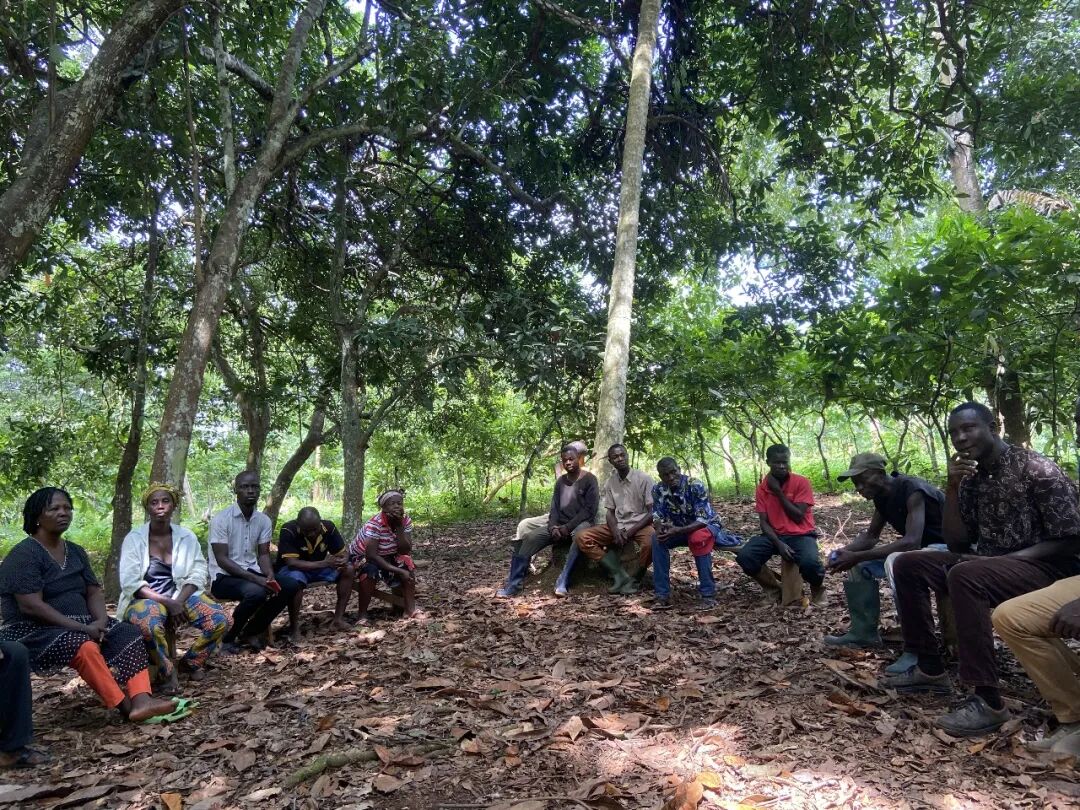
<p>我们先去走访了几个村庄。我其实从来没有下过田，当时下雨下得非常厉害，我穿了雨鞋，走得深一脚浅一脚，还摔在里面，特别搞笑。我们去了三个村庄，准备了一些访谈的问题，对这些农民开展了小组访谈（focus group）。我觉得还是有一些记忆非常深刻的瞬间。第一个村庄的访谈你肯定问得最仔细，对背景就有了最充足的了解。因为雨下得很大，到第三个村庄的时候其实我们已经没有那么想去了，你了解到的新的信息也没有那么多，可可地你也看到了。但是当时那位带我们去的政府官员说农民其实很早就开始等着你们了。我们也发现，他们虽然很穷，过来参加这个访谈也完全是无偿的，还要走很多的路走过来，但每个人都是盛装出席，穿得非常像每周日要去教堂一样。我们在那一瞬间就觉得唯有认真对待才可回应他们的真诚。<strong>所以最开始，我觉得是因为这种真诚以及相互的认真对待，使得他们相信我们真的会给他们带来一些变化，哪怕很微小。</strong> 他们也提到，之前会有很多国际公司什么的在这里，每次都说“我们会再回来”，但从来都没有再回来过。我们在2022年7月去做了第一次访谈，然后2022年10月回过去做试点(Pilot)，真正的研究可能是2023年2月。我们在第二次回去的时候，这些农民对我们的信任可能是大幅提升的，因为他们觉得我们说出的话会比较可信，是真的有说到做到。</p>

<p>We first visited a few villages and did some focus groups. I had never been out in the fields before, and it was pouring that day. I had on rain boots, but I was still slipping and stumbling through the mud—and I even fell at one point, which was honestly pretty funny. We visited three villages in total. We came with a set of questions and ran focus group discussions with farmers. There are a few moments from those visits that really stayed with me. The first village was where we asked the most detailed questions, and it gave us the strongest grounding in the local context. By the time we got to the third village, the rain had been so relentless that we were honestly less eager to go. We also felt we had already seen the cocoa farms and weren’t learning that much new. But the government officer traveling with us said, “The farmers have been waiting for you for a long time.” When we arrived, we were struck by how they showed up. Many of them were very poor, and the discussion was entirely unpaid. Some walked a long distance just to be there. Yet everyone came dressed in their best clothes—almost as if they were going to church on Sunday. In that moment, we felt we owed them the same seriousness in return.** I think it was this sincerity and mutual respect that made them believe we would truly bring something meaningful, even if the change would be small. **They also told us that many international organizations and companies had visited before, and each time they said, “We’ll come back,” but they never did. We did our first round of interviews in July 2022, returned in October 2022 for a pilot, and the main study began around February 2023. When we went back the second time, the farmers’ trust in us had increased significantly because they believed in what we said was credible and that we were actually doing what we promised.</p>

<p><strong>第二点我想是因为他们真的见到了我本人，这个点上可能小团队也有小团队的好处。</strong> 如果是比较大的团队，他们想要去表达某些诉求的时候，见到的不过是这件事情的实施者，而不是真正主导的人。</p>

<p><strong>Second, I think it also helped that they met me in person, and this is where a small team can have an advantage.</strong> In a larger project team, when people want to raise concerns or share their needs, they often end up speaking only with the field staff or day-to-day implementers, rather than the person leading the project.</p>

<p><strong>另一方面，我们也会尽我们所能提供一些帮助。</strong> 加纳人总体来说是非常勤劳和刻苦的，尤其是在政府部门工作的这些年轻人，他们是愿意去接触和了解一些新东西的。所以当你去跟他们讲，甚至是一些很简单的Excel的工作，他们也都很重视和珍惜。我们当时有一个部门的负责人，他是有想之后读公共政策方面的博士项目的，所以我们可能会有的没的跟他聊一些。这些东西其实非研究相关，但也能够帮助你们像朋友一样相处，也为了后面更好的相互学习跟服务。</p>

<p><strong>On top of that, we tried our best to be helpful whenever we could.</strong> People in Ghana are generally very hardworking, and many of the younger staff in government offices are genuinely open to learning new things. So even when we shared something as simple as an Excel workflow, they took it seriously and really appreciated it. At one point, a department head told us he was considering applying for a PhD in public policy, so we would chat with him about all sorts of things. None of that was directly about the research, but it helped us relate to each other more like friends,and it made the relationship more collaborative, which supported mutual learning and cooperation over time.</p>

<p><img src="/assets/images/posts/yunyu-shu/img-03.jpeg" alt="" /></p>

<p>可可地里的访谈（图｜殳蕴钰）</p>

<p>Focus group interviews in the cocoa field. Photo credit: Yunyu Shu</p>

<p><strong>Q8：你从第一个idea 做到后面，是怎么把一个项目扩展成较多的系列研究的？</strong></p>

<p><strong>Q8:</strong><strong>How did you expand your initial idea into a project with multiple pipelines?</strong></p>

<p>这要回到我的第一个研究计划。<strong>虽然从目前看来，还没有任何一篇文章是在做可可的绿色偏好是如何在其供应链中传导，以及这种传导如何体现在对气候变化的应对，但事实上我现在的研究框架是围绕这个展开的。</strong> 可以说，我是在把可可产业链的各个环节拆开来做：围绕不同环节的机制与约束，分别展开相应的研究。后续更多的研究问题延伸，则主要来自之前项目尚未完全回答的问题，或者在田野调查或数据中的一些额外发现。</p>

<p>This goes back to my very first proposal. <strong>While there still isn’t a single paper that directly studies how green taste propagates through the cocoa supply chain, my current research agenda has essentially traced back to this initial idea.</strong> In other words, I’ve been unpacking the cocoa value chain and studying different sectors one by one, with each project focusing on one or two specific mechanisms. Many of my follow-up questions come directly from what earlier work leaves unanswered, or from new patterns and surprises that emerged as we moved from one stage of the research to the next.</p>

<p><strong>我们的第一篇文章关注的是：在生产端，直接与农民接触的政府部门如何通过设定不同的政策组合（policy bundle），帮助农民提高气候韧性（climate resilience），探讨在生产端可以有怎样的气候适应策略（climate adaptation strategy）。</strong> 在这项研究（Shu and Zhang 2025）中，我们集中讨论不同补贴政策与信息干预的交互作用，如何推动农民采用绿色的气候适应行为；同时也指出，不同补贴政策的有效性在很大程度上取决于政策目标人群对相关收益与风险的正确认知信念。我们所关注的适应策略是荫蔽种植（shade-grown technology），即在可可农田中间种高大的林木。</p>

<p><strong>Our first paper looks at the production side: how to design the different policy bundles to improve the farmers’ adoption of climate adaptation strategy to build on climate resilience.</strong> In Shu and Zhang (2025), we focus on how different subsidy schemes interact with information nudges to encourage the adoption of “green” adaptation behaviors. We also show that the effectiveness of these subsidies depends heavily on whether the target population holds accurate beliefs about the relevant benefits and risks. The adaptation strategy we study is shade-grown practice, that is, intercropping cocoa with tall timber trees.</p>

<p>在我们汇报论文的过程中，也出现了一些拓展性的讨论：生态学家或其他领域的学者更关心这些林木能够固碳多少——也就是它在气候减缓（climate mitigation）方面的作用。我们非常认可这类讨论，并因此发展了第一个拓展方向。因为荫蔽种植同时具有气候减缓和气候适应两重属性：一方面，它通过固碳（carbon sequestration）带来社会福利；另一方面，它也可能通过稳定产量等渠道给农民带来个人收益。<strong>我们因此想进一步探究：农民在理解这两类收益时，信息摩擦主要来自哪一块？关于“社会福利”的信息是否会提供额外激励？ 在第一篇论文的基础上，我们设计了一种纯信息干预方案，分别突出同一适应策略的社会效益属性与私人效益属性，并检验受试者的反应差异以及“更多引导”是否总是更好的。</strong></p>

<p>When we presented the paper, it naturally led to broader discussions. Scholars in ecology and related fields were especially interested in how much carbon these trees can sequester—that is, the climate mitigation side. We took that perspective seriously, and it motivated our first extension. Because shade trees have both mitigation and adaptation functions, they generate social benefits through carbon sequestration while also potentially delivering private benefits to farmers, such as more stable yields. This raised a new question: where do the key information frictions lie—on the social-benefit side or the private-benefit side? And does information about the social benefits provide additional motivation? <strong>Building on the first paper, we designed a pure information treatment that separately emphasizes the social-benefit attribute versus the private-benefit attribute of the same adaptation strategy, and we examine how responses differ and whether “more nudging” is always better.</strong></p>

<p><strong>后续我们又把研究从生产端延伸到产后与交易环节。</strong> 加纳农民在可可丰收后，还有很大一部分工作是对可可豆进行发酵和烘干；烘干后需要联系中间商运送并转卖，最终获得收入。我们认为，相比单看生产端，产后（post-production）同样是非常关键的环节。<strong>因此沿着这个思路，我们近期的研究又做了两块延伸：第一，将重心从生产端转向产后端，观察农民在储存和烘干环节如何受到气候冲击(climate shocks)的影响，以及这些环节对农民气候韧性究竟是“放大器”（multiplier）还是“缓冲器”（mitigator）。第二，更深入地探讨农民与当地采购公司的交易员之间的交易过程，这也更接近我们最初关注的“中间商角色”的问题。</strong></p>

<p><strong>We then extended our work beyond production to post-production activities and trading.</strong> After harvest, farmers spend substantial time fermenting and drying cocoa beans, and once the beans are dried, they rely on purchasing clerks to transport and sell their beans. We view this post-production stage as a critical part of the value chain. <strong>Following this logic, our recent work has two additional extensions. First, we shift the focus from production to post-production—storage and drying—to study how these stages are affected by climate shocks, and whether they act as a multiplier or a mitigator for farmers’ climate resilience. Second, we take a closer look at the transaction process between farmers and local buying companies, which brings us back to our original interest in the role of middlemen.</strong></p>

<p>在实地收集数据时我们发现，农民在与中间商交易时会记录非常详细的交易信息，包括交易的具体日期、交易对象和数量。这是一套连加纳政府可可部门都没有的高频交易记录，我们也花了很长时间把这部分信息逐条数字化。这份独特数据不仅让我们能够刻画年产量，还能用来识别农民在应对气候冲击时的交易动态：他们是“即收即卖”的碎片化交易，还是囤积后集中出售以降低运输成本、并争取更高价格？<strong>从这个角度看，这些高频数据使我们得以观察气候冲击如何改变可可交易的频率与时点，以及农民在面对不同冲击时如何与中间商互动，从而更完整地讲述产后（post-production）的故事。</strong></p>

<p>During fieldwork, we found that farmers often keep detailed transaction records when they trade with intermediaries—dates, counterparties, and quantities. This creates a unique high-frequency dataset that even COCOBOD itself does not have. It allows us not only to measure annual production, but also to capture farmers’ trading dynamics: whether farmers engage in fragmented “sell-as-you-harvest” transactions or whether they store and sell in bulk—potentially to seek better terms and reduce transport costs. <strong>These data let us examine how climate shocks change the timing and frequency of cocoa transactions, and how farmers interact with intermediaries under different shocks—helping us capture a more comprehensive post-production story.</strong></p>

<p>这一系列研究目前仍处在新数据收集或分析阶段，但整体框架是环环相扣、层层递进的。</p>

<p>This broader research agenda is still in the stage of extensive data collection and analysis, but all projects are closely connected and designed to build on one another.</p>

<p><strong>Q9：你现在在加纳的团队有多大？</strong></p>

<p><strong>Q9:How large is your team in Ghana right now?</strong></p>

<p>我们是在当地找了一个帮助做调查的公司，并且已经跟他们合作大概三四年了。公司里面的每一个访谈员我都非常熟悉，包括他们的脾气秉性、擅长什么事等。我们现在每次项目通常会安排10到16名调查员，为了保障项目的进行，可能会分配1到2名组长。调查员每天的工作量大约是访谈5-6位受访对象，组长的访谈量通常是1到2位受访对象，但他们需要承担更多的协调工作。在西非，除了行政领导，村民也倾向于听取“chief farmer”或老者的意见。因此，组长需要提前和村长或村里的酋长沟通；此外，队长还需负责执行行动计划，这个行动计划是调研前我和组长共同根据地图规划出的从交通和可行性角度出发的最优路径。</p>

<p>We hired a local company to assist with the surveys, and we’ve been working with them for about three or four years. I’m very familiar with each enumerator in the company, including their personalities and strengths. For each project, we typically assign 10 to 16 enumerators, and to ensure the project runs smoothly, we may assign one or two team leaders. Each enumerator interviews approximately 5 to 6 farmers per day, while team leaders usually interview 1 to 2 farmers, but they are responsible for more coordination work. In West Africa, besides administrative leaders, villagers tend to listen more to the chief farmer or elders. Therefore, the team leader needs to communicate with the village chief or elders in advance. In addition, the team leader is responsible for executing the movement plan, which is the optimal route planned by me and the team leader together before the survey, based on transportation and feasibility considerations.</p>

<p><strong>Q10：所以实际上，在整体的规划上你是非常亲力亲为的？</strong></p>

<p><strong>Q10:</strong><strong>So, you are very hands-on in the overall planning process?</strong></p>

<p>是的，我认为这是非常有必要的。我们每一轮数据收集大约持续一个半月，前10天我一定是会在现场的，因为这段时间需要随时做好应对各种突发问题的准备。就拿我最近的一轮追踪调查为例，这些农民我都已经提前找好了，我也有他们的联系方式，所以流程比较简单，但是依然要做好所有的预案和应急措施，比如某个地方有葬礼，原本的行动计划就必须调整。我通常选择周四到加纳，周五、周六做培训，周日让团队赶路到实地，以便周一正式开始。这样安排是为了确保每周六个工作日，方便每个团队都执行“3+3”的调研周期。第二个是你需要在现场处理一些难以预料的棘手问题，需要你马上想出应对方法并同步给调研团队。比如你在设计问卷时可能没有想到某个问题会有这么多的差异，或者说某些问题农民是不理解的，那就需要及时调整，并将统一的解决办法告知团队所有人。在头几天我每天都会给他们开田野调研的例会，鼓励团队一起讨论他们各自碰到的特殊案例及背后的逻辑。<strong>只有当场沟通、有问题及时在10小时之内解决方案和修正，才能最小化成本，如果不及时做调整，后续工作是成倍数增长的。</strong></p>

<p>Yes, I think it’s absolutely necessary. Each round of data collection lasts about a month and a half, and I always make sure I’m on the ground for the first ten days, because that’s when you need to be ready for unexpected issues. Take my most recent follow-up survey as an example: I had already located the farmers in advance and had their contact information, so the logistics were relatively straightforward. But you still have to prepare contingency plans—for instance, if there’s a funeral in a community, the original schedule has to change. I usually arrive in Ghana on Thursday, run enumerator training on Friday and Saturday, and have the teams travel to the field on Sunday so we can launch on Monday. That way we can keep a six-day workweek and make it easier for each team to follow a “3+3” field cycle.</p>

<p>The other reason to be on-site is that some problems are hard to anticipate and require immediate decisions. For example, during survey design you may not realize how much variation a question will generate, or that certain questions are confusing to farmers. In the first few days, I hold daily field debriefs and encourage each team to share the special cases they encountered and the logic behind them. <strong>Only with in-person communication—and with solutions agreed upon and shared within the same day (often within 10 hours)—can we standardize responses and update procedures for the next day. If we don’t adjust quickly, the downstream costs can grow exponentially.</strong></p>

<p><strong>Part 3: 对想要探索 RCT 的学者的建议</strong></p>

<p><strong>Q11：对于那些想要尝试RCT的学者或是博士生，你是否可以给一些建议？</strong></p>

<p><strong>Q11: For scholars or PhD students embarking on their first RCT, what advice would you offer?</strong></p>

<p><strong>首先，勇敢的人先享受世界。我觉得梦想还是要有的，不要被手头有限的资源框住视野。</strong> 无论是采用 RCT 的方法，还是选择在哪里做 RCT ，最终都应该<strong>服务于研究问题本身。</strong> 挖掘好的研究问题，不仅需要扎实的文献梳理，更需要对现实世界保持敏锐的洞察。<strong>第二，在项目执行层面，要脚踏实地、多管齐下，从细微处着手，在有限成本下尽可能提高项目的成功率。</strong> 比如，通过多轮 pilot 来检验问题与设计的可行性、提前暴露并降低可预期风险，往往是一条更节约时间和资金的路径。对学生而言，<strong>第一个自己主导的项目可以从更“好上手”的实验设计开始</strong> ：例如依托线上平台开展实验（像前几年常见的简历投递实验），成本相对可控；或者选择高频数据收集与实验场景，比如在工厂环境里做任务管理（task management）或机制检验（test mechanism）的实验——周频数据对博士生而言时间成本通常更低，也更便于快速迭代。<strong>第三，要善于利用身边的一切资源。</strong> 比如我们另一个项目，就是在和某家银行的客户经理聊天时，意外找到了一位企业端合作者。保持对现实信息的敏感度，并把这种观察转化为研究上的思考，有时能事半功倍。<strong>最后，尽早尝试组建属于你自己的研究团队，找到“合拍”的合作者。</strong> 这一点对实验研究尤其重要：除了考虑研究能力上的互补性，还需要在时间管理、项目执行、对外沟通与协调等多元任务上形成清晰分工与高效合作。</p>

<p><strong>First, the world rewards the bold. Dream high, and don’t let the limited resources you have on hand narrow your vision.</strong> Whether you choose to run an RCT or where you choose to run it, the method and the setting <strong>should ultimately serve the research question.</strong> Finding promising research questions requires not only solid engagement with the literature, but also a sharp eye for what is happening in the real world. <strong>Second, on the implementation side, it helps to stay grounded and use multiple approaches to raise the odds of success under tight constraints.</strong> In practice, running several rounds of pilots can be extremely valuable: pilots help you test feasibility, realize design problems early, and reduce predictable risks before you commit serious time and funding to a full-scale RCT. <strong>For students, a first self-led project can start from a more accessible design.</strong> For example, you can leverage online platforms—like the classic resume-submission experiments—where costs are more reasonable. Or you can work in settings that naturally generate high-frequency data, such as factories, where you can run task-management interventions or mechanism tests and learn quickly from weekly outcomes. That kind of setup is often much more manageable for PhD students and allows faster iteration. <strong>Third, utilize all available resources around you.</strong> For instance, we found a corporate partner for one of our other projects simply through a conversation with a bank relationship manager. If you stay attentive to real-world information and continuously translate those observations into research ideas, you can sometimes make progress much more efficiently. <strong>Finally, try to build your own research team early and find collaborators who truly “click” with you.</strong> This is especially important for experimental work. Beyond complementarity in technical skills, successful field-based projects also require clear coordination on time management, field execution, and external communication—so having a team that can divide tasks well and work smoothly together makes a huge difference.</p>

<p><strong>Q12：可能很多博士生最直接面临的是资金问题，你是否可以给点建议？</strong></p>

<p><strong>Q12: Many PhD students may face funding problems. Could you give some advice on this?</strong></p>

<p>现在确实是 RCT 的寒冬，很多地方都在削减科研资助，但还是有一些机会的。</p>

<p>It really is a tough moment for RCT funding right now. Research grant budgets have been tightening in many places, but there are still some opportunities.</p>

<p>我目前主要申请到的资助来自 International Growth Centre(IGC) 和 Private Enterprise Development in Low-Income Countries(PEDL)。它们都是英国政府支持、与高校合作的研究机构，官网会定期发布公开征集提案(open calls for proposals)，而且通常会设置面向博士生的申请窗口。比如两万英镑左右的小额资助，我觉得用来做一个小项目或几轮 pilot 基本够用。当然，这类资金往往更倾向于支持其“目标国家”，比如非洲、东南亚等地区可能更容易中。但虽然中国不在它的主要目标范围内，也确实有中国学者用中国背景的项目成功申请过。<strong>另外，PEDL 下面还有一个“青年学者对接会”(Young Scholar Matchmaking Workshop)。</strong> 它由几位发展经济学领域的教授组织，初衷是鼓励北美的博士生和发展中国家的博士生建立合作。比如如果能找到一位加纳合作者，我不需要每次都亲自跑去加纳；同时也可以把新的研究想法或方法带到当地学术环境中。一般会在现场研讨会上互相交流、推介研究想法和提案，并提供几千美元左右的试点资金。我觉得博士一、二年级如果想尝试，是值得考虑的：先提交提案参加workshop，看能不能把合作真正落地。<strong>做实验的过程中，钱固然重要，但找到志同道合的合作者是一个更大的考验，你们需要的不仅是研究技能的相互契合，还有管理技能（比如时间管理）等方面的配合。</strong></p>

<p>In my case, the main funding I’ve received has come from the International Growth Centre (IGC) and Private Enterprise Development in Low-Income Countries (PEDL). Both are U.K. government–supported research initiatives partnered with universities. They regularly post open calls for proposals on their websites, and they often have specific tracks for PhD students. For example, grants on the order of £20,000 can be enough to run a small project or a few rounds of pilots. I need to mention that these funds are typically oriented toward their “target countries,” and proposals in places like Africa or parts of Southeast Asia may have a higher chance of success. China isn’t a primary focus, but some China-based projects have still been funded—so it’s not impossible.</p>

<p><strong>Another avenue is PEDL’s Young Scholars Matchmaking Workshop.</strong> It’s organized by a group of development economists and is designed to facilitate collaboration between PhD students in North America and researchers based in developing countries. For instance, if you build a partnership with a Ghana-based collaborator, you don’t have to travel for every single step—while also bringing new ideas and methods into the local research environment. Typically, participants pitch proposals during the workshop, and selected teams receive small seed funding—often a few thousand dollars—to run a pilot. I think this can be a good option for first- or second-year PhD students who want to get started: you submit a proposal, join the workshop, and see whether a collaboration can take shape. <strong>And one last point: in field experiments, funding matters—but finding the right collaborator is often the bigger bottleneck. You need complementarity in research skills, but you also need alignment on execution and management—things like time management and project coordination.</strong></p>

<p><strong>Q13：是不是有领导才能的人才更适合组织RCT？</strong></p>

<p><strong>Q13:</strong>**Is it true that only people with leadership skills are more suitable for organizing an RCT? **</p>

<p><strong>我不觉得。我并不是那种非常外向的人，但我愿意跟各个层面的人去聊聊。</strong> 比如我很愿意跟非经济学背景的人聊一些问题，听听大家的想法。其实我比较舒服的是两三个人这样的聊天，如果扩展到更多的人，我其实就不太说话了，但是会去倾听并且把各方信息整合在一起思考的角色。</p>

<p>I<strong>don’t think so. I’m not particularly outgoing, but I’m open to talking with people from all walks of life.</strong> For example, I really enjoy conversations with people outside economics—just to hear how they think about the same issues. I’m most comfortable in small groups, like two or three people. Once it becomes a larger group, I usually speak less—but I listen carefully and take on the role of synthesizing everyone’s insights to form my own conclusions.</p>

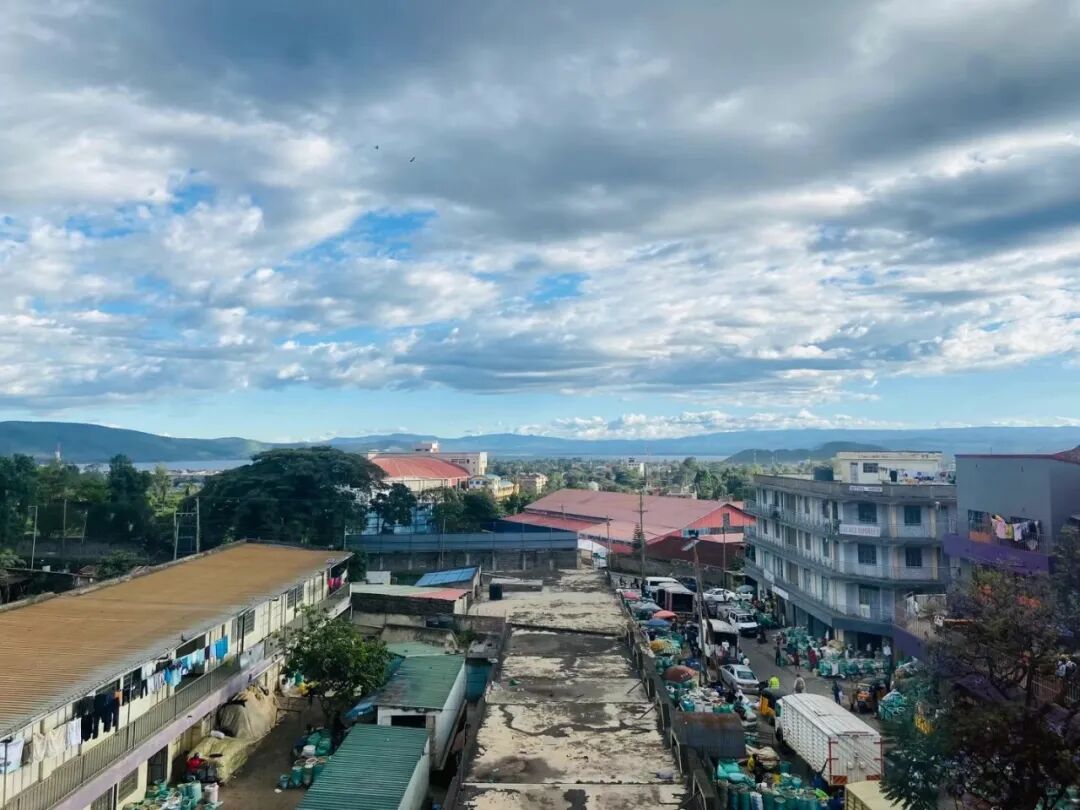
<p><strong>另一个方面，我觉得可能需要一些热情。</strong> 比如当时在肯尼亚，当你能分明地看到贫富差距——远处是美丽的自然湖景，近处是破破烂烂的房子——这对我的冲击是很大的。所以我会有一种想要改变一点点的想法，不能说是改变世界，就哪怕是改变一点点，我非常珍视这个本身，所以即使这件事情我没有那么擅长，我也愿意去做。我觉得这其实就是某种原动力。虽然听上去一路上我有很多“贵人相助”，但这可能只是冰山一角，因为整个过程里面肯定有很多你需要去处理的坎坷的、反复的东西，在这种时候就需要你对这个问题本身的一些坚持，或者说你有自己相信的一些东西在，你才能把这件事走得更长久一点。曾经老师跟我们讲过，研究做得好不好是一方面，大家更多聊的时候可能会说到的是你这个人对自己做的东西有多热爱。我觉得这种发自内心的热情其实是会有一定的吸引力法则的，会感染到别人、（让他们）更加愿意来做这件事。</p>

<p><strong>On another note, I also think a certain passion is necessary.</strong> For instance, back in Kenya, witnessing the stark contrast between wealth and poverty—with the beautiful lake view in the distance and dilapidated houses nearby—really shook me. That’s why I developed this desire to make even the smallest change. I’m not talking about “changing the world,” but even a tiny shift holds immense value to me. So even if I’m not particularly skilled at it, I’m willing to give it a shot. I think this is really a kind of driving force. While it may sound like I’ve had a lot of “luck” or people helping me along the way, that’s probably just the tip of the iceberg. Throughout the entire process, there are inevitably many rough setbacks and detours you need to navigate. In those moments, you need persistence—and you need to believe in the problem you’re working on—otherwise it’s hard to stay with it for the long run. One professor once told me that research quality matters, of course, but what people often remember and talk about is how passionate you are about your own work. I believe this kind of genuine enthusiasm carries a certain magnetic force—it inspires others and makes them more willing to build something together.</p>

<p><img src="/assets/images/posts/yunyu-shu/img-04.jpeg" alt="" />远方碧波澄明，近处一隅拥挤 （图｜殳蕴钰）<br />
Lake Nakuru and the crowded settlement nearby. Phone credit: Yunyu Shu</p>

<p><img src="/assets/images/posts/yunyu-shu/img-05.jpeg" alt="" /></p>

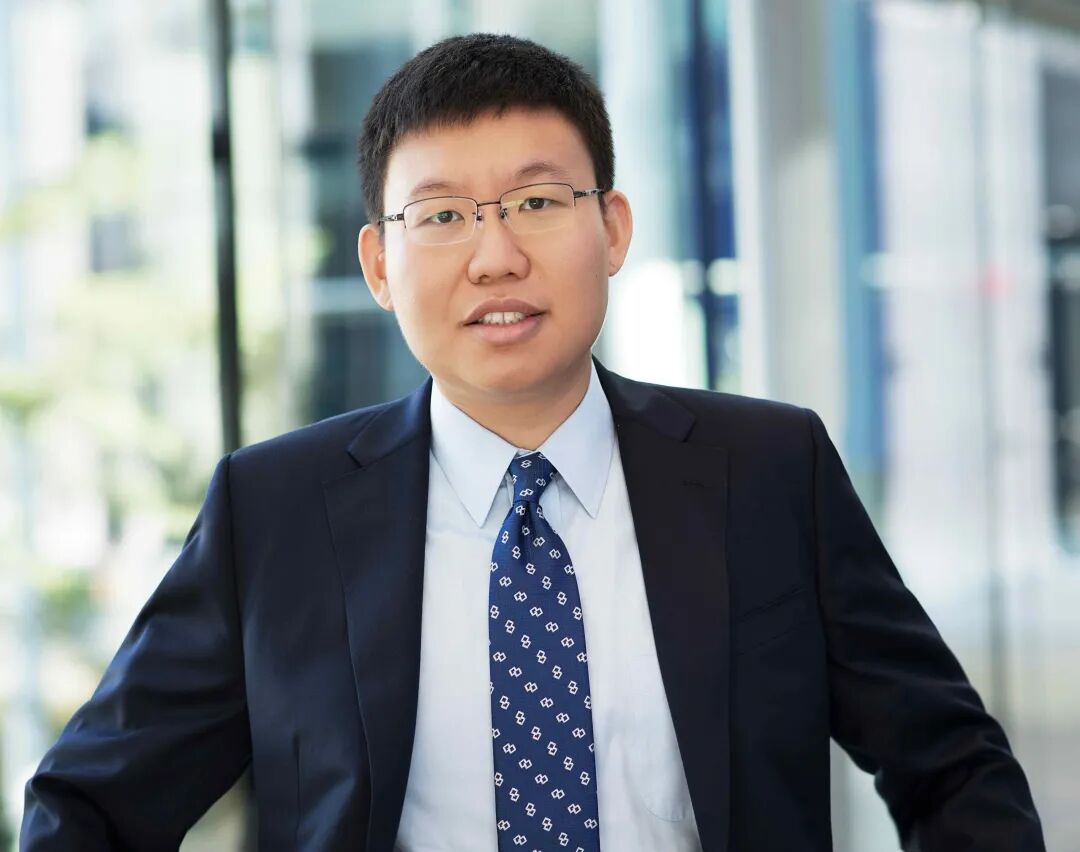
<p><strong>学者简介：</strong></p>

<p>殳蕴钰现任上海财经大学经济学院资源与环境经济系助理教授。她于2025年获得布朗大学经济学博士学位。她的研究领域为发展经济学与环境经济学，聚焦发展中国家微观主体的气候适应与绿色能源转型等系列环境议题。研究覆盖中国、加纳、肯尼亚、乌干达等国家。多项主持课题获International Growth Centre (IGC)、Private Enterprise Development in Low-Income Countries (PEDL) 等国际研究机构持续资助。</p>

<p>做研究不易——欢迎金主爸爸来支持我们的research！</p>

<p>参考文献：</p>

<p>[1] Shu, Yunyu, and Jiayue Zhang. 2025. “Informed Climate Adaptation: Input and Output Subsidies for Shaded Cocoa.” Preprint, SSRN.</p>

<table>
  <tbody>
    <tr>
      <td>责任编辑</td>
      <td><a href="http://www.qinyurain.com/">秦雨</a></td>
    </tr>
  </tbody>
</table>

<table>
  <tbody>
    <tr>
      <td>整理翻译</td>
      <td>何夏宇</td>
    </tr>
  </tbody>
</table>

<table>
  <tbody>
    <tr>
      <td>校对</td>
      <td>殳蕴钰</td>
    </tr>
  </tbody>
</table>]]></content><author><name>Impactful Research</name><email>impactful.research.blog@gmail.com</email></author><category term="pioneer" /><category term="development" /><category term="environment" /><summary type="html"><![CDATA[殳蕴钰教授分享在加纳开展可可豆田野研究的心得！Insights from Yunyu Shu on doing cocoa field research in Ghana.]]></summary></entry><entry><title type="html">马松教授谈JPE(2021)和JF(2025)创作心得Song Ma on JPE (2021) and JF (2025)</title><link href="https://impactful-research.github.io/2025/10/29/song-ma/" rel="alternate" type="text/html" title="马松教授谈JPE(2021)和JF(2025)创作心得Song Ma on JPE (2021) and JF (2025)" /><published>2025-10-29T01:00:11+00:00</published><updated>2025-10-29T01:00:11+00:00</updated><id>https://impactful-research.github.io/2025/10/29/song-ma</id><content type="html" xml:base="https://impactful-research.github.io/2025/10/29/song-ma/"><![CDATA[<p><em>本文最初于 2025 年 10 月 29 日 发布于微信公众号 Impactful Research；2026 年 4 月 28 日 同步至本网站。</em></p>

<p><em>Originally published on the WeChat official account Impactful Research on 2025-10-29; mirrored to this website on 2026-04-28.</em></p>

<p><img src="/assets/images/posts/song-ma/img-01.jpeg" alt="" /></p>

<p>来源：Google图文</p>

<p><strong>这个公众号的第二十七篇文章，</strong><strong>我们很荣幸邀请到耶鲁大学的马松教授分享他的两篇论文，</strong> <em><strong>Killer Acquisitions</strong></em><strong>和 Persuading Investors: A Video-Based Study</strong><strong>的创作心得。</strong></p>

<p>本文正文内容约一万字，全文阅读需约15分钟</p>

<p>#本期访谈主要问题</p>

<p>1. 谈 Killer Acquisitions (Cunningham, Ederer, &amp; Ma, 2021)</p>

<p>2. 谈 Persuading Investors (Hu &amp; Ma, 2025)</p>

<p>3. 对青年学者的建议</p>

<p><strong>Part 1: 谈</strong><strong>Killer Acquisitions (Cunningham, Ederer, &amp; Ma, 2021)</strong></p>

<p><strong>Q1：</strong><strong>今天我们就聊一聊你的几篇论文。我觉得你有好几篇都非常有意思。我们不妨先聚焦在 JPE 那篇Killer Acquisitions（扼杀型并购）的文章上。这篇论文我个人觉得特别有意思，但我也能想象，在发表的过程中你们可能遇到过不少阻力。因为你们讨论的主题，可能与主流经济学研究中的一些观点不太一致。能不能先从最初的想法开始讲起？当时是怎么想到要做这个题目的？</strong></p>

<p><strong>Let’s start by talking about some of your papers — you have several that I find really interesting. Maybe we can focus on your JPE paper Killer Acquisitions. I think it’s a fascinating study, but I can also imagine you might have faced some pushback during the publication process, since what you were trying to say differs somewhat from mainstream views in economics. Could you start by sharing how you first came up with the idea for this paper?</strong></p>

<p><strong>我个人在研究中的一个习惯，是尽量贴近真实的商业世界。</strong> 每个人产生研究想法的方式都不同，有的人习惯通过文献获得灵感，有的人则更倾向于从理论角度出发。而我个人更喜欢从现实世界中发生的事情中获得启发。</p>

<p><strong>One of my personal research habits is to stay as close as possible to what is actually happening in the business world.</strong> Everyone has different ways of generating research ideas—some are inspired by the literature, while others approach it from a more theoretical perspective. Personally, I tend to be inspired by real-world phenomena.</p>

<p>Killer Acquisitions （扼杀型并购）这篇论文的起源其实很简单。我之前在阅读新闻和同业界朋友交流的时候大概接触过类似的现象，但当时并没有认真思考这个问题，因为我觉得这件事非常直观—我的直觉就是大公司当然会这么做，这没什么问题。后来我在课堂上讲创业金融和风险投资课程，在最后一节课谈到初创企业如何退出时，其中一种方式就是被收购。我顺便提到，有时候大公司收购你，可能只是为了扼杀你的业务，以防止未来你成长为它的竞争对手。我当时只是随口一说，但学生们觉得他们好像从没听过这个观点，就让我举一些例子或多讲讲。我发现自己既没有完善的例子（因为没有公司会去主动宣传这种行为），也没有完整的理论动机，更没有任何实证证据。那一刻我就有点“被挂在黑板上”的感觉。课后我开始更认真地思考这件事。于是我和几位合作者（大部分是我的朋友）聊起这个话题。我问他们有没有遇到类似的例子，或在授课或阅读中见过类似讨论。他们也说没有系统思考过，还觉得我提的这个观点其实并不那么直观。于是我们决定深入研究，从理论和实证两个角度去论证它。</p>

<p>The origin of the Killer Acquisition paper was actually quite simple: I had come across similar phenomena in news reports or through conversations with industry peers, but I never really thought deeply about it, because it felt quite straightforward to me. My intuition was that of course large companies would act that way, and there was nothing particularly wrong with it. Later, when I was teaching a course on entrepreneurial finance and venture capital, I discussed how startups can exit their businesses, one way being through acquisition. I casually mentioned that sometimes large companies might acquire you just to kill your business and to prevent you from growing up as their competitors. I only said it in passing, but the students found the idea unfamiliar and asked me for examples or further explanation. I realized then that I had no comprehensive examples (because no firm will openly promote such strategy), no well-developed theoretical motivation, and no empirical evidence — I was, in a sense, “caught on the blackboard.” After class, I started to systematically think about it. I chatted about it with some of my co-authors, most of whom are close friends. I asked if they had ever comprehensively come across similar examples in their teaching or readings. They said no, and added that what I described wasn’t actually that intuitive. That was when we decided to dig into it systematically, to justify the idea from both theoretical and empirical perspectives.</p>

<p>在这篇论文的研究过程中，最关键的难点其实是实证部分。因为我们想通过数据来推断企业的“扼杀未来竞争”的意图，但如果一件事情本身并不是特别“正面”，企业往往会刻意隐藏，不会公开进行。<strong>所以，最大的实证挑战在于如何识别一家企业在收购某个项目之后，是否终止了该项目。</strong> 为了解决这个问题，我们花了很长时间去思考方法。如果只使用常见的并购数据库，是无法观察到收购后具体发生的运营变化的，这就是数据粒度不足带来的挑战。于是我们开始思考，是否能找到能够真正“看到”这种变化的数据来源。后来我和我的合作者 Colleen Cunningham（现犹他大学商学院创业与战略助理教授）想到了一个突破口。我们在攻读博士期间，虽然在不同的专业（我是金融，Colleen 是战略），但是因为共同的兴趣，曾经下载过制药行业的数据。当时并没有特定的研究目的，只是出于兴趣。但我们后来发现，<strong>制药行业有一个独特的优势：它的项目追踪是独立于并购事件的</strong> 。也就是说，一个药企被收购前后的项目进展都能被持续追踪。这就像一个教授在研究某个课题时，即使后来换到另一所大学，我们仍然可以通过 工作论文的 ID 追踪到他的项目进展。而在 COMPUSTAT 或其他数据库中，这种追踪是不可能做到的。制药行业的数据则不同，每个化合物都有注册信息和相关文献，因此可以在整个研发周期中保持一致的追踪。这一特征给了我们一个方法上的突破，我们能够利用外部独立的数据观察并购后的变化。自从有了这个方法和实证设计上面的突破，这篇论文的后续进展在我所有的研究中可能是遇到阻力最小的一篇。</p>

<p>During the research process of this paper, the main difficulty was empirical. We wanted to infer a firm’s intention of killing its future competitors from data, but when a behavior is not particularly “positive,” firms naturally try to conceal it rather than display it openly. <strong>Therefore, the key empirical challenge was figuring out how to identify when a company acquires a project and later terminates it.</strong> We spent a long time trying to resolve this issue. Using standard acquisition databases alone wouldn’t work, because they don’t allow us to observe what actually happens operationally after an acquisition — the data simply isn’t granular enough. So we pushed ourselves to think about what kind of data might allow us to truly observe these changes. That’s when my coauthor, Colleen Cunningham (Assistant Professor of Entrepreneurship &amp; Strategy at the Eccles School of Business, University of Utah), and I had an idea. During our PhD studies, although we were in different fields (I was in finance and Colleen was in strategy), we once downloaded data from the pharmaceutical industry out of shared personal interest, without any specific research purpose at the time. <strong>We later realized that this industry has a unique advantage: its project tracking is independent of any mergers or acquisitions.</strong> In other words, we can observe a drug development project both before and after an acquisition. It’s similar to how a professor’s research project can still be tracked through its working paper ID even if the professor moves to another university. In COMPUSTAT or other typical databases, that’s impossible, but in pharmaceuticals, each compound is registered and documented through associated publications. This continuity within the same project track provided us with a methodological breakthrough — it allowed us to use external, independent data to observe these hidden dynamics. Since we achieved breakthrough in methodology and empirical design, Killer Acquisition turned out to be the paper that faced the least pushback among all my work.</p>

<p>大家对这篇论文都非常兴奋，而且几乎没有提出太多质疑。<strong>原因主要有两个。第一，大家直觉上认为这种现象确实存在，但此前没有人认真思考过它为什么可以在均衡中出现。</strong> 我们的研究重要的一点在于，我们不仅记录了这种行为的存在，还在理论上证明了它在均衡状态下是可能发生的。有人可能会认为，在潜在的均衡中，大公司有收购竞争者的动机，但小公司可能不愿意出售，或者无法以合理的方式体现自身的全部价值，因此这种现象在总体上未必能成立。而我们的模型在理论上把各种机制都纳入考虑，证明它确实可以发生，并且我们也在实证上记录到了这种现象。因此，学界普遍认为我们的分析是可信的。<strong>第二，大家对我们的实证方法认可度很高。以往之所以难以研究这个问题，是因为没有合适的数据。而我们利用制药行业的数据，提供了一个可行的识别途径。</strong> 这让大家相信这种研究是可操作的。因此，这篇论文的审稿过程几乎没有遇到太大的阻力。</p>

<p>People were genuinely excited about the paper, and there was surprisingly little pushback. I think there were two main reasons for that. <strong>First, most people intuitively believed that this phenomenon exists, but no one had seriously thought about why it could occur in equilibrium.</strong> One of our key contributions was to document that such behavior can indeed arise in equilibrium. Some might argue that in a potential equilibrium, large firms may want to acquire competitors, but small firms would refuse to sell, or that the value of such acquisitions could not be fully realized globally. However, our theoretical framework incorporated all these factors and showed that the phenomenon can in fact occur and our empirical analysis documented that it does. As a result, people found the story credible. <strong>Second, our empirical method was widely accepted.</strong> Researchers felt that the difficulty in studying this topic had always been due to data limitations. By leveraging the pharmaceutical industry, we showed that it was actually possible to identify and measure such behavior. That’s why this paper encountered very little resistance during the review process.</p>

<p>文章带来的真正的困扰其实主要来自于大家对论文的误读，但也可以说是一种“幸福的烦恼”。因为这篇论文影响力很大，很多人会过度解读，比如会把论文过度解读为所有的并购都是为了扼杀竞争对手的扼杀型并购。<strong>但实际上，我们的研究结果显示，只有大约 6% 的并购属于这种类型。</strong> 由于论文本身非常显眼，很多人就误以为收购的主要目的都是为了消灭竞争。其实我们并没有这样说，也并未声称这种现象普遍存在。我和合作者尤其是我本人在传播论文时一直非常谨慎。我不喜欢夸大或过度解读自己的研究发现或论文的影响力。所以这种被误读的情况让我有些困扰。</p>

<p>The real pushback brought by the paper actually came from people misreading our research. It’s somewhat of a “happy problem”, but still a bit bothering. Because the paper became so impactful, many people started to over-interpret it — for example, assuming that all acquisitions are “acquire to kill”.<strong>In fact, our study finds that only about 6% of acquisitions fall into that category.</strong> Since the paper became very salient, people tend to think that the purpose of most acquisitions is to eliminate competition. But we never made that claim. My coauthors and I have been very conservative in disseminating this work. I don’t like to overstate or over-interpret my findings or the paper’s impact. That’s why this kind of misreading can be a bit troubling to me.</p>

<p><strong>Q2：</strong><strong>你觉得你们的研究结论会改变这种市场均衡吗？现在小公司会不会过度保护自己？</strong></p>

<p><strong>Do you think your research findings could change this equilibrium? Will small firms now overprotect themselves?</strong></p>

<p>我认为不会。它之所以能在均衡中发生，是因为大公司愿意付出很高的价格。为什么愿意？<strong>因为当竞争的小公司失败时，大公司能获得巨大的潜在收益，所以他们愿意付高价去进行扼杀型并购。</strong> 我认为这是我们论文中的一个关键洞见。从个体企业战略的角度来看，很多小公司甚至会认为，如果能以这种方式退出，其实也是不错的结果, 既能获得高额回报，又不需要把药物真正推向市场。毕竟要把一个药物推向市场，投入巨大，不确定性也非常高。</p>

<p>I don’t think so. The reason this can happen in equilibrium is that large firms are willing to pay a lot of money. Why? <strong>Because when a small competitive firm fails, the benefit to the large firm is substantial, so they’re willing to pay a high price to acquire to kill.</strong> This is one of the key insights in our paper. From the perspective of individual firm strategy, many small firms might even see such an exit as a good outcome — they can make substantial profits without having to push their drug all the way to market. After all, bringing a drug to market requires massive investment and carries great uncertainty.</p>

<p><strong>Q3：</strong><strong>按我的理解，由于制药行业将药物推向市场需要投入巨大，且不确定性很高，那么扼杀型并购这样的现象是否会在某些特定行业中更加显著？</strong></p>

<p><strong>From my understanding, since bringing a drug to market in the pharmaceutical industry requires enormous investment and involves high uncertainty, would the killer acquisition phenomenon be more salient in certain industries?</strong></p>

<p>这个观点我们在论文中没有明确写出，但在与他人交流时，<strong>我个人认为制药行业是扼杀型并购最容易发生的领域。</strong> 原因有两个：第一，药物在进入上市后期时成本极高，因此对初创公司而言，放弃项目有时反而是更有吸引力的选择。第二，制药行业的知识产权保护非常有效。如果是 IT 行业，大公司可以收购并“杀掉”一家小的 App 公司，但其他公司几乎可以以极低成本复制类似产品。这样的话，大公司不可能不断重复收购与封杀，否则这种策略就会失效。而在制药行业，如果我收购了某个化合物或其背后的研发团队，其他公司很难立刻找到另一个化合物来做完全相同的事情。因此，扼杀型并购这种策略在制药领域会更加有效，也因此可能更为显著。</p>

<p>We didn’t explicitly discuss this point in the paper, but in my personal conversations,<strong>I’ve argued that the pharmaceutical industry is the most obvious place for killer acquisitions to occur.</strong> There are two main reasons. First, the cost of bringing a drug to market in its later stages is extremely high, so for startups, it can actually be appealing to give up the project at some point. Second, intellectual property protection in the pharmaceutical industry is very effective. In contrast, if you’re an IT company, a large firm can acquire and kill a small competitor, but other app developers can almost replicate the same product at very low cost. It’s not sustainable for a big company to keep acquiring and killing multiple startups like that — the strategy would soon become ineffective. However, in pharmaceuticals, once a company acquires a compound or the team behind it, it’s very difficult for others to immediately find another compound to do exactly the same thing. That’s why the “acquire to kill” strategy becomes much more effective — and thus possibly more salient — in this industry.</p>

<p>我们在写这篇论文时是非常客观的，讨论的对象仅限于制药行业。但让我感到困扰的是，当论文变得非常有影响力后，很多人开始说这种现象可以推广到其他行业。问题就在于，这个现象是否真的能够轻易地推广？政策制定者往往不会仔细区分这些细节，他们会直接将结论外推到其他领域。<strong>作为研究者，这是一个矛盾的处境：一方面，我们希望自己的研究能启发监管者或商业领袖，带来新的思考；但另一方面，当研究被以一种我们无法确认真伪的方式讨论时，又会让人感到痛苦。</strong> 我称这种感觉为“幸福的烦恼”。这篇论文可能是Journal of Political Economy近几年引用次数最高的文章之一。发表仅四年，引用量就超过了一千次。它之所以能产生如此大的影响，是我们当初没有预料到的。它的成功当然让我们非常高兴，但与此同时，当论文变得如此有影响力后，它似乎也不再完全受我们控制。对学者而言，这是一种微妙的平衡：有影响力的研究如何在社会中发挥作用，在某种意义上已经超出了研究者本人的掌控。</p>

<p>When we wrote the paper, we were very objective — our discussion was strictly limited to the pharmaceutical industry. But what started to bother me later was that, as the paper became highly influential, people began claiming that the phenomenon could be extrapolated to other industries. The problem is: can it really be easily extrapolated? Policymakers usually don’t make such distinctions. They tend to take the conclusion and directly apply it elsewhere. <strong>As a researcher, this creates a kind of tension. On the one hand, you’re glad that your work brings new ideas to regulators or business leaders. But on the other hand, it can be painful when your findings are discussed in ways you’re not sure are true.</strong> I call this a “happy problem”. This paper is probably one of the most highly cited in the Journal of Political Economy in recent years. It’s only been four years since publication, yet it has already received over a thousand citations. Clearly, it has had an impact that we never expected. Its success makes us happy, of course, but as it becomes more impactful, it also starts to feel beyond our control. For scholars, that’s a tricky tradeoff: once a piece of research becomes truly impactful, the way it influences society is, in some sense, no longer in your hands.</p>

<p><strong>Q4：</strong><strong>那有业界的人来找你交流过吗？</strong></p>

<p><strong>Have people from the industry reached out to talk with you?</strong></p>

<p>有的。但在这些交流中，<strong>我始终坚持基于证据讨论，不会随意外推。</strong> 他们无法从我这里套出他们想要的论点。只要没有确凿的证据，我就不会随意推断，否则就违背了我写这篇论文的初衷。</p>

<p>Yes, they have. <strong>But whenever I discuss these issues, I stay strictly evidence-based. I don’t extrapolate beyond the data.</strong> They can’t fish for the arguments they want from me. If there’s no evidence, I won’t speculate, because doing so would go against the very purpose of writing this paper.</p>

<p><strong>Part 2: 谈Persuading Investors (Hu &amp; Ma, 2025)</strong></p>

<p><strong>Q5：</strong><strong>你刚刚提到扼杀型并购这篇论文其实是在审稿的过程中经历的阻力相对比较小的一篇，你能分享一下其他的文章中有什么是经历过比较多阻力？你一般是如何应对审稿过程中面临的挑战的？</strong></p>

<p><strong>You just mentioned that the Killer Acquisitions paper faced relatively little pushback during the review process. Could you share which of your other papers encountered more pushback from reviewers, and how you usually deal with such pushback?</strong></p>

<p>我发表过的论文中，审稿过程最难的一篇是我今年刚在 Journal of Finance 上发表的Persuading Investors: A Video-Based Study。<strong>在开始写一篇论文之前，我会强迫自己问一个问题：“如果这篇论文最终完成了，别人会记住什么？”</strong> 我把这个称为寻找文章的制胜策略。制胜策略并不是指论文怎么做一定能发表，虽然发表当然是好事，但从长期影响来看，发表并不是最终目标。我所说的制胜策略是：文章必须有某个让人印象深刻，对未来的研究者有极大启发的地方。比如说 Killer Acquisitions这篇文章的制胜策略就是我们提出了一个全新的洞见，一个多数人从未想过、但一听又觉得很合理的观点。还有时候一篇文章的制胜策略来自于新的数据或新的研究方法。很多重要的论文正是因为在数据或方法上有突破而被记住的。制胜策略有时则来自其他创新点，或者是多种因素的结合。当我们做这篇Persuading Investors的论文时，我们注意到当今世界上约有 85% 的数据以视频形式存在，因此视频数据必然有成为社会科学研究素材的潜力。我们当时想做一次探索。那时我还只是一个较为年轻的助理教授，我的合作者 Allen 当时还只是博士一年级，现在已经在 UBC 任教。你可以想象这篇论文花了多久。我们当时的目标是：如果能建立一个研究流程，让视频数据可以被系统地用于社会科学研究，那么这篇论文就能为未来的研究打开新的大门。事实证明，我们的愿景是正确的。如今已有越来越多的学者在延续这类研究，使用视频、音频等新型数据，尤其在 AI 浪潮下，这个方向越来越受到关注。</p>

<p>Among all my publications, the most challenging one in the reviewing process is my recent Journal of Finance paper titled “Persuading Investors: A Video-Based Study.” <strong>Before I start writing a paper, I always force myself to ask one question: “If this paper were completed, what would people remember about it?”</strong> I call this the process of finding the paper’s winning strategy. The winning strategy doesn’t mean figuring out how to get the paper published — although publication is of course desirable — but publication is not the ultimate goal in terms of long-term impact. What I mean by winning strategy is that the paper must have something truly memorable, something that inspires future researchers in a lasting way. For example, the winning strategy of the Killer Acquisitions paper was that it offered a completely new insight, something most people had never thought about, yet found intuitively reasonable once they saw it. Sometimes, that winning strategy comes from new data or a new method. Many influential papers are remembered for their data or methodological innovations; others for different reasons, or a combination of several. When we started Persuading Investors, we noticed that about 85% of all data in the world exists in video form. That means video data must have potential for real social science research. We decided to explore that possibility. At the time, I was still a relatively junior assistant professor and my coauthor, Allen Hu, was only a first-year PhD student (he is now a faculty member at UBC). So you can see this project took a long time. Our goal was clear: if we could build a pipeline showing that video data could be systematically used for research, then the paper would open new doors for future work. Looking back, our vision turned out to be right. Many researchers are now following this path, working with video, audio, and other new forms of data, especially under the current wave of AI-driven research.</p>

<p>我们这篇论文在投各类学术会议时几乎没有遇到任何阻力，几乎所有会议我们投了都被接收。但在期刊审稿过程中却一度非常艰难。<strong>我个人感觉，经济学、金融学领域的发表审查制度都是对接纳创新相对保守的。</strong> 对许多新兴主题，学界往往不愿意轻易信任早期的研究，尤其是不愿意信任年轻学者的早期成果。这篇论文在投稿阶段遇到了大量的质疑，主要原因是大家“看不懂”。当人们面对自己不熟悉的东西时，通常会以一种保守的姿态去应对：“我没见过它，所以我害怕它可能会带来问题”。因此，我们遇到了很多误解。审稿人往往倾向于找个理由拒稿，这样他们就不用继续深入地去理解一个陌生的主题。这就造成了一个消极的循环。虽然许多主编非常喜欢我们的论文，但即便如此，他们也常常难以找到合适的审稿人。我们早在 2019 年就完成了这篇论文，而直到 2025 年 10 月才正式发表。令人庆幸的是，在 2022 年 ChatGPT 出现之后，学界对“替代性数据”和 AI 研究变得更开放了。大家开始意识到，这是一个潜在的新前沿领域。之后的投稿过程相对容易一些，但仍然遇到了不少阻力。我之所以坚持推动这篇论文，是因为我认为它是一篇真正的winning paper。<strong>它提出了一个愿景，展示如何利用丰富的替代性数据来开展未来的研究。</strong> 而且我们并不害怕未来技术可能会取代我们论文中提出的方法，这完全没问题，也是科研的必然的健康的过程。关键是我们要把自己的想法和愿景清晰地写出来。</p>

<p>When we submitted the paper to conferences, we faced almost no resistance, nearly every conference we sent it to accepted it. But the journal review process was a completely different story. <strong>I personally feel that the publication and review system in economics and finance tends to be relatively conservative toward accepting innovation.</strong> In general, the field tends not to trust early papers on new topics, and especially not early work from new researchers. During submission, we encountered a lot of push back mainly because people didn’t really understand what we were doing. When reviewers face something unfamiliar, they often respond cautiously, “I haven’t seen this before, so I’m worried it might be wrong or misleading.” As a result, there was a lot of misunderstanding. Many reviewers preferred to find some reasons to reject the paper, so they wouldn’t t have to deeply engage with something outside their comfort zone. This created a negative cycle. Many editors liked the paper, but even so, they struggled to find suitable referees. We wrote the paper back in 2019, and it wasn’t published until October 2025. Fortunately, after 2022, when ChatGPT came out, attitudes toward alternative data and AI research became much more receptive. People started to realize that this could be a potential frontier, and the process became somewhat easier. Still, we faced considerable push back along the way. The reason I insisted on pushing this paper forward was that I believed it was a winning paper. <strong>It offered a vision, a vision of how rich, alternative data could be used in future research.</strong> Moreover, we are not afraid that future technologies might eventually replace the methods proposed in our paper. That would be perfectly fine. It is a natural and healthy part of scientific progress. What mattered was that we articulated our ideas and put our vision out there.</p>

<p>我这次在 NUS 展示这篇论文 (Chen, Hu, &amp; Ma, 2025)，其实是对这个研究主题的又一次尝试。<strong>我希望能把这个方向再往前推进，为大家提供一种不同的研究方法来思考这个视频数据结构和相关的科研问题。</strong> Persuading Investors这篇论文是我在学术生涯中投稿遭遇阻力最大的一篇，也让我感到相当挫败。因为这是我个人认为自己最好的论文之一，也是在研究过程中最有乐趣的一篇。但发表过程中遇到了许多意料之外的困难。不过，有些时候你别无选择，只能往前走，不能放弃。这次展示的是同一方法主题的第二篇论文。写它的原因并不是我想“延伸”自己的研究，而是因为第一篇发表得太艰难，以至于我觉得必须再推进一次，让更多人能够接受这个研究方向。坦率地说，我通常不会写自己研究的follow-up 论文。我一向有一个原则：一个想法写一篇就够了，很少重复使用相同的数据集，也不会在同一主题上写第二篇。但这一次我主动follow up，因为我觉得这是一种责任。我非常相信这个研究方向的价值，但是觉得第一篇没有被完全理解或接受。所以我想再写一篇，用另一种方法去呈现，看看是否能让更多人接受。像 Killer Acquisitions 那篇论文，很多人问我要不要写后续研究，我的回答是我不想。我觉得自己想说的该说的都已经说完了，除非我有新的洞见，否则不会再写。但这个主题，我觉得值得再努力一次。</p>

<p>My presentation at NUS this time (Chen, Hu, &amp; Ma, 2025) was essentially another attempt to advance this line of research.<strong>I hoped to push it one step further and offer an alternative way to think about the structure of video data and the related research questions.</strong> Persuading Investors is the one that has faced the most pushback in terms of the reviewing process in my entire career, and it’s been quite frustrating. It’s one of the papers I personally value the most, and it was also genuinely fun to work on. Yet, despite that, I’ve encountered so many unexpected difficulties in the publication process. But sometimes you simply have no choice, you just have to keep going and not give up. This presentation features the second paper developed under the same methodological theme. The reason of writing this new paper isn’t that I want to “follow up” on my own research; it’s because the first paper was so difficult to publish that I feel compelled to push it a bit further, to make it more acceptable to the broader community. Honestly, I rarely write follow-ups to my own work. I have a principle: one idea, one paper. I merely reuse my dataset, and I usually don’t write a second paper on the same topic. But this time, I’m deliberately following it out of a sense of responsibility. I truly believe in the line of this research, but I feel the first paper wasn’t fully understood or accepted. So I want to write another one, offering an alternative way of doing it, to see whether people might receive it better. For instance, with Killer Acquisitions, many people have asked whether I plan to do a follow-up study. My answer is no. I feel that I have already said everything I wanted to say. Unless I have new insights, I wouldn’t write another one. But for this topic, I really think it’s worth another try.</p>

<p><strong>Part 3: Suggestions for junior scholars</strong></p>

<p><strong>对青年学者的建议</strong></p>

<p><strong>Q6 ：</strong>**对于青年学者的发展，你有什么建议吗？</p>

<p><strong>Do you have any suggestion for junior scholars?</strong></p>

<p>我读过这个专栏的很多采访，里面有不少对自己很有益的建议。像宋铮老师、杨立岩老师、方汉明老师，丛林老师，他们都提出了非常好的观点。这里我想补充几个大家可能没特别强调的。但是我想先说，Steve Ross（注：麻省理工学院斯隆商学院已故金融学教授，现代金融研究的领军学者之一）曾经讲过，科研是个非常个人化的过程，所以每个人都应该尊重自己的习惯和偏好。我自己的分享也只是给大家另一个思路而已。</p>

<p>I’ve read many interviews from this column, and I’ve found a lot of the advice there truly valuable. Professors Michael Zheng Song, Liyan Yang, Hanming Fang, and Lin Cong, among others, have all offered excellent insights. Here, I’d like to add a few points that may not have been emphasized as much. But before that, I want to echo something Steve Ross once said: research is a very personal process, and everyone should respect their own habits and preferences. What I’m sharing here is simply another way of thinking about it.</p>

<p><strong>首先，</strong><strong>很多同事都提到要研究自己真正感兴趣的主题，这一点非常重要</strong> ——人生苦短，做自己喜欢的研究才能走得远。除此之外，不要因为某个问题太难就放弃。只要你坚持做下去，最后都能得到答案。</p>

<p><strong>First, many colleagues have emphasized the importance of working on topics you’re genuinely interested in and I completely agree.</strong> Life is short, and doing research you truly care about is essential. In addition, don’t avoid something just because it seems too difficult. If you keep working on it, you’ll eventually figure it out.</p>

<p><strong>我着重想说的一点是：少写几篇论文。</strong> 想出一个好点子并把它做好已经很难了，一年能想出 2–3 个好点子是一件极少人可以做到的事情。尤其对初入行的研究者而言，大部分工作都很艰难，你也不熟悉整个论文写作和发表流程，一年能写 2–3 篇好论文在我看来几乎是不可能的。你或许想通过“分散风险”来提高命中率，但如果连一篇真正有把握的稿件都没有，多写几篇又有什么意义？就像沃伦·巴菲特在谈价值投资时说的：如果你清楚自己在做什么，那么分散投资就毫无意义，因为你应该对一个好想法“下重注”。我职业生涯前 4–5 年非常自律，一年只写一篇论文。我会大量“取样”想法，每年大概几十个：花时间与人交流、讨论、阅读，但不过早动手；或用最快的方法做初筛，比如是否有可用数据源，判定文章是否有足够的心意和贡献。一旦碰壁、遇到无法解决的问题，我就立刻收手，不会硬做。因为把一篇论文做成做好真的很难：要获取和处理数据、写代码、与合作者协同、投稿、回应审稿意见。每一篇论文都会拖很久。我在读博时就受这种“老派思维方式”的影响：导师说，作为博士生和年轻研究者，写太多论文会稀释自己。当然，我不否认有人处在能力分布的“右尾”（“right tail”），可以完成别人几倍的工作。但对平均研究者而言，我认为一年写 1–1.5 篇已经接近上限；只要其中有一半能发表，你几乎可以在任何靠谱的学校获得晋升。与其在六年的评审期写十几篇论文、最终命中 3–4 篇，不如认真写 6–7 篇高质量论文，力争发出 3–4 篇。哪个更可行？在我看来，应当 all in 好点子：在选题阶段更严谨，从所有备选中挑最好的，找最匹配的合作者，把功夫下在刀刃上，集中火力推广这个想法，把能做的都做到，不被分散。</p>

<p><strong>The main point I want to make is this: write fewer papers.</strong> Coming up with a truly good idea (and executing it well) is already extremely difficult. Very few people can generate two or three solid ideas in a single year. Especially for early-career researchers, most projects are challenging, and the whole process of writing and publishing a paper takes time to master. From my perspective, producing two or three good papers a year is almost impossible. You might try to diversify the risk to improve your odds, but if you don’t have even one good shot, what’s the point of writing more? As Warren Buffett says about value investing: if you know what you are doing, then diversification doesn’t make sense, you should place a big bet on a great idea. In my first 4–5 years, I was very disciplined: one paper per year. I would sample many ideas (probably a few dozen) —talk to people, discuss, read—but avoid starting too early; or I’d do a quick probe (e.g., check for viable data, see if it has enough contribution). Once I hit a wall I couldn’t solve, I’d pull back immediately rather than force it. Making a single good paper work is hard: collecting and processing data, coding, coordinating with coauthors, submissions, handling comments. Each paper can drag on for a long time. During my PhD, I absorbed this somewhat old-fashioned view: as my supervisor said, as a PhD student or a junior researchers, writing too many papers dilutes you. Of course, there’s a right tail and they can accomplish several times more than others. But for the average scholar, 1–1.5 papers per year is near the upper limit; if about half get published, you can likely secure promotion at almost any reasonable school. Rather than writing a dozen papers during the six-year tenure period and ending up publishing only three or four, it’s better to focus on producing six or seven high-quality papers and aim to get three or four of them published. Which is easier? In my view, you should all in on great ideas: be more rigorous at the selection stage, pick the very best from your sample, find the right coauthors, invest where it matters, push the idea hard, do everything needed, and don’t get distracted.</p>

<p><strong>换一个角度来说，我认为写论文其实要遵循一种类似“价值投资”的方法——写论文就是将自己的时间和思考进行价值投资。</strong> 巴菲特常说，他在投资前要彻底看懂一个标的，看透之后才会出手；而一旦决定投资，就会重仓押注。这与做研究完全一样。在选择研究想法时，不要贪心。不要想着“这个也想做、那个也想做”，时间根本不够。就像你没有无限的钱去投资一样，你也没有无限的时间和精力去研究。把时间花在真正值得投入的题目上，把它做好，花一两年时间深耕，然后一步步地把成果发出来。学术界最终会奖励那些“右尾的成果”。无论你的简历多长，别人最终记住的可能也就三篇，而真正有价值的往往就是那三篇。所以我的可能有点“另类”的建议就是：可以少写几篇文章，但是把自己的时间和精力充分投入进去，把这些文章做好做出影响力。</p>

<p><strong>From another perspective, I think writing papers should follow a kind of value investing approach: you are essentially investing your time and thinking in projects that will generate lasting value.</strong> Warren Buffett often says that before investing, he studies an idea thoroughly; once he understands it, he invests heavily and stays committed. It’s exactly the same with academic work. When evaluating research ideas, don’t be greedy. Don’t think, “I want to do this and that.” You don’t have that much time and energy — just as you don’t have unlimited capital to invest. Focus your time on what truly matters, spend one or two years doing it well, and then publish it piece by piece. Our profession rewards right-tail outcomes. No matter how long your CV is, people usually remember only about three papers — and those are your truly valuable ones. So my perhaps somewhat “unconventional” advice is this: write fewer papers, but invest your time and energy deeply in them, making them truly well-crafted and impactful.</p>

<p><strong>另外一个建议就是一定要找到志同道合的学术伙伴。这些伙伴并不仅限于你的合作者，而是一些你欣赏的并且信赖的朋友。</strong> 这些朋友平时可以一起天马行空思考；当你遇到学术问题的时候，这些伙伴可以给你最诚实和有效的建议。未来有好的想法的时候，这些伙伴是最好的合作者。一个最好的循环就是，你并不需要根据研究课题去寻找合作者，而是你已经有一群伙伴，而这些伙伴之间的交流可以让你们在有合适的机会的时候自然成为最和谐的合作者组合。我感觉自己很幸运的就是，很多论文都是在和自己的好朋友的交流之中思想碰撞得到的灵感，这样大家非常自然进入到科研的工作状态。</p>

<p><strong>Another piece of advice I’d like to give is to find like-minded academic partners. These partners are not limited to your coauthors: they are people you genuinely admire and trust.</strong> You can brainstorm freely with them, and when you encounter academic challenges, they can offer the most honest and constructive feedback. When good ideas come along, these people often become your best coauthors. In an ideal situation, you don’t look for coauthors after you have an idea; rather, you already have a group of trusted peers, and through constant conversations, you naturally form the most harmonious coauthor teams when the right opportunities arise. I feel very fortunate that many of my papers were inspired by conversations with close friends — those exchanges naturally sparked ideas and led us into productive collaborations.</p>

<p><img src="/assets/images/posts/song-ma/img-02.jpeg" alt="" /></p>

<p><strong>学者简介：</strong></p>

<p>Song Ma is a Professor of Finance and Entrepreneurship at Yale School of Management (SOM) and a Faculty Research Fellow at the National Bureau of Economic Research (NBER). He is also an affiliated faculty member at Yale Law School Center for the Study of Corporate Law and Yale SOM Program on Entrepreneurship. Professor Ma’s main research interests are innovation economics, entrepreneurship, financial economics, AI, and big data. His research also spans to corporate strategy, industrial organization, antitrust, labor, and business law. His research has been featured in top academic journals such as the J <em>ournal of Political Economy, Journal of Finance, Journal of Financial Economics, and Review of Financial Studies</em> , and won numerous research awards.</p>

<p>马松教授是耶鲁大学管理学院金融与创业学教授、美国国家经济研究局（NBER）研究员，同时兼任耶鲁法学院公司法律研究中心及耶鲁管理学院创业项目的教研成员。马教授的主要研究领域包括创新经济学、创业学、金融经济学、人工智能与大数据。其研究还延伸至公司战略、产业组织、反垄断、劳动经济学及商法领域。他的研究成果发表在 <em>Journal of Political Economy, Journal of Finance, Journal of Financial Economics, Review of Financial Studies</em> 等顶级学术期刊，屡获科研奖项。</p>

<p>参考文献：</p>

<p>[1] Chen, X., Hu, A., &amp; Ma, S. (2025). Banks’ Images: Evidence from Advertising Videos (SSRN Scholarly Paper No. 5425916). Social Science Research Network. https://doi.org/10.2139/ssrn.5425916</p>

<p>[2] Cunningham, C., Ederer, F., &amp; Ma, S. (2021). Killer Acquisitions. Journal of Political Economy, 129(3), 649–702. https://doi.org/10.1086/712506</p>

<p>[3] Hu, A., &amp; Ma, S. (2025). Persuading Investors: A Video-Based Study. The Journal of Finance, 80(5), 2639–2688. https://doi.org/10.1111/jofi.13471</p>

<table>
  <tbody>
    <tr>
      <td>责任编辑</td>
      <td><a href="https://truan.github.io/">阮天悦</a> <a href="http://www.qinyurain.com/">秦雨</a></td>
    </tr>
  </tbody>
</table>

<table>
  <tbody>
    <tr>
      <td>整理翻译</td>
      <td>陈一凡 张诗怡</td>
    </tr>
  </tbody>
</table>

<table>
  <tbody>
    <tr>
      <td>校对</td>
      <td>马松</td>
    </tr>
  </tbody>
</table>]]></content><author><name>Impactful Research</name><email>impactful.research.blog@gmail.com</email></author><category term="featured" /><category term="finance" /><category term="io" /><summary type="html"><![CDATA[马松教授分享 Killer Acquisitions 与 Persuading Investors 两篇论文的创作心得！Insights from Song Ma on writing Killer Acquisitions and Persuading Investors.]]></summary></entry><entry><title type="html">Kjetil Storesletten教授分享RES（2025）创作心得Kjetil Storesletten on RES (2025)</title><link href="https://impactful-research.github.io/2025/10/11/kjetil-storesletten/" rel="alternate" type="text/html" title="Kjetil Storesletten教授分享RES（2025）创作心得Kjetil Storesletten on RES (2025)" /><published>2025-10-11T01:00:28+00:00</published><updated>2025-10-11T01:00:28+00:00</updated><id>https://impactful-research.github.io/2025/10/11/kjetil-storesletten</id><content type="html" xml:base="https://impactful-research.github.io/2025/10/11/kjetil-storesletten/"><![CDATA[<p><em>本文最初于 2025 年 10 月 11 日 发布于微信公众号 Impactful Research；2026 年 4 月 28 日 同步至本网站。</em></p>

<p><em>Originally published on the WeChat official account Impactful Research on 2025-10-11; mirrored to this website on 2026-04-28.</em></p>

<p><img src="/assets/images/posts/kjetil-storesletten/img-01.jpeg" alt="" /></p>

<p>来源：bing图片</p>

<p><strong>这个公众号的第二十六篇文章，我们很荣幸邀请到明尼苏达大学的Kjetil Storesletten教授分享他2025年发表在The Review of Economic Studies 的论文 Barriers to Entry and Regional Economic Growth in China 的创作心得。</strong></p>

<p>本文正文内容约七千字，全文阅读需约12分钟</p>

<p>**Q1：I think your paper is one of the first macro papers to study regional economic differences in China. How did you identify this research question? What motivated you to focus on the regional aspect?</p>

<p><strong>我感觉您的论文是宏观经济学中首批研究中国区域经济增长差异的论文之一。您是如何识别出这一研究问题的？是什么动机促使您关注区域差异？</strong></p>

<p>I am, of course, very fascinated by China and its economic development. When we began this work, a lot of research had already been done trying to understand or describe the economic transformation—but usually, people would either treat China as a whole or focus solely on the coast.</p>

<p>我原本就一直对中国及其经济发展非常着迷。当我们开始这项工作时，已有大量研究试图理解或描述中国的经济转型——但通常，人们要么将中国视为一个整体，要么只关注沿海地区。</p>

<p>I felt that <strong>the heterogeneity within China was understudied.</strong> That’s something I wanted to understand better. So, one motivation was that it was remarkable how large these regional differences were, yet so few had really examined them. The other motivation came from my perspective that understanding China’s economic transformation—or that of other developing countries—is incredibly important. China stands out especially because it is incredibly big. So, I wanted to understand: <strong>what can we learn from this transformation? What factors helped or deterr</strong><strong>ed it?</strong></p>

<p>我认为<strong>对于中国内部的区域异质性的研究是不足的</strong> 。这正是我想要更深入理解的。因此，第一个动机是，这些区域差异如此巨大，却鲜有人真正去审视它们。另一个动机源于我的一个观点，即理解中国或其他发展中国家的经济转型至关重要。中国的特殊性尤其在于其庞大的规模。因此，我想理解：<strong>我们能从这场转型中学到什么？哪些因素促进或阻碍了它？</strong></p>

<p><strong>It occurred to me that China is more like a continent.</strong> And when I began working with prefectural-level data with Loren, I was excited because I hadn’t known such detailed information was available—and clearly underutilized. It felt like we suddenly had 350 or 360 natural laboratories to examine—that was essentially the motivation at the start. We study the economic takeoff of each region separately and identify factors correlated with local development. Regional convergence was interesting in itself—and once we dived into the data, we uncovered strikingly rapid convergence, and that naturally became a central theme of the paper.</p>

<p><strong>我意识到中国（的宏观经济发展）更像一个大陆。</strong> 当我开始与Loren合作处理地市级数据时，我感到非常兴奋，因为我之前并不知道能够获得如此详细的信息——而且这些数据显然未被充分利用。这感觉就像我们突然拥有了350到360个天然实验室可供研究——这基本上是我们最初的动机。我们分别研究每个区域的经济增长，并识别其影响因素。空间收敛本身就是一个有趣的现象——而一旦我们深入数据，便发现了极其迅速的收敛过程，这自然成为了论文的一个核心主题。</p>

<p><strong>Q2： Let us talk about the concept “entry wedge”—is this a completely new idea that you developed?</strong></p>

<p><strong>我们来谈谈“进入楔子”（entry wedge）这个概念——这是您提出的一个全新概念吗？</strong></p>

<p>The concept of the entry wedge is something we developed. When we began working on this paper, much of the existing literature focused on misallocation-type distortions to explain why firms have a wrong size or an inefficient mix of capital and labor. Two common distortions were overly expensive or cheap capital, and regulatory limits on firm expansion like being taxed or subsidized.</p>

<p>“进入楔子”这一概念是我们提出的。当我们开始撰写这篇论文时，现有文献大多聚焦于资源配置层面的扭曲，以此解释为何存在企业不适当规模的问题或资本劳动配置不当的问题。两种常见的扭曲是资本价格过高或过低，以及对企业扩张的管制限制，如征税或补贴。</p>

<p><strong>As we started to focus specifically on private firms, we quickly observed a clear correlation: in regions with a lot of state-owned enterprises (SOEs), there were very few private firms.</strong> We also noted that after the 1998 SOE reforms, which significantly reduced the size of the state sector, the decline was uneven across industries—it was much more concentrated in labor-intensive, light, and non-strategic industries. We considered using this variation as an instrumental variable to predict the decline of SOE firms and understand its impact.</p>

<p><strong>当我们开始特别关注私营企业时，我们很快观察到一个明显的相关性：在国有企业众多的地区，私营企业非常少。</strong> 我们还注意到，在1998年国企改革大幅缩减国有部门规模之后，这种缩减在不同行业间并不均衡——它更集中于劳动密集型、轻工业和非战略性行业。我们考虑利用这些行业差异构建关于区域国企退出的工具变量，并理解其影响。</p>

<p>In a simple model, for regions where state employment fell sharply, one would expect massive layoffs and, consequently, a surplus of workers leading to lower wages. You also expect the TFP to fall because of the cheap labor. This is because in a standard model (like Hopenhayn’s), lower wages should enable less productive firms to enter. <strong>Surprisingly, we observed the opposite: in these regions, private firms started to pay higher wages and their TFP increased.</strong> This suggested we need something else to explain this.</p>

<p>在一个简单的模型中，人们会预期在国有部门从业人数急剧下降的地区出现劳动力过剩和工资下降。同时，由于劳动力廉价，全要素生产率也应下降。这是因为在标准模型中，较低的工资使生产率较低的企业得以进入。<strong>但出乎意料的是，我们观察到了相反的情况：在这些地区，私营企业支付更高的工资，并且全要素生产率也提高了。</strong> 这表明我们需要引入其他因素来解释这一现象。</p>

<p>Let’s consider a simple story: for some reason, the laid off workers may boost the aggregate TFP. But the problem is that in that case both new and existing firms should increase hiring. <strong>However, we found that most of the employment growth occurred in new firms.</strong> In regions with faster wage growth, the share of employment by newly created firms increased, and the average age of firms declined.</p>

<p>我们可以设想一个简单的模型：工人下岗通过某种方式提升了整体全要素生产率。但问题在于，如果是这样，新企业和现有企业都应提高雇员人数。<strong>然而，我们发现就业增长大部分发生在新成立的企业中。</strong> 在工资增长较快的地区，新创企业的就业份额上升，企业的平均年龄下降。</p>

<p>This pattern indicated that TFP growth was driven primarily by new entrants. We concluded that <strong>so</strong><strong>me factor that are related with firm entry—such as lower startup costs or reduced entry barriers—were at play.</strong> In China context, getting a business license is hard and how easy to obtain it varies significantly across regions. In business-friendly environments, getting a license is straightforward; in others, it is more difficult. What we call the “entry wedge” captures exactly this mechanism.</p>

<p>上面发现的典型事实说明，全要素生产率的增长主要由新进入者驱动。我们由此得出结论：<strong>某些与企业进入相关的因素——例如更低的创业成本或减少的进入壁垒——在发挥作用。</strong> 在中国当时的制度背景，获取进入市场的许可是困难的，且其难易程度在不同地区差异显著。在营商环境友好的地区，获取执照相对简单；而在其他地区则更为困难。我们称之为”进入楔子”的概念，正是捕捉了这一机制。</p>

<p><strong>Q3 ：</strong>**My next question is about the research process—it seems like quite a complex puzzle. How long did it take from initially observing the correlation to checking all the possibilities and ultimately identifying the story?</p>

<p><strong>我的下一个问题是关于研究的过程——这似乎是一个很复杂的解谜过程。从最初观察到相关性，到检验各种可能性，最终确定核心叙事，这中间花了多长时间？</strong></p>

<p>We started it ten years ago. At first, we were simply playing around with the data and different variables.<strong>I think it’s better to start with a simple model. Then, when the data doesn’t align with that simple model, you ask why—what frictions need to be added?</strong> That’s how the process unfolds.</p>

<p>我们这项研究始于十年前。最初，我们只是在对数据和各种变量进行初步的探索。<strong>我认为，从构建一个简单的模型开始是更好的方式。然后，当数据与这个简单模型不符时，你就会追问原因——需要加入哪些摩擦来解释这种不一致？</strong> 整个研究过程就是这样展开的。</p>

<p><strong>Q4：</strong>**I’ve been thinking a lot about how to do research combining empirical analysis and model analysis—particularly in the context of our serial entrepreneur paper. From a reduced-form perspective, the decision to become an entrepreneur the first or second time is endogenous. And in our model, it’s endogenous as well. In this kind of research, I understand that we first find a correlation (like between serial entrepreneurship and productivity), and try to rationalize it through a model. The contribution often lies in proposing a specific mechanism—like a financial friction in our context—to explain the correlation between two endogenous variables. Am I understanding this correctly?</p>

<p><strong>**我一直在自己思考如何将实证分析与模型分析相结合来进行研究——特别是在我们关于连续创业者的研究过程中(Serial Entrepreneurship in China)。从简化型（reduced-form）的视角看，首次或再次创业的决定是内生的。而在我们的模型中，它也是内生的。在这类实证与模型结合的研究中，我的理解是，我们首先发现一种相关性（例如连续创业与生产率之间的相关性），然后试图通过一个模型来将其合理化。其贡献往往在于提出一个具体的机制——比如在我们的情境中是一种金融摩擦——来解释两个内生变量之间的相关性。我的理解正确吗？</strong></p>

<p>Ideally, if we could run real-world policy experiments, that would be fantastic for learning about how the economy works. <strong>But usually, we don’t have experimental evidence</strong> —for many important questions, clean causal evidence isn’t available.<strong>That’s where models become very useful.</strong><strong>**Just calculating correlations does not work.</strong>If you have a model that gives meaning to a correlation, and that model makes sense, then it becomes meaningful.**</p>

<p>理想情况下，如果能够在现实世界中进行政策实验，那对于理解经济如何运行将是极好的。<strong>但通常，我们并没有实验证据</strong> ——对于许多重要问题，干净的因果证据是无法获得的。<strong>这正是模型变得非常有用的地方</strong><strong>。</strong> 当然，仅仅发现两个变量之间的相关性意义不大。<strong>如果有一个模型能为相关性赋予意义，并且这个模型本身是合理的，那么这种相关性的分析就变得有意义了。</strong></p>

<p><strong>Q5：</strong>**For example, in the serial entrepreneur paper, what part is meaningful? Some people might find it interesting to see the performance premium of serial entrepreneurs, while others might appreciate learning a model that captures the step-by-step decision process of entrepreneurs who start multiple businesses. I’m very curious how you view this?</p>

<p><strong>例如，在关于连续创业者的论文中，您认为哪部分贡献最有意义？有些人可能对观察到的连续创业者的TFP更高这一现象本身感兴趣，而另一些人则可能更欣赏能够分析创业者逐步决策过程的理论模型。我很好奇您如何看待这篇文章的贡献？</strong></p>

<p>For some questions, you can go quite far away with a purely empirical approach—though even then, you always have some models in mind. I still find it useful to use a model as a benchmark. A model gives you testable predictions, and you can check whether the data align with some of those predictions.</p>

<p>对于某些问题，纯粹依靠实证方法也可以进行很深入的分析——尽管即便如此，你脑海中始终会存在某种理论模型。我仍然认为，使用一个模型作为基准是有益的。模型能提供可检验的预测，你可以去验证数据是否与其中的一些预测相符。</p>

<p>Take our serial entrepreneur paper, for example. We found that serial entrepreneurs are more productive than first-time entrepreneurs. However, that’s a prediction that can emerge from many models. But then we also observed that the advantage of serial entrepreneurs is much larger in terms of equity and capital than TFP. This could be due to measurement error in TFP. However, when we broke the sample into “stayers” (those who remain in the same industry) and “switchers” (those who switch industries), we found something revealing: stayers showed a super high TFP advantage—even larger than their advantage in capital and equity. In contrast, switchers had more capital and equity than stayers but lower TFP than non-serial entrepreneurs. <strong>This pattern suggests that the simple model isn’t enough—something is missing. It let us extend the model by incorporating additional elements, such as heterogeneity in costs of capital, which helped explain these empirical patterns.</strong> It’s not saying that other explanations aren’t possible, but this offers one way to interpret the data—and one that aligns well with what others observe as relevant dynamics in China’s context.</p>

<p>以我们的连续创业者论文为例。我们发现连续创业者比首次创业者有着更高的生产率。然而，这个结论可能是许多模型都能推导出的预测。但随后我们还观察到，连续创业者的优势在资本方面的优势远大于在TFP的优势。这当然可能是由于TFP的测量误差所致。然而，当我们将样本划分为”坚守者”（留在同一行业的人）和”转换者”（跨行业的人）时，我们发现了一个揭示性的现象：坚守者表现出超高的TFP优势——甚至比他们在资本方面的优势还要大。相比之下，转换者比坚守者拥有更多的资本和股权，但其TFP却甚至低于非连续创业者。<strong>这种现象表明，简单的模型不足以解释全部——遗漏了某些因素。这促使我们扩展模型，纳入新的要素，例如资本成本的异质性，这有助于解释这些实证发现。</strong> 这并不是说其他解释不可能成立，但我们提供了一种解读实证发现的机制——而且是一种与中国情境下其他人观察到的相关动态十分吻合的机制。</p>

<p><strong>Q6：</strong><strong>Okay, so I understand that one advantage of combining models with empirical work is that while many models or mechanisms can explain simple empirical findings, when you have a set of related and more complex empirical results, this approach can help narrow down the specific mechanism or type of model that fits best. That makes the research more interesting—is that right?<br />
**</strong><br />
我明白了。所以，将模型与实证工作相结合的一个优势在于：虽然许多模型或机制都能解释实证发现，但当您面对一组相互关联且更为复杂的实证结果时，模型与实证相结合的分析方法有助于筛选出最契合的特定机制或模型类型。这使得研究更加深入和有力——我这样理解对吗？**</p>

<p>Absolutely.</p>

<p>没错。</p>

<p><strong>Q7：</strong>**When you were writing and revising the paper—the entry barrier paper—what do you think was the greatest challenge throughout the whole process?</p>

<p><strong>在您撰写和修改这篇entry barrier论文时，您认为整个过程中最大的挑战是什么？</strong></p>

<p><strong>I think one of the biggest challenges was figuring out how to find a standard or widely recognized model.</strong> It might have been easier if we had written it more in the style of a full Hopenhayn model—that could have made our approach clearer to readers. Instead, we approached it more as a measurement paper—we were charting new territory, studying something people hadn’t really looked at before. There wasn’t a natural or obvious modeling framework to adopt.</p>

<p><strong>我认为最大的挑战之一在于如何找到一个标准或广受认可的基础模型。</strong> 如果我们当初采用更完整的Hopenhayn模型为基础来构造模型，或许会更容易些——那样可能让我们的方法对读者而言更清晰。但事实上，我们更多是从一篇测量型论文的角度来写作——我们是在开拓新领域，研究的是前人未曾深入关注的问题。当时并没有一个现成或显而易见的基础模型可供采用。</p>

<p>These days, spatial models and related frameworks have become more common. Perhaps if we were writing it today, we might place it more clearly within that context. But back then, the real challenge was deciding on the right theoretical framing. The model we used was simpler than a full spatial model—much simpler, actually. We approached it more as an accounting framework.</p>

<p>当前，空间模型及相关框架已变得更为普遍。如果现在重写这篇论文，我们或许能更清晰地将它置于空间模型的框架下。但在当时，真正的挑战在于确定合适的理论框架。我们采用的模型比完整的空间模型更简化——实际上简化得多。我们更多是将其作为一个核算框架来使用。</p>

<p><strong>Ideally, it’s very convenient if you can take an existing model that people already know and introduce just one or two changes to make your point. That makes it much easier for readers to understand your contribution.</strong> Like my “Growing Like China” paper, it’s almost a neoclassical model.</p>

<p><strong>理想情况下，如果能采用一个学界已知的基准模型，仅通过一两个改动来阐明的观点，会非常便利。这能让读者更容易理解你的贡献。</strong> 就像我的《Growing Like China》那篇论文，它基本上是一个典型的新古典模型。</p>

<p><strong>Q8 ：</strong><strong>What do you think are the key factors that made your paper impactful?</strong>**</p>

<p>您认为这篇论文变得具有高影响力的关键因素是什么？**</p>

<p><strong>I think it’s very important to present your work widely</strong> —travel to conferences, seminars, and discuss it within relevant research communities. That’s essential. Looking back on my career, I’ve spent much of it in Europe, and I think one mistake some European researchers make is that they don’t travel enough to present their work. In contrast, researchers based in the U.S. often present their paper again and again at different venues. In economics, that is perhaps the most important things you can do to increase a paper’s impact. You want to show people what you’re doing, hear their comments, and refine your work based on their input.</p>

<p><strong>我认为非常重要的一点是广泛地展示你的工作</strong> ——参加各种会议、研讨会，并在相关研究群体中进行交流。这至关重要。回顾我的职业生涯，其中很大一部分时间我在欧洲度过，我认为一些欧洲研究人员的一个失误就是他们不够积极地外出交流展示自己的成果。相比之下，美国的研究人员通常会在不同场合反复宣讲他们的论文。在经济学领域，这或许是提升论文影响力所能做的最重要的事情。你需要向人们展示你的工作，听取他们的评论，并根据反馈来完善你的研究。</p>

<p><strong>Q9 ：</strong>**Do you have any golden principles? For example, how many times should a paper be presented before submission?</p>

<p><strong>您有什么黄金法则吗？比如，一篇论文在提交前应该宣讲多少次？</strong></p>

<p>I think you should always focus on <strong>presenting your best paper.</strong> Suppose you have three papers—one is really strong, and the other two are just okay. I would recommend presenting the very best one many many times and dedicating your efforts to improving it further. The returns from improving your best paper are surprisingly high.</p>

<p>我认为<strong>你应该始终展示你最好的论文。</strong> 假设你有三篇论文——一篇非常出色，另外两篇只是尚可。我会建议你将那篇最优秀的论文反复宣讲多次，并投入精力进一步打磨它。因为优化你最好的论文，其回报会高得惊人。</p>

<p>This is especially true for young scholars. When we say impactful, you should talk with people and should talk about your best work. For instance, if you were to sit next to Pete Klenow at a conference, you’d want to discuss your best paper. If you were colleague with him over a longer period—say, several months—then you could also bring up some of your other projects.</p>

<p>这对年轻学者来说尤其如此。当我们谈论影响力时，你需要与人交流，并且应该谈论你最好的工作。例如，如果你在会议上碰巧坐在Pete Klenow旁边，你应该向他介绍你最好的论文。但如果你能与他有更长时间的共事机会——比如几个月——那么你才可以再提及其他一些研究项目。</p>

<p><strong>Q10 ：</strong>**I’d like to ask for your general advice for young scholars interested in China’s growth—especially given your influential work on structural transformation and the China growth. More specifically, I’m curious about how to properly incorporate the issue of misallocation into studies of China’s growth. Do you see this as a field where there’s still a lot to be done? Or is it already mature, with established models ready to be applied?</p>

<p><strong>我想请教您对于研究中国增长的年轻学者有什么总体建议——特别是考虑到您在中国结构转型和增长方面的诸多开创性研究。更具体地说，我很好奇如何将资源错配的问题恰当地纳入中国增长的研究中。您认为这仍然是一个大有可为的研究领域，还是已经成熟、只需应用现有模型即可？</strong></p>

<p>If you look back a hundred years from now, the economic transformation of China will stand as a profoundly important event—far more significant than, say, the Great Recession or the Great Inflation, which, while heavily studied, were relatively small bumps in the (economic) history of the world. The fact that China went from one of the poorest countries to a middle-income economy in just a few decades is truly monumental.</p>

<p>回望百年后的今天，中国的经济转型必将成为影响深远的重大历史事件，其意义远非大衰退或大通胀可比。后者虽然被广泛研究，但在世界经济史中只是相对较小的波动。中国在短短几十年内从最贫困的国家之一发展成为中等收入经济体，这一成就确实具有里程碑意义。</p>

<p>There is so much we still need to understand about China—and about emerging economies in general—and still relatively few economists working deeply on these questions. <strong>So, I certainly wouldn’t call it a mature field.</strong></p>

<p>关于中国——以及广义的新兴经济体——我们仍有大量问题需要理解，而深入钻研这些问题的经济学家相对仍属少数。<strong>因此，我绝不会称其为一个成熟的领域。</strong></p>

<p>Understanding and measuring misallocation remains a crucial challenge—one that will engage researchers for generations to come. Now, we have a lot of micro-level data, and there’s been a boom in applied economics. But there were always interest in the big questions, and <strong>understanding growth is a big question.</strong></p>

<p>理解和测度资源错配依然是一个核心挑战——这将吸引未来几代研究者的持续探索。当前，伴随大量微观数据的出现，实证研究在蓬勃发展。但人们对重大问题的兴趣始终存在，而<strong>理解增长正是一个重大问题。</strong></p>

<p>There is a view that Charles Jones may state most clearly. Endogenous growth theory is problematic when treating each country as an observation. It doesn’t make any sense that one country can grow faster alone than the rest of the world forever.<strong>Instead, the best way to think about growth for an individual country is to use a semi-endogenous growth model. You can influence the growth for a while, but in the long run, the development is cointegrated with the rest of the world. That’s what misallocation is all about.</strong> Misallocation can explain the level difference and growth for a while. For example, in the Chinese context, the removal of frictions led to a reduction in misallocation. The reduction of misallocation is one way to understand the growth. This is the semi-endogenous growth view.</p>

<p>有一种观点，或许Charles Jones阐述得最为清晰。内生增长理论将每个国家视为一个独立观测点的处理方式是有问题的。一个经济体是不可能永远独自以高于世界其他地区的速度增长。<strong>相反，思考单个国家增长的最佳方式是采用半内生增长模型。你可以在一段时间内影响其增长速度，但长期来看，其发展会与世界其他地区协同整合。这正是资源错配研究的核心所在。</strong> 资源错配可以解释水平差异和一段时间内的增长。例如，在中国的背景下，摩擦的消除带来了资源错配程度的下降。而资源错配程度的下降带来的水平变化可以理解为短期的经济增长。这就是半内生增长理论的视角。</p>

<p><img src="/assets/images/posts/kjetil-storesletten/img-02.jpeg" alt="" /></p>

<p><strong>学者简介：</strong></p>

<p>Kjetil Storesletten 是美国明尼苏达大学的理查德和贝弗利·芬克经济学教授，同时也是世界计量经济学会会士（Econometric Society Fellow）。他曾在奥斯陆大学、明尼阿波利斯联邦储备银行和国际经济研究所任职。Kjetil 曾担任经济学顶级期刊Review of Economic Studies的执行编辑（2006-2010），以及该期刊的主编（2013-2017）。他还曾担任挪威货币政策执行委员会成员（2014-2019），并于2019年担任欧洲经济学会主席。Storesletten教授于1995年获得卡内基梅隆大学的经济学博士学位。他是一位宏观经济学家，专注于不平等、税收和发展经济学。其研究成果已发表在包括Quarterly Journal of Economics、Journal of Political Economy、American Economic Review、Review of Economics Studies和Econometrica在内的顶级经济学期刊。Storesletten教授是国外研究中国宏观经济学的顶级专家之一，2012年因发表在American Economic Review上的论文“Growing Like China”获得中国经济学最高奖“孙冶方奖”。</p>

<p>参考文献：</p>

<p>[1]Brandt L, Kambourov G, Storesletten K. Barriers to Entry and Regional Economic Growth in China. The Review of Economic Studies, 2025: rdaf029.</p>

<p>[2]Brandt L, Dai R, Kambourov G, Storesletten K, Zhang X. Serial Entrepreneurship in China, CEPR Discussion Paper No. 17131, 2022.</p>

<p>[3]Song Z, Storesletten K, Zilibotti F. Growing like China. The American Economic Review, 2011, 101(1): 196-233.</p>

<table>
  <tbody>
    <tr>
      <td>责任编辑</td>
      <td><a href="https://econ.cufe.edu.cn/info/1033/6641.htm">戴若尘</a></td>
    </tr>
  </tbody>
</table>

<table>
  <tbody>
    <tr>
      <td>整理翻译</td>
      <td>张诗怡</td>
    </tr>
  </tbody>
</table>

<table>
  <tbody>
    <tr>
      <td>校对</td>
      <td>Kjetil Storesletten</td>
    </tr>
  </tbody>
</table>]]></content><author><name>Impactful Research</name><email>impactful.research.blog@gmail.com</email></author><category term="featured" /><category term="development" /><category term="io" /><summary type="html"><![CDATA[Kjetil Storesletten教授分享RES(2025) 创作心得！Insights from Kjetil Storesletten on writing RES (2025).]]></summary></entry><entry><title type="html">Dávid Krisztián Nagy教授分享经济地理学研究心得Dávid Krisztián Nagy on Doing Economic Geography Research</title><link href="https://impactful-research.github.io/2025/06/13/david-krisztian-nagy/" rel="alternate" type="text/html" title="Dávid Krisztián Nagy教授分享经济地理学研究心得Dávid Krisztián Nagy on Doing Economic Geography Research" /><published>2025-06-13T03:01:55+00:00</published><updated>2025-06-13T03:01:55+00:00</updated><id>https://impactful-research.github.io/2025/06/13/david-krisztian-nagy</id><content type="html" xml:base="https://impactful-research.github.io/2025/06/13/david-krisztian-nagy/"><![CDATA[<p><em>本文最初于 2025 年 6 月 13 日 发布于微信公众号 Impactful Research；2026 年 4 月 28 日 同步至本网站。</em></p>

<p><em>Originally published on the WeChat official account Impactful Research on 2025-06-13; mirrored to this website on 2026-04-28.</em></p>

<p><img src="/assets/images/posts/david-krisztian-nagy/img-01.jpeg" alt="" /></p>

<p>来源：Google图文</p>

<p><strong>这个公众号的第二十五篇文章，</strong><strong>我们很荣幸邀请到西班牙国际经济研究中心的Dávid Krisztián Nagy教授分享他2018年发表在 <em>Journal of Political Economy</em> 的论文  <em>The Geography of Development</em> 的创作心得。</strong></p>

<p>本文正文内容约九千字，全文阅读需约15分钟</p>

<p>#本期访谈主要问题</p>

<p>1. 写作的灵感与动机</p>

<p>2. 移民、技术传播和增长</p>

<p>3. 模型的反向预测能力</p>

<p>4. 未来的模型拓展</p>

<p>5. 写作中遇到的挑战</p>

<p>6. 文章未来的影响</p>

<p>7. 给予建议</p>

<p><strong>Part 1: Inspiration and Motivation</strong></p>

<p><strong>写作的灵感与动机</strong></p>

<p><strong>Q1：What initially inspired you to undertake this research? I noticed that most urban economics modeling papers focus on either a single city or cross-city studies within a nation, whereas your work adopts a global perspective. Did theoretical literature primarily drive this, or did the idea emerge from observing real-world or historical patterns?<br />
**</strong><br />
最初是什么促使您开展这项研究？我注意到，大多数城市经济学建模论文要么聚焦于单一城市，要么研究一国之内的跨城市问题，而您的研究却采用了全球视角。这是主要源于理论文献的启发，还是基于对现实世界或历史规律的观察？**</p>

<p>Yes, this paper originated from my collaboration with my PhD advisor–Esteban Rossi-Hansberg, and Klaus Desmet during my third year as a PhD student at Princeton University.</p>

<p>是的，这篇论文源于我在普林斯顿大学攻读博士第三年时，与导师Esteban Rossi-Hansberg以及Klaus Desmet的合作。</p>

<p>The core motivation stemmed from our <strong>broader interest in understanding how trade frictions and migration frictions shape economic growth, particularly the evolving geography of the world economy.</strong> Which regions will thrive in the future, and which will fall behind? From the outset, we aimed to develop a model that could explain the differential growth patterns across global regions.</p>

<p><strong>研究的核心动机源于我们感兴趣的话题：理解贸易摩擦和移民摩擦如何影响经济增长，尤其是世界经济地理格局的演变</strong> ——哪些区域将在未来崛起，哪些会落后？从一开始，我们的目标就是建立一个能够解释全球不同区域增长差异的模型。</p>

<p><strong>Migration frictions naturally emerged as a key factor because they fundamentally constrain agglomeration, the spatial concentration of people and economic activity.</strong> Economic geography has long emphasized that agglomeration drives productivity and growth, so we hypothesized that migration barriers would significantly influence these dynamics.</p>

<p><strong>移民摩擦天然地成为关键因素，因为它从根本上限制了集聚效应（即人口和经济活动的空间集中）。</strong> 经济地理学很早就指出，集聚通过提升生产率推动增长，因此我们推测移民壁垒会显著影响这一机制。</p>

<p>However, at the time (around 2012–2013), quantitative economic geography was still in its infancy. No existing model could directly address our question. The closest framework was the quantitative spatial model developed by Allen and Arkolakis (2014)[1], but it had two critical limitations for our purposes: (1) it assumed perfect labor mobility (no migration frictions), and (2) it was static, lacking growth dynamics. We realized we needed to introduce both endogenous productivity growth and migration frictions into the model. Fortunately, under our assumptions, the framework remained tractable and ultimately allowed us to explore these questions empirically.</p>

<p>然而，当时（2012–2013年左右）定量经济地理学尚处于发展初期。现有模型都无法直接回答我们的问题。最接近的是Allen和Arkolakis (2014)[1]提出的定量空间模型，但它存在两大局限：(1) 假设劳动力完全自由流动（无移民摩擦）；(2) 是静态模型，缺乏增长动态。于是我们决定在模型中同时引入内生生产率增长和移民摩擦。幸运的是，在我们的假设下，模型仍保持了可操作性，并最终为实证分析提供了框架。</p>

<p>[1] Allen, T., &amp; Arkolakis, C. (2014). Trade and the Topography of the Spatial Economy. The Quarterly Journal of Economics, 129(3), 1085-1140.</p>

<p><strong>Q2：</strong>**If we look at this question from an international perspective, cross-border movement can be highly restricted, as people are not always free to travel between countries. However, within a single country, such migration frictions tend to be much lower. So this reflects a real-world motivation behind the model or assumption, am I right?</p>

<p>如果我们从国际的角度来看，跨国流动往往受到严格限制，人们并不能自由地在国家之间迁移。然而，在一个国家内部，这种迁移的阻力通常要小得多。所以这就是模型或假设背后的一种现实动因，这样的理解对吗？**</p>

<p>Yes, absolutely. And what’s nice about our model is that it allows for any distribution of migration frictions across locations. So, for instance, you can incorporate varying levels of migration frictions, such as lower frictions within countries and higher ones across countries.</p>

<p>是的，完全正确。我们模型的一个优点在于，它允许在不同地点之间设定任意形式的迁移摩擦分布。比如说，你可以纳入不同层级的迁移摩擦——像是在国家内部摩擦较小，而在跨国迁移时摩擦更大。</p>

<p><strong>Part 2:</strong><strong>Migration, Technology Diffusion and Growth</strong></p>

<p><strong>移民、技术传播和增长</strong></p>

<p><strong>Q3：</strong>**Your paper suggests that, since we’re discussing a counterfactual scenario, under the current migration barriers, it would take around 400 years to reach balanced growth. So in the absence of large-scale migration liberalization as a substitute, do you think mechanisms like foreign investment or technology transfer could help accelerate this transition?</p>

<p><strong>您的论文指出，根据这个反事实情境，在当前的迁移壁垒下，实现平衡增长大约需要 400 年。那么，在没有大规模移民自由化作为替代方案的情况下，您认为外国投资或技术转让等机制是否有助于加速这一转变？</strong></p>

<p>Yeah, that’s a very good question. We incorporate that mechanism into our model as well, since we include technology diffusion. Admittedly, it’s modeled in a somewhat stylized way—we didn’t micro-found it through explicit channels such as foreign direct investment or the movement of ideas from one location to another. But we do include a general force of technology diffusion.</p>

<p>是的，这是一个非常好的问题。事实上，我们在模型中也考虑了这个机制，因为我们引入了技术扩散的要素。诚然，我们是以一种相对简化的方式建模的，没有从微观层面去刻画，比如阐述外国直接投资，或者思想是如何从一个地方传播到另一个地方的具体过程。但我们确实在模型中引入了技术扩散这股“力量”。</p>

<p>In the appendix of the paper, we conduct a robustness check where we increase the strength of technology diffusion to see its effects. And your intuition is absolutely correct: <strong>in a world where migration frictions remain at their current levels, increasing the strength of technology diffusion leads to faster global economic growth and quicker convergence of lagging regions toward the technological frontier.</strong> So in that sense, technology diffusion can act as a substitute for migration.</p>

<p>在论文的附录部分，我们做了一个稳健性检验，通过增强技术扩散的强度，来观察其对结果的影响。你的直觉完全正确：<strong>在当前迁移壁垒保持不变的情况下，增强技术扩散的确会带来全球经济的更快增长，也会加速落后地区向技术前沿靠拢的过程。</strong> 所以，从这个角度来看，技术扩散可以在一定程度上替代迁移。</p>

<p>However, we also find that this result doesn’t always hold. In particular, when migration frictions are relaxed, allowing people to move more freely, strong technology diffusion can actually reduce long-run growth. While it still boosts growth in the short run, over the long term, it can lead to slower growth. The reason is that when technology diffuses very easily across locations, individuals have less incentive to move toward high-productivity and high-density areas. In other words, if you can access the best technologies even in remote or low-productivity regions, there’s less motivation to cluster in economic hubs. As a result, we lose the benefits of agglomeration economies, which are crucial drivers of sustained long-term growth.</p>

<p>不过，我们也发现这种替代关系并不总是成立。尤其是在放宽迁移壁垒、允许人口自由流动的情况下，技术扩散在长期内反而会降低经济增长速度。虽然在短期内技术扩散仍然会促进增长，但从长期看，它可能会适得其反。原因在于，如果技术在各地之间扩散得非常容易，那么人们就会缺乏动力去迁往那些高生产率、高密度的经济中心。换句话说，即便你身处偏远地区，也能接触到最先进的技术，那就不再有强烈的动机去集聚在经济中心区域。这样一来，我们就失去了集聚经济所带来的增长红利，而这其实是推动长期持续增长的关键因素。</p>

<p>So there’s indeed a fundamental trade-off at play. While technology diffusion promotes convergence, it can undermine the agglomeration economies that arise from spatial concentration. In a world with freer population movement, we find that stronger technology diffusion actually reduces long-run growth. This counterintuitive result emerges because when knowledge spreads too easily across locations, it diminishes the incentive for workers to cluster together - thereby weakening the productivity benefits of density. So the relationship isn’t as straightforward as one might initially assume.</p>

<p>这里存在一个根本性的权衡。虽然技术扩散能促进区域收敛，但它可能削弱空间集聚带来的规模经济效应。我们发现，在人口流动更自由的环境中，更强的技术扩散反而会降低长期增长。这个反直觉的结果出现是因为：当知识可以太容易地在地区间传播时，工人聚集的动机就会减弱——从而削弱了密度带来的生产率优势。因此，两者的关系并不像最初想象的那么简单。</p>

<p><strong>Q4 ：</strong>**What kind of policy or policy combinations can you imagine that can bring us faster to that good growth balance in the future.</p>

<p><strong>什么样的政策干预（或政策组合）能够最有效地推动我们更快地实现未来最优增长均衡？</strong></p>

<p>Our point in this paper is very clear: the most direct and impactful way to promote long-run growth and bring the global economy closer to its potential is by relaxing restrictions on labor mobility. Of course, we fully recognize that the political economy surrounding migration policy is complex. However, we firmly believe that enabling people to move freely—to the places where they wish to live and work—offers widespread benefits. This is largely due to agglomeration economies: <strong>when people come together in high-density areas, it generates positive externalities such as knowledge spillovers, shared infrastructure, and increased innovation.</strong></p>

<p>我们在这篇论文中的核心观点非常明确：最直接、最有效的方式，可以推动全球长期增长、拉近各地区经济发展差距的，就是放宽劳动力流动的限制。当然，我们完全理解现实中与移民政策相关的政治经济问题非常复杂。但我们依然坚信，让人们能够自由地迁移——到他们希望生活和工作的地方——是一种能够惠及全社会的选择。这主要得益于所谓的集聚经济效应：<strong>当人们集中到高密度地区时，会带来知识溢出、基础设施共享、创新加速等正外部性。</strong></p>

<p>This is not a controversial idea within economics. Scholars in economic geography and urban economics have been studying this mechanism for decades, and the empirical evidence is strong—greater population concentration consistently leads to higher output, greater productivity, and faster economic growth. So, from a policy perspective, if we are truly serious about addressing global disparities and unlocking growth, the most effective strategy would be one that targets the reduction of barriers to mobility. Unfortunately, we are still far from implementing such policies at a meaningful scale.</p>

<p>在经济学界，这一机制早已得到了广泛研究和证实。无论是经济地理学还是城市经济学，过去几十年的实证研究都表明：人口集中度越高，产出越高，生产率越强，经济增长也越快。因此，从政策角度来看，如果我们真的希望解决全球发展不平衡的问题，真正释放经济潜力，那么最有效的路径，就是减少人口流动的障碍。遗憾的是，目前我们离这一政策目标仍然相当遥远。</p>

<p><strong>Q5 ：</strong><strong>I think basically we’re moving forward in that direction because we see a lot of like visa-free policies between like China and some other countries and vice versa. So I think everything is going the right way.</strong></p>

<p><strong>我认为我们正朝着这个方向前进，中国和其他国家之间有很多类似的免签政策，反之亦然。一切都在朝着正确的方向发展。</strong></p>

<p>Exactly. And hopefully, we’ll see more progress within countries, where the political economy is generally less complicated. Allowing people to move from one region to another within the same country is usually less controversial, both politically and socially. So I’m more optimistic that we’ll see continued progress on internal migration policies. Of course, across countries, the picture is far more complex. International migration involves more political sensitivities, institutional challenges, and coordination issues. That said, even small steps in that direction can generate significant benefits.</p>

<p>确实如此。我们希望在国家内部的迁移政策上能看到更多进展，因为相对而言，这方面的政治经济阻力要小得多。让人们从一个地区迁移到同一个国家的另一个地区，在政治和社会层面上通常争议较少。所以我对各国在内部迁移政策上取得持续进展持更为乐观的态度。当然，在跨国迁移方面，情况就要复杂得多了。国际迁移涉及更多的政治敏感性、制度障碍以及国家之间的协调问题。不过，即便是朝这个方向迈出小小的一步，也可能带来非常显著的经济效益。</p>

<p><strong>Part 3:</strong><strong>Backcasting Power of the Model</strong></p>

<p><strong>模型的反向预测能力</strong></p>

<p><strong>Q6 ：</strong>**I notice another very interesting result from the paper is that your model has successfully replicated the global population distributions in history, like from 1872 to 2000. Can you tell us how you achieved this, ang during this retrospective inspection, were there any historical details or regional patterns that particularly surprised you?</p>

<p><strong>我注意到论文中另一个非常有趣的结果是，您的模型成功地复制了历史上的全球人口分布，比如从 1872 年到 2000 年。那么在这次回顾性检查中，是否有任何历史细节或区域模式让您特别感到惊讶。</strong></p>

<p>Sure—let me explain this exercise a bit. What we do is calibrate our model using only current data, specifically, the current spatial distribution of population and economic activity across the globe. Then we perform what is sometimes called a backcasting exercise. Instead of forecasting future trends, we use the model to go back in time and estimate what the historical evolution must have looked like according to the model, to arrive at the present distribution we observe in the data. <strong>So, essentially, we ask: what dynamic process, as implied by our model, would have led to the current global economic geography?</strong></p>

<p>我来简单解释一下我们在论文中所做的这个实验。我们对模型的校准仅使用当前的数据，也就是当今全球人口和经济活动在空间上的分布情况。然后我们进行了一项被称为“反向预测”（backcasting）的分析。不同于传统的前向预测（forecasting）——即预测未来会发生什么——反向预测的目标是：利用模型推演出过去可能发生过什么，从而产生我们今天所观察到的分布。<strong>换句话说，我们想问：根据模型的机制，是怎样的动态过程导致了今天全球经济地理格局的形成？</strong></p>

<p>What really surprised me was how well the model performs—not just in replicating historical levels of population, but also in capturing regional patterns of population change over time. It accurately predicts which regions experienced faster growth and which grew more slowly, based solely on today’s data and the model’s structure. We run this backcasting exercise all the way back to 1870, and although the model fit naturally worsens the further back we go, it still performs remarkably well, even considering that this time span includes two world wars and other major historical shocks that are not explicitly included in the model. This result really convinced me of the model’s usefulness. The fact that it can match long-run historical changes so well, despite having no mechanical elements built in to guarantee this, suggests that it captures something fundamental about the evolution of the global economy.</p>

<p>让我感到非常惊讶的是，模型的表现非常出色。它不仅很好地拟合了历史上人口分布的绝对水平，更准确地捕捉到了不同地区人口增长速度的相对差异——即哪些地区增长更快，哪些增长更慢。我们将这项反向预测追溯到了1870年。当然，时间越久远，模型的拟合效果会有所下降，这是可以理解的。但即便如此，即使跨越了两次世界大战和其他许多模型未明确考虑的重大历史事件，模型的表现仍然令人惊讶地好。这个结果让我真正相信这个模型的价值。它并没有通过某种“硬编码”来刻意拟合历史变化，但仍然能很好地重现这些变化，这说明模型抓住了某种关于全球经济演化的基本规律。</p>

<p>After examining the fit across different regions globally, we find overall the model performs quite well everywhere. There isn’t any specific region that stands out as being fitted exceptionally better or worse compared to the global average. So, while the overall fit is strong, I don’t recall any particular case that notably deviates from that general pattern.</p>

<p>我们检查了模型在全球不同地区的拟合效果，总体来说表现都相当不错。没有哪个地区的拟合明显好于或差于全球的整体水平。所以，整体拟合效果很好，但我并不记得有哪个地区表现特别突出或特别逊色。</p>

<p><strong>Part 4:</strong><strong>Model Extension in the Future</strong></p>

<p><strong>未来的模型拓展</strong></p>

<p><strong>Q7 ：</strong>**Do you have any plans or suggestions for extending the model in the future? For example, are you considering incorporating factors such as climate change, artificial intelligence, or multinational supply chains into the framework? Could you also share some insights or hints on how researchers might build upon your previous work?</p>

<p><strong>您未来是否有计划或建议来扩展这个模型？比如，您是否考虑将气候变化、人工智能或者跨国供应链等因素纳入模型框架？您能否分享一些思路或建议，帮助其他研究者基于您之前的工作进行进一步探索？</strong></p>

<p>Yes, we have actually already incorporated climate change into our framework. We have two follow-up papers where we build on the same model to study two important questions related to climate change. In one of the papers, we use the original model to examine the impacts of coastal flooding expected in the future. This project involves collaboration with environmental scientists, not just economists. In another follow-up paper, we study the effects of rising global temperatures, which is one of the most significant impacts of climate change. For this, we extend the original model to include two sectors—agriculture and non-agriculture—since agricultural productivity is primarily affected by temperature increases. This work is done in collaboration with Bruno Conte.[1]</p>

<p>是的，实际上我们已经把气候变化纳入了模型框架。我们有两篇后续论文建立在同一个模型的基础上，它们研究了两个重要的与气候变化相关的问题。其中一篇我们使用了最初的模型来探讨未来可能发生在沿海地区的的洪水的影响。这个工作是和环境学家合作完成的，不仅仅是经济学家。我们的另外一篇后续论文研究了全球气温上升的影响，这是气候变化最重要的影响之一。为此，我们扩展了原模型，加入了两个部门——农业和非农业——因为农业生产力是受温度上升影响最大的领域。这项研究是和Bruno Conte合作完成的。[1]</p>

<p>Beyond climate change, we are currently working on another extension that incorporates the accumulation of human capital into the model. Human capital accumulation is an important source of economic growth that is currently absent from the baseline model. This is a challenging problem because it requires introducing additional dynamic processes—on top of the existing productivity dynamics—in the model. Specifically, we need to consider the trade-offs between the benefits of higher returns to skills and the costs associated with education and acquiring human capital. From a computational perspective, this extension is significantly more complex than the baseline model, which was surprisingly tractable despite modeling many heterogeneous locations. But we believe this extension is important because it allows us to study education policies and their effects. For example, if schools are built in developing countries, how does that affect human capital accumulation there? And with migration, do people stay where they acquire skills or move elsewhere afterward?</p>

<p>除了气候变化，我们目前还在研究另一项扩展：将人力资本积累纳入模型。人力资本积累是经济增长的重要来源，但在现有模型中尚未涵盖。这个问题非常有挑战性，因为它要求我们在已有的生产力动态基础上，引入另一套动态过程。具体来说，需要考虑技能回报的增加带来的收益和教育成本、获取人力资本的成本之间的权衡。 从计算角度来看，这一扩展比基础模型复杂得多，基础模型虽然涵盖了大量异质的地点，但在计算上还是相对可控的。而现在我们面临更复杂的动态问题。尽管如此，我们认为这项扩展很重要，因为它让我们能够研究教育政策及其效果。比如说，在发展中国家建设学校会如何影响人力资本积累？而且在存在人口迁移的情况下，这些人是留在积累人力资本的地方，还是学成后迁移到其他地方？</p>

<p>To our knowledge, there currently isn’t a global economic geography model with migration that can address these questions. So, despite the challenges, we believe this is a very interesting and valuable direction for future work.</p>

<p>据我们所知，目前还没有哪个世界经济地理模型能结合迁移问题来研究这些问题。因此，尽管困难重重，我们依然认为这是未来非常有价值且有趣的研究方向。</p>

<p>[1] Conte, B., Desmet, K., Nagy, D. K., &amp; Rossi-Hansberg, E. (2021). Local sectoral specialization in a warming world. Journal of Economic Geography, 21(4), 493-530.</p>

<p><strong>Part 5: Challenges</strong></p>

<p><strong>写作中遇到的挑战</strong></p>

<p>**Q8: What was the biggest challenge during the research and writing process? Were there any unexpected obstacles during the submission and peer review stages for this paper?</p>

<p><strong>在研究和写作过程中最大的挑战是什么？这篇论文在提交和同行评审阶段是否遇到了什么意想不到的障碍？</strong></p>

<p>I think the biggest challenge was simply the scale of the model. While it turned out to be surprisingly computationally tractable, it’s still a large-scale model with many parameters. Calibrating and estimating these parameters took a significant amount of time and care. Gathering the appropriate data to take the model to the empirical level was also quite demanding.</p>

<p>Moreover, writing the paper itself posed challenges. When working with a framework of this size and complexity, it’s easy to get lost in the details—or even lose sight of the big picture. So, communicating the core ideas clearly in writing was something we had to be very mindful of. But fortunately, we were able to overcome those hurdles.</p>

<p>我认为最大的挑战就是模型的规模非常大。虽然最后我们发现它在计算上出奇地可行，但它依然是一个大规模的模型，包含大量参数。因此，校准和估计这些参数花费了我们很多时间和精力。此外，为了将模型真正应用到数据上，我们还需要收集大量合适的数据，这本身也是个不小的挑战。当你处理这样一个复杂且庞大的模型框架时，很容易陷入各种细节，甚至可能忽略掉整体的逻辑。所以在撰写论文时，如何清晰地传达核心思想，是我们非常在意的一点。幸运的是，我们最终还是克服了这些困难。</p>

<p><strong>Q9 ：That sounds tough—especially in such a large project, it’s easy to get bogged down in the details.</strong></p>

<p><strong>确实很不容易，如此大的项目，有时候很容易在细节中迷失</strong></p>

<p>Exactly, and not just in the details—sometimes even the broader narrative can get lost. That’s often the nature of large-scale quantitative work. But in the end, we’re happy we pushed through, even though it wasn’t easy.</p>

<p>完全正确，而且不只是细节，有时候连大的方向都可能模糊掉。这就是做大规模量化研究经常会面临的问题。但我们很高兴最终坚持了下来，虽然确实过程并不轻松。</p>

<p><strong>Part 6: Future Impacts</strong></p>

<p><strong>未来的影响</strong></p>

<p>**Q10 ：What kind of impact do you hope this paper will have in the future?</p>

<p><strong>您希望这篇论文在未来产生什么样的影响？</strong></p>

<p>So like I said, we already have a couple of follow-up papers. The two that I already told you about — one on coastal flooding[1] and the other on global temperature rise. We have a third follow-up paper as well in which we use, again, the original model to study the development of Asia in various counterfactual scenarios. This is a paper that came out in the  <em>Asian Development Review.</em>[2]</p>

<p>就像我刚才提到的，我们已经基于这篇论文做了几项后续研究，包括一篇关于沿海洪水影响的文章[1]，另一篇则探讨了全球气温上升的经济后果。我们还有第三篇延伸研究，使用原始模型分析亚洲在不同反事实情境下的发展路径。这项成果已经发表在《Asian Development Review》期刊上。[2]</p>

<p>We are currently working on embedding human capital in the model. But we are hoping that there are lots of other extensions that people can do. And some of them they have already done. I mean, I know that some people have been using our framework to study other things. And one thing that seems quite timely is perhaps studying the effects of disruptions in trade. Our model is one that allows for any distribution of trade costs across locations, so you can change those trade costs and see what happens. And we live in a world now in which changes in trade costs are really on the table. I think that would be potentially another fruitful avenue.</p>

<p>我们目前正在尝试将人力资本的积累机制纳入模型。当然，我们也希望其他研究人员能基于我们的框架进行更多拓展，实际上已经有一些人在这样做了。我知道已经有学者用我们的模型研究其他课题。其中一个很及时的方向是探讨贸易中断的经济影响。 我们的模型本身就允许不同地区之间的贸易成本设定为任何数值，因此可以通过调整这些成本来模拟不同情境。现在这个时代，贸易成本的变化是非常现实的问题。我认为这是一个非常有前景的研究方向。</p>

<p>I think the key is that the model is really worth the time. It has all these heterogeneities — trade costs, migration frictions, differences in productivity, amenities, land — across locations. So there’s a lot that can be done with it. Luckily, it’s also computationally tractable. In fact, this is again based on Allen and Arkolakis(2014)[3]. We can characterize the uniqueness of the equilibrium under specific parameter conditions. We can offer a procedure that can be used to solve the model. And it always works. You don’t need to resort to complicated numerical methods. I think this is something that allows our model to be almost taken off the shelf and used by many researchers when they try to answer important questions.</p>

<p>我觉得关键在于这个模型本身非常值得投入时间去使用。它囊括了多个维度的异质性，比如贸易成本、迁移摩擦、生产率、便利性和土地资源等，所以它的应用范围非常广泛。幸运的是，这个模型在计算上也具有良好的可行性。事实上，这也归功于 Allen 和 Arkolakis(2014)[3] 的理论成果，使得我们可以在特定参数条件下刻画出均衡解的唯一性。我们提供了一套稳定的模型求解程序，始终有效，研究人员不需要依赖复杂的数值方法。因此，我们的模型几乎可以像“现成工具”一样被其他研究人员拿来使用，用于回答各种重要的政策和实证问题。</p>

<p>[1] Desmet, K., Kopp, R. E., Kulp, S. A., Nagy, D. K., Oppenheimer, M., Rossi-Hansberg, E., &amp; Strauss, B. H. (2018). Evaluating the economic cost of coastal flooding (No. w24918). National Bureau of Economic Research.</p>

<p>[2] Desmet, K., Nagy, D. K., &amp; Rossi-Hansberg, E. (2017). Asia’s geographic development. Asian Development Review, 34(2), 1-24.</p>

<p>[3] Allen, T., &amp; Arkolakis, C. (2014). Trade and the Topography of the Spatial Economy. The Quarterly Journal of Economics, 129(3), 1085-1140.</p>

<p><strong>Part 7: Advices</strong></p>

<p><strong>建议</strong></p>

<p>**Q11 ：Could you please give us some advice to PhD students or researchers who are new to structural equilibrium models? How can they get started with their work, or how can they work efficiently with such models? Do you have any suggestions or steps that they might follow?</p>

<p><strong>您能否给刚接触结构性平衡模型的博士生或研究人员一些建议？他们该如何开始工作，或者如何有效地运用这些模型？您有什么建议或步骤吗？</strong></p>

<p>I think it’s always very important to start with the question rather than with the model. In the sense that maybe the question requires another type of model to answer, or requires only empirical analysis to answer. So the starting point should always be the research question. When empirical approaches prove insufficient, whether due to identification challenges or when evaluating hypothetical policies, we need to turn to structural modeling for counterfactual analysis. The choice of model should be guided by the research question; while not every case requires a quantitative spatial framework, when such models are appropriate, I strongly advocate starting with the most parsimonious specification possible. <strong>The process should indeed be gradual. Start with the simplest viable model, then carefully evaluate its limitations. If you find it inadequate, whether because it fails to match key empirical patterns or lacks essential mechanisms for your research question, that’s when you should consider extending it.</strong></p>

<p>我认为研究问题本身出发而非模型出发，这一点始终非常重要。因为这个问题可能需要另一种模型来解答，或者只需要实证分析就能解答。所以，研究的起点应该始终是研究问题。当实证方法不那么有效时，无论是由于识别挑战还是在评估假设性政策时，我们需要转向结构模型进行反事实分析。模型的选择应以研究问题为指导；虽然并非所有案例都需要定量的空间框架，但如果此类模型适用，我强烈建议从尽可能简约的规范入手。<strong>这一过程确实应该是渐进式的。首先从最简单的可行模型开始，然后仔细评估它的局限性。如果你发现模型存在不足——无论是无法匹配关键的实证特征，还是缺乏研究问题所需的核心机制——这时才应考虑扩展它。</strong></p>

<p>The key is to introduce new elements incrementally, one at a time. This disciplined approach allows you to precisely understand each additional component’s role in the model. The alternative—adding multiple features simultaneously—often leads to intractable complexity.</p>

<p>关键在于每次只逐步引入一个新要素。这种严谨的方法能让你准确理解每个新增组件在模型中的作用。如果一次性添加多个特征，往往会导致模型过于复杂。</p>

<p>These large-scale models already incorporate numerous mechanisms and dimensions of heterogeneity, with various forces pulling in different directions. If you introduce too many elements at once, it becomes extraordinarily difficult to isolate individual effects or even understand what’s truly driving the results.</p>

<p>这些大规模模型本身已包含众多机制和异质性维度，各种力量可能朝不同方向作用。如果同时引入过多新要素，我们将很难分离单个效应，甚至难以理解结果背后的真正驱动力。</p>

<p>In practice, I find it extremely valuable to study foundational quantitative spatial models through their seminal papers—works like Allen &amp; Arkolakis (2014)[1], Redding (2016)[2], and others we’ve discussed. Many of these papers now come with replication packages available online, which presents an excellent learning opportunity.</p>

<p>在实践中，我发现通过经典文献来学习定量空间模型特别有价值——比如Allen &amp; Arkolakis (2014)[1]、Redding (2016)[2]等我们讨论过的研究。这些论文大多配有在线的复制包，这提供了绝佳的学习机会。</p>

<p>I always recommend starting by attempting to replicate these published results. This process serves dual purposes: it helps you understand both the theoretical model structure and the numerical methods required to solve it. Through replication, you gain hands-on experience with the computational techniques while deepening your conceptual understanding.</p>

<p>我始终建议从尝试复制这些已发表的结果开始。这个过程有双重作用：既能帮助理解理论模型结构，又能掌握求解所需的数值方法。通过复制，你既能获得计算技术的实践经验，又能加深概念理解。</p>

<p>For those new to this field, I’ve written a review article titled “Quantitative economic geography meets history: Questions, answers and challenges” (published in Regional Science and Urban Economics) [3]. The paper develops a relatively basic quantitative spatial model framework and includes a simple numerical exercise using historical Hungarian data to demonstrate counterfactual analysis. All accompanying code is publicly available, making it particularly useful for educational purposes.</p>

<p>对于刚接触该领域的研究者，我曾在《Regional Science and Urban Economics》发表过题为”Quantitative economic geography meets history: Questions, answers and challenges”的综述文章[3]。文中构建了一个相对基础的定量空间模型框架，并使用匈牙利历史数据进行了简单的反事实分析数值演练。所有配套代码都已公开，特别适合教学用途。</p>

<p>This serves as another valuable entry point for researchers seeking to develop proficiency with quantitative spatial models. I consider this approach—starting with fully documented, replicable foundational models—to be the most natural and effective learning pathway.</p>

<p>这为想要掌握定量空间模型的研究者提供了另一个有效的学习起点。我认为这种从具有完整文档、可复制的基础模型入手的方法，是最自然且高效的学习路径。</p>

<p>[1] Allen, T., &amp; Arkolakis, C. (2014). Trade and the Topography of the Spatial Economy. The Quarterly Journal of Economics, 129(3), 1085-1140.</p>

<p>[2] Redding, S. J. (2016). Goods trade, factor mobility and welfare. Journal of International Economics, 101, 148-167.</p>

<p>[3] Nagy, D. K. (2022). Quantitative economic geography meets history: Questions, answers and challenges. Regional Science and Urban Economics, 94, 103675.</p>

<p><img src="/assets/images/posts/david-krisztian-nagy/img-02.png" alt="" /></p>

<p><strong>学者简介：</strong></p>

<p>Dr. Dávid Krisztián Nagy is a Senior Researcher at the Centre de Recerca en Economia Internacional (CREI), an Adjunct Professor at Universitat Pompeu Fabra, and an Affiliated. Professor at the Barcelona School of Economics. His main research interests lie in international trade, economic geography, and economic growth, with a focus on developing quantitative spatial models and integrating data to analyze the forces shaping the spatial distribution of economic activity. His work has been published in leading journals such as the Journal of Political Economy, Review of Economic Studies, AEJ: Macroeconomics, and AEJ: Microeconomics. His coauthored paper The Geography of Development received the Robert E. Lucas Jr. Prize. He currently serves as a Co-Editor of Regional Science and Urban Economics.</p>

<p>Dávid Krisztián Nagy博士是西班牙国际经济研究中心（Centre de Recerca en Economia Internacional，CREI）高级研究员，庞培法布拉大学（Universitat Pompeu Fabra）兼职教授，以及巴塞罗那经济学院（Barcelona School of Economics）客座教授。主要研究国际贸易、经济地理和经济增长，致力于开发量化空间模型并结合数据以分析经济活动空间分布的驱动因素。研究成果发表于 Journal of Political Economy, Review of Economic Studies, AEJ Macroeconomics, AEJ Microeconomics 等知名期刊。其合著论文The Geography of Development获得罗伯特-卢卡斯奖（Robert E. Lucas Jr. Prize）。目前担任Regional Science and Urban Economics 联合主编。</p>

<p>参考文献：</p>

<p>[1] Desmet, K., Nagy, D. K., &amp; Rossi-Hansberg, E. (2018). The geography of development. Journal of Political Economy, 126(3), 903-983.</p>

<p>[2] Allen, T., &amp; Arkolakis, C. (2014). Trade and the Topography of the Spatial Economy. The Quarterly Journal of Economics, 129(3), 1085-1140.</p>

<p>[3] Conte, B., Desmet, K., Nagy, D. K., &amp; Rossi-Hansberg, E. (2021). Local sectoral specialization in a warming world. Journal of Economic Geography, 21(4), 493-530.</p>

<p>[4] Desmet, K., Nagy, D. K., &amp; Rossi-Hansberg, E. (2018). The geography of development. Journal of Political Economy, 126(3), 903-983.</p>

<p>[5] Desmet, K., Nagy, D. K., &amp; Rossi-Hansberg, E. (2017). Asia’s geographic development. Asian Development Review, 34(2), 1-24.</p>

<p>[6] Desmet, K., Kopp, R. E., Kulp, S. A., Nagy, D. K., Oppenheimer, M., Rossi-Hansberg, E., &amp; Strauss, B. H. (2018). Evaluating the economic cost of coastal flooding (No. w24918). National Bureau of Economic Research.</p>

<p>[7] Nagy, D. K. (2022). Quantitative economic geography meets history: Questions, answers and challenges. Regional Science and Urban Economics, 94, 103675.</p>

<p>[8] Redding, S. J. (2016). Goods trade, factor mobility and welfare. Journal of International Economics, 101, 148-167.</p>

<table>
  <tbody>
    <tr>
      <td>责任编辑</td>
      <td><a href="https://sites.google.com/view/zack-zhangfan/zhang-fan%E5%BC%A0%E5%B8%86">张帆</a></td>
    </tr>
  </tbody>
</table>

<table>
  <tbody>
    <tr>
      <td>整理翻译</td>
      <td>张诗怡</td>
    </tr>
  </tbody>
</table>

<table>
  <tbody>
    <tr>
      <td>校对</td>
      <td>Dávid Krisztián Nagy 张诗怡</td>
    </tr>
  </tbody>
</table>]]></content><author><name>Impactful Research</name><email>impactful.research.blog@gmail.com</email></author><category term="featured" /><category term="urban-regional" /><category term="international" /><category term="development" /><summary type="html"><![CDATA[Dávid Krisztián Nagy 分享经济地理学研究心得！Insights from Dávid Krisztián Nagy on doing economic geography research.]]></summary></entry><entry><title type="html">Loren Brandt教授分享JDE(2012)创作心得Loren Brandt on JDE (2012)</title><link href="https://impactful-research.github.io/2025/01/28/loren-brandt/" rel="alternate" type="text/html" title="Loren Brandt教授分享JDE(2012)创作心得Loren Brandt on JDE (2012)" /><published>2025-01-28T00:59:32+00:00</published><updated>2025-01-28T00:59:32+00:00</updated><id>https://impactful-research.github.io/2025/01/28/loren-brandt</id><content type="html" xml:base="https://impactful-research.github.io/2025/01/28/loren-brandt/"><![CDATA[<p><em>本文最初于 2025 年 1 月 28 日 发布于微信公众号 Impactful Research；2026 年 4 月 28 日 同步至本网站。</em></p>

<p><em>Originally published on the WeChat official account Impactful Research on 2025-01-28; mirrored to this website on 2026-04-28.</em></p>

<p><img src="/assets/images/posts/loren-brandt/img-01.jpeg" alt="" /></p>

<p>来源：Google图文</p>

<p><strong>这个公众号的第二十四篇文章，</strong><strong>我们很荣幸邀请到多伦多大学的Loren Brandt教授分享他2012年发表在顶刊 <em>**Journal of Development Economics**</em></strong>上的<em>**</em></p>

<p><strong>**“</strong>Creative accounting or creative destruction? Firm-level productivity growth in Chinese manufacturing” 的创作心得<strong>** ，万字采访，干货满满！</strong></p>

<p><strong>同时也祝大家除夕快乐，蛇年大吉！🎉🧧</strong></p>

<p>以下是Loren Brandt教授分享关于<strong>Creative accounting or creative destruction? Firm-level productivity growth in Chinese manufacturing</strong> 这篇文章的创作心得。</p>

<p>本文正文内容约一万五千字，全文阅读需约40分钟</p>

<p>#本期访谈主要问题</p>

<p>1. 是什么启发您开始写作关于中国企业生产率分析的 JDE 论文？</p>

<p>2. 关于您JDE 论文的真正研究动机是什么？是为了回答一些特定的重要研究问题，还是为了做好企业层面全要素生产率估计的基础性描述工作？</p>

<p>3. 其他研究可能会识别一些因果关系，比如什么因素导致了某个结果，或者为什么会出现某个现象。感觉您做这类研究不一定是为了找出因果关系，而更多的是为了发现一些正确的实际情况，并描述它。这么理解对吗？</p>

<p>4. 从世界范围来看，研究中国企业层面的数据真的很难吗？还是说在大多数国家研究企业层面的数据都很难？</p>

<p>5. 很多人引用您的JDE文章并说您文章中用非常复杂的方法构建了跨年公司关联的非平衡面板。您在数据构建中遇到最大的困难是什么？</p>

<p>6. 除此之外，您在本文的撰写和修改过程中遇到的最大的挑战是什么？（例如数据清洗、平减指数计算等问题）</p>

<p>7. 您认为让这篇文章这么有影响力的主要原因是什么？</p>

<p>8. 除了这些数据本身之外，它传达的信息也很重要。但似乎其中信息还没有被学术界完全理解，对吗？</p>

<p>9. 对于动态过程或资源配置的研究，您也有一篇关于农业资源配置的论文。能否分享一下您的想法，比如在这个领域中的研究难题或关键兴趣点？可以鼓励更多年轻人关注这个研究领域。</p>

<ol>
  <li>您觉得应该如何提出新的研究想法？</li>
</ol>

<p><strong>Q1：</strong><strong>是什么启发您开始写作关于中国企业生产率分析的 JDE 论文</strong>[1]** ？<br />
<strong>**Q1:</strong><strong>What inspired your JDE paper on analyzing firm-level productivity in China?</strong></p>

<p>我非常高兴能谈论这篇论文。当我们在2000年代初期开始这项研究时，中国针对企业层面的分析还相对较少。国家统计局（NBS）已经收集了很长时间的企业层面数据，但大多数数据都是经过汇总后以较高的层次呈现的。例如，数据可能会汇总为所有国有企业在某一行业中的情况，或所有非国有企业的整体情况。因此，大部分分析都是在较为宏观的层面上进行的。<strong>虽然这些分析很有意义，但它们通常只是告诉我们国有部门和非国有部门之间生产率变化的趋势，而并没有从企业层面去分析。</strong></p>

<p>I’m certainly delighted to talk about this paper. When we started working on this, probably in the early 2000s, there just wasn’t much analysis at the firm level in China. The National Bureau of Statistics (NBS) had been collecting firm-level data for a long time, but most of what was available was aggregated and presented in yearbooks at a higher level. For example, the data might be aggregated for all state-owned enterprises (SOEs) in a particular industry, or for non-state-owned enterprises as a whole. So, most of the analysis at that time was done at a very aggregate level. <strong>While these analyses were useful, they often only told us about productivity trends in the state sector versus the non-state sector, rather than looking at firms individually.</strong></p>

<p><strong>然而，随着时间的推移，一些企业层级的数据也变得可得。</strong> 例如，Gary Jefferson长期与中国国家统计局合作，他与中国的合作者使用了一份涵盖约25,000到30,000家中型和大型企业的大样本数据集。这对了解中国的工业情况非常有价值。然而，这个数据集排除了大量的小型企业，而这些小企业中有很多最终会成长为大型企业。</p>

<p><strong>However, some firm-level data was starting to become available as time went by.</strong> For example, Gary Jefferson had a long collaboration with the NBS. He and his Chinese collaborators used data from a large sample of medium and large firms, roughly 25,000 to 30,000 firms, which was incredibly valuable for understanding Chinese industry. But this dataset excluded a large number of smaller firms, many of which would eventually grow into much larger firms.</p>

<p>在1980年代和1990年代，还有一些其他影响力较大的企业层级数据收集工作。例如，加利福尼亚大学圣地亚哥分校的Barry Naughton和他的团队与中国社会科学院的董辅礽合作，在1990年代初进行了一个关于国有企业和国有企业改革的调查。尽管这个样本较小，只有大约750家企业，但它对理解国有企业改革有着重要的影响。此外，还有一些关于乡镇和村企业（TVEs）的较小数据集，但总体来说，企业层面的详细数据并不多。</p>

<p>In the 1980s and 1990s, there were other influential efforts to collect firm-level data. Barry Naughton and a group at UC San Diego, for example, worked with Dong Fureng at the Chinese Academy of Social Sciences to conduct a survey in the early 1990s on SOEs and the evolution of reforms in the state-owned sector. It was a small sample, about 750 firms, but it was influential in understanding SOE reforms. There were also smaller datasets on township and village enterprises (TVEs), but in general, there wasn’t much detailed firm-level data.</p>

<p>1990年代初期，我有机会开始访问企业。我和一个上海的团队合作，开展了一次针对中国企业的调查。尽管样本很小，仅约250家企业，但这是我第一次有机会深入与企业交流，并开始认真思考调查设计和数据收集的问题。<strong>从这个角度出发，结合我对公司在政策环境中如何运作和互动的直觉，我逐渐意识到我需要更详细的数据。</strong></p>

<p>In the early 1990s, I had the opportunity to start visiting firms. I worked with a team in Shanghai to conduct a survey of Chinese companies. Although it was a small sample—about 250 firms — it gave me my first real opportunity to extensively talk to firms and think seriously about survey design and data collection. <strong>So, from that perspective, along with my own intuition about how I thought firms were behaving and interacting in the policy environment, I began to see the need for more detailed data.</strong></p>

<p>真正促使这篇论文完成的因素有几个。一个关键因素是张轶凡，他当时是我一个好朋友Thomas Rawski的博士生。那时中国的企业级别数据逐渐变得更加可得，同时张轶凡对这个机会非常敏锐，他在这些数据刚刚进入公共领域时，便积极着手获取并不断积累。</p>

<p>What really made this paper come together were several factors. One key factor was Yifan, who was a PhD student of a good friend of mine, Thomas Rawski. There was a time when firm-level data was becoming more available, and Yifan was very aware of that. He started acquiring and accumulating this data as it became accessible in the public domain.</p>

<p>另一个关键人物是我以前的同事Jo Van Biesebroeck，他曾和我在多伦多大学共事约十年。Jo是企业层面全要素生产率研究的专家，他的博士论文就是关于此。他还在非洲做过企业层面生产率和出口的研究。我和Jo意识到张轶凡收集的企业层级数据是我们可以利用的资源。这是一个非常好的机会去探讨一些有趣的问题。Jo在全要素生产率的研究方面有丰富的经验，而我也有一些相关经验，尽管我的早期研究主要集中在农业，而非企业。</p>

<p>Another key person was my former colleague, Jo Van Biesebroeck, who had worked with me at the University of Toronto for about ten years. Jo had an extensive knowledge of productivity, having written his dissertation on the topic. He had also worked on firm-level productivity and exporting in Africa. Jo and I realized that the enterprise-level data that Yifan had started to collect was a resource we could leverage. It was a great opportunity to explore some interesting questions. Jo had a lot of expertise in productivity, while I had some experience in the field as well, although my earlier work had focused on farms rather than firms.</p>

<p>所以，这篇文章的动机是识别有趣的问题、获取正确数据、并与互补的学者合作的结合。<strong>我认为，这个项目的成功正是我整个职业生涯的一个缩影——找到重要的问题，识别数据源，并将合适的人聚集在一起，共同解决重要的问题。</strong></p>

<p>So, it was a combination of recognizing interesting questions, having access to the right data, and identifying the right collaborators with complementary skills that allowed us to move forward with this project. <strong>I think this is a great example of how my career has evolved—finding important questions, identifying data sources, and bringing together the right people to work on important issues.</strong></p>

<p><strong>Q2：那么关于您JDE 论文的真正研究动机是什么？是为了回答一些特定的重要研究问题，还是为了做好企业层面全要素生产率估计的基础性描述工作？</strong></p>

<p><strong>Q2: What really motivates your JDE paper? Is it to answer important research questions, or to do some fundamental description work for firm-level TFP?</strong></p>

<p>曾经有一种普遍认识是中国工业，特别是制造业的生产率增长相当迅速。然而，当时很难确定到底有多快。当我刚加入多伦多大学时的前五到十年里，我教授了一门关于中日经济发展的为期一年的课程。通过这门课程，我学到了很多关于日本发展经验的知识，特别是日本制造业的成功。一部分内容涉及历史分析，但更多的是关注日本在1950年代、1960年代和1970年代所经历的显著增长。</p>

<p><strong>当我开始研究中国时，我已经有了一个感觉——中国的制造业部门正在快速增长。而通过与企业的互动，我更直观地感受到中国企业充满了活力。</strong></p>

<p>As you know, there was a sense that productivity growth in Chinese industry, particularly in manufacturing, had been fairly rapid. How rapid, however, was hard to say at the time. In my first five or ten years at the University of Toronto, I taught a year-long course on the economic development of both China and Japan. Through that, I learned a lot about Japan’s development experience, particularly the success of Japan’s manufacturing sector. Some of this was historical, but a lot of it focused on the impressive growth Japan experienced in the 1950s, 60s, and 70s.<strong>By the time I started working on China, I already had a sense that China’s manufacturing sector was growing very rapidly. From my interactions with firms, I could see there was a tremendous amount of dynamism.</strong></p>

<p>你可以开始观察到一些代表成功的指标，比如在国际市场上的竞争力。但当时，我们并没有完全理解这种增长的来源，也不清楚生产率增长在其中所扮演的重要角色。我们不知道哪些企业在推动这种增长。例如，这篇论文的一个主要发现是新企业对于TFP的增长极为重要，但是当这个项目开始之初，我不确定我们是否考虑过这个假设。</p>

<p>You could begin to observe the indicators of success, like the ability to compete in international markets. But at that time, we didn’t fully understand where this growth was coming from or how important productivity growth was as a contributing factor. We didn’t know which firms were driving this growth. For example, one of the main findings from the paper was that new firms had been extremely important, but when we started, I’m not sure whether we had that hypothesis.</p>

<p>因此，在研究开始之前，我们并未预设或明确假设新企业是推动全要素生产率（TFP）增长的重要力量之一。如果我这么说，“哦，是的，我们认为新公司很重要，我们也证实了这一点”，这好像是不错的论文写法，但研究开展的事实并非如此。<strong>我们是抱着我们并不知道真实情况是如何的态度开始在研究中进行探索。这包含了持续的不同观点的互动——一方面是阅读其他国家的经验，另一方面是观察中国发生的事情，再加上与数据的相互验证。</strong> 你从自己进行的描述性分析中学到了很多东西，有时候这些东西揭示了问题，也展示了研究机会。<strong>正是这些研究中的重要要素——阅读、观察、访问企业和分析数据的相互影响与作用，最终促成了这篇论文的完成。</strong></p>

<p>I’m not sure that when we started, we knew or even had the hypothesis that new firms were important and would be as much of a driving force as they turned out to be. It would be nice for me to say, “Oh yes, we thought new firms were important and we validated that,” but probably not. <strong>We were more agnostic about it. But there was always this continual interaction between reading what goes on in other countries, observing what’s happening in China, and interacting with the data.</strong> You learn things from the descriptive exercises that you do, and sometimes these things identify problems but also opportunities. <strong>It’s an interaction between all of these elements—reading, observing, visiting firms, and analyzing data—that ultimately contributed to the paper.</strong></p>

<p><strong>Q3：</strong><strong>其他研究可能会识别一些因果关系，比如什么因素导致了某个结果，或者为什么会出现某个现象。从我和您的合作经验来看，我感觉您做这类研究不一定是为了找出因果关系，而更多的是为了发现一些正确的实际情况，并描述它。我这么理解对吗？</strong></p>

<p><strong>Q3:</strong><strong>For other research, they may identify some causality, such as what factors influence certain outcomes or why something happens. From my experience with you, I feel like your research is not necessarily about finding the cause; it’s more about finding certain true facts or describing those facts.</strong></p>

<p>不准确。正如我提到的，我认为这是多种因素的综合。我在职业生涯早期就意识到识别因果关系是非常困难的。甚至在谈论因果关系之前，<strong>你需要先有一组描述性的“典型事实”——我们都能达成一致并能够解释的事实。</strong> 如果没有一组大家都同意的典型事实，我们又怎么能够解释任何事情呢？我们究竟想解释什么，我们又在尝试揭示什么样的因果机制呢？</p>

<p>Not exactly. As I mentioned, I would say it’s a combination of things. What I learned very early in my career is that identifying causality can be extremely difficult. Even before talking about causality, <strong>you need to have a descriptive set of what I’ll call stylized facts—facts that we can all agree on and explain.</strong> Without an agreed-upon set of stylized facts, how can we explain anything? What exactly do we want to explain, and what causal mechanisms are we trying to uncover?</p>

<p>例如在新企业与全要素生产率的研究中，我们首先明确了新企业确实很重要。我与Kjetil和Geuorgui合作的后续研究，在《the Review of Economic Studies》上发表的那篇论文[2]，就受到了与Jo、张轶凡和王璐航的早期合作研究的启发。我们的目标是识别是否有某种因果关系，解释新企业在不同地区或不同时间段所扮演角色的差异。如果没有之前的这些研究工作，后面的论文是无法完成的。</p>

<p>In this context, we went ahead and established that new firms are really important. Later work that I did with Kjetil and Geuorgui, for example, in a paper that was published in the Review of Economic Studies, was motivated by some of the earlier work with Jo, Yifan, and Luhang. It was trying to identify whether there is something causal underlying the differences in the role new firms play across regions or over time. That paper would not have been possible without all of the earlier work that had been done.</p>

<p>这使我们能够有一定信心地说，生产率增长是存在的，而新企业确实很重要。接下来，我们可以开始解释为什么新企业变得重要，以及是什么潜在因素——无论是空间差异还是与时间相关的变化——帮助缓解了一些制约新企业进入的因素。这点你是对的，我更加喜欢从一组我相信的实证发现和典型事实开始。</p>

<p>It allowed us to say with some degree of confidence that there was productivity growth, and new firms were important. Then, we could begin to explain why new firms became important and what underlying factors—whether spatial differences or time-related changes—helped relax some of the constraints. You’re absolutely right, I’m much more comfortable starting with a set of empirical observations and stylized facts that I’m confident in.<em>**</em></p>

<p>但确保这些事实的准确性本身就是一项重要任务。一旦我们完成了这一点，就可以开始寻找可以解释这些观察结果的影响因素。在中国的背景下，明确事实并达成共识似乎是研究的第一步。因为中国发展得非常迅速——有太多变化在发生。我们实际上是在尝试记录一个快速演变的过程。</p>

<p>But getting those facts right is a major task in itself. Once we’ve done that, we can start looking for causal factors that help explain those observations. Having the facts first, and agreeing on them, seems to be the first step in the context of China. Because China was moving so quickly—there was so much happening. We were trying to document something that was evolving at a very fast pace.</p>

<p>我们并不总是拥有完美的数据来捕捉这些变化，虽然中国的统计机构已经竭尽全力，但这列经济火车实在前进得太快。所以，我们不得不花费很多时间来确保事实的准确性。<strong>我可以说，我这些年来做的几乎所有工作——无论是最近关于农业资源错配和产权的研究，还是宏观经济周期的研究，或者是繁荣与衰退的周期——都建立在花费大量时间和精力确保事实的准确性的基础上。</strong></p>

<p>We didn’t always have perfect data to capture it. Although statistical agencies in China were doing their best, but the train was moving very fast. So, you have to spend a lot of time getting the facts right.<strong>I would say that almost everything I’ve done over the years—whether it’s the more recent work on misallocation in agriculture and property rights, or work on macroeconomic cycles, or the boom-bust cycles—has been built on a massive amount of time and energy devoted to getting the facts right.</strong></p>

<p>让我们先确立一组事实，对这些事实的准确性有信心，并弄清楚生产这些数据的底层机制和政策。然后，我们可以看看是否能够构建出一个逻辑上连贯的经济故事，将所有要素有机地联系起来。这些要素——实证发现、典型事实和理论解释——之间总是存在这种互动，是这种互动最终促成了这项研究。</p>

<p>Let’s establish a set of facts, be comfortable with them, and be confident in the underlying institutions and policies that might be generating the data we observe. Then, we can see if we can construct a logically coherent narrative that ties all these elements together. There’s always this interaction between all these elements—empirical observations, stylized facts, and theoretical explanations—that ultimately contributes to the work.</p>

<p><strong>Q4：从世界范围来看，研究中国企业层面的数据真的很难吗？还是说在大多数国家研究企业层面的数据都很难？</strong></p>

<p><strong>Q4: From around the world, is it really difficult to study Chinese firm-level data? Or is it difficult in most countries?</strong></p>

<p>在许多国家，获取开展类似研究所需的公司级数据非常困难。这与公开要求、调查数据的特点以及隐私问题有关。相比之下，美国的研究相对更多，因为可以访问经过匿名化处理的企业普查数据，人们可以通过统计机构访问和使用公司级别的数据。但这可能更多是例外而非常态。</p>

<p>Now, I would say that in many countries, it’s very difficult to access the kind of firm-level data needed to conduct such research. It’s just the nature of reporting requirements, the nature of primary data, and privacy issues. A lot of work is done in the United States, where people have access to U.S. census data. A lot of that is anonymized, so people can access it through statistical agencies, allowing them to work with firm-level data. But that’s probably the exception rather than the rule.</p>

<p>今天，在许多国家，尤其是高收入国家，已经有更多种类的行政数据可供使用。<strong>但我仍然认为，我们围绕中国进行经济学研究的学者是幸运的，因为一些行政数据得以开放使用，而且这些数据还具有较长的时间跨度。</strong></p>

<p>Today, there are many more forms of administrative data available in various countries, particularly for high-income nations to use. <strong>But yes, I would say we were fortunate in China in many ways that such data became available, data that could be used and constructed for relatively long periods of time.</strong></p>

<p>在JDE的论文中，我们也做了和其他国家的比较，研究了针对其他国家的研究，并发现了一些类似的学术成果，例如日本和韩国。然而，所有这些工作的核心是能够访问企业层面的数据。这是关键，我们有幸能够在特定时间段内访问到这些公司级数据。</p>

<p>You know, in the JDE paper, we looked for comparisons with other countries, examined analysis on other countries, and found similar kinds of work that had been done for countries like Japan and Korea. But the key to all of this was having access to firm-level data. That was the key, and we were fortunate, at least during this window of time, to have access to firm-level data that allowed us to address that.</p>

<p>如果你仔细想想，关于中国的农业问题也是如此。农研中心收集并公开的农户调查数据，为我们提供了有关中国农村的大量信息，包括农业生产力、产权和收入分配等。</p>

<p>If you think about it, it’s the same with respect to farms in China. The survey data collected by the Research Center for Rural Economy, which made its way into the public domain, provided us with so much of what we know about rural China—agricultural productivity, property rights, and income distribution.</p>

<p>我还要用另一个例子来阐述获得全国的企业层面数据为我们提供了许多解决重要问题的机会。以我现在与亚洲发展银行和国研中心合作开展的项目为例，我最大的建议仍然是研究人员必须能够获得企业层面数据，这至关重要。<strong>你可以就政府应采取的行动提出各种政策建议，但政策建议的质量取决于这些建议所依据的企业层面数据的质量。在能够获取企业或家庭层面数据的国家，研究人员能够利用这些数据开展工作—并进而找出自己和对方研究中的优缺点。</strong> 我对此持非常积极的态度。</p>

<p>This is another example where firm-level data collected nationwide provides us with many opportunities to address important issues. To me, when I work on things—even now, with a collaborative project we’re involved in with the ADB and the Development Research Center, my biggest recommendation is still that researchers must have access to data. It’s unbelievably critical. <strong>You can ask for all the policy recommendations you want about what governments should do, but policy recommendations are only as good as the firm-level data underlying those recommendations. In countries where firm-level or household-level data have become accessible, researchers have been able to work with that data—identifying strengths and weaknesses, both in their own work and in each other’s</strong><strong>.</strong> I mean that in a positive way.</p>

<p>这些东西为政策制定提供了基础。多年来，我也做了一些关于越南的研究，那里有很多公开可得的家庭级数据。研究人员能够使用并分析这些数据，从政策角度来看，我认为这非常重要。研究人员可以分析这些数据，得出自己的结论，并对研究结果的优劣进行辩论。</p>

<p>All of this provides the basis for policymaking. Over the years, I’ve done some work in Vietnam, where a lot of household-level data was much more publicly accessible. Researchers were able to use and analyze it, and in many ways, I thought that was extremely important from a policy perspective. Researchers could analyze the data, come up with their own conclusions, and debate the merits of the findings.</p>

<p>最终，这让我们能够更好地评估实际情况，以及哪些政策和措施在解决最重要问题时最为有效。因此，如果你想做政策评估研究，微观数据的可获取性至关重要。如果一个政府关注政策制定，那么确保研究者能够获取和利用微观数据同样至关重要。然而，有时做到这一点并非易事。</p>

<p>Ultimately, this allowed us—or allowed people—to come up with a better assessment of what was going on at the ground level, and the types of policies and treatments that would be most effective in addressing the most important issues. So, data availability is crucial if you want to do policy work. And if you’re a government concerned with policymaking, making data available is critical. But sometimes, that’s difficult.</p>

<p><strong>Q5：很多人引用您的JDE文章并说您文章中用非常复杂的方法构建了跨年公司关联的非平衡面板。您在数据构建中遇到最大的困难是什么？</strong></p>

<p><strong>Q5: Many people citing your JDE paper say that you constructed the unbalanced panels in your paper in a very sophisticated way, linking companies across years. What is the biggest difficulty in data construction?</strong></p>

<p>张轶凡做了大量的工作。<strong>困难在于，在这段时间内，许多公司都经历了大量的变化。这些变化包括一些公司可能被私有化，可能破产，也可能重新开始营业。因此，问题在于能否通过公司可能经历的所有权变更来追踪单个公司，这些变更对于公司的行为可能具有实质性和重要性。</strong> 后来，我们利用国家统计局的数据来追踪企业的时间变化及其所有权变动，以研究这些所有权变化的影响。</p>

<p>Yifan did a lot of that. <strong>The issue was, during this period of time, there were just lots of changes that individual firms were going through. Through this process of change, certain firms could be privatized, go bankrupt, or start a business again. So it was a matter of being able to track an individual firm through all these changes in ownership that the firm may have gone through, which could have been substantive and important to how the firm behaved.</strong> Later on, there has been work done using the NBS data to track firms over time and track their changes in ownership, to examine the impact these ownership changes had.</p>

<p>所以，这需要在公司层面进行非常细致的清理工作，尝试追踪每个公司变化，并尽可能利用当时互联网上可用的数据库或其他工具。如今，通过工商注册数据，可能会有更好的方法来实现这一点。然而，我们当时没有访问这些行政数据的权限，注册数据应该可以让我们更有效、更准确地追踪公司随时间的变化。</p>

<p>So, it was a matter of very careful, meticulous work at the firm level, trying to track changes in individual firms, and trying to take advantage of either databases or other tools that were certainly available at that time on the internet. Through the business registry today, there may be better ways to do this. We just didn’t have access to administrative data at that time that would have allowed us to link firms more effectively and accurately over time.</p>

<p><strong>Q6：除此之外，您在本文的撰写和修改过程中遇到的最大的挑战是什么？（例如数据清洗、平减指数计算等问题）</strong></p>

<p><strong>Q6: Besides that, what was the biggest challenge you encountered in the writing and revision process of this article? (For example, issues like data cleaning, deflator calculation.）</strong></p>

<p>我不确定是否算得上困难。<strong>我认为我们遇到的大多数困难可能都与数据相关。</strong> 我记得第一次展示这篇论文是在2008年，在匈牙利布达佩斯的一个欧洲会议上。Jo、张轶凡和我自己——实际上我们的妻子也都在场。Jo汇报了论文的早期版本，后来这篇论文成为了JDE论文。同时，我汇报在会议汇报了后来发表在2017年AER的早期论文（WTO accession and performance of Chinese manufacturing firms[3]）。即使在最早期的时候，我们已经注意到有关关税自由化对企业生产率影响的文献。</p>

<p>I don’t know that it was. <strong>I think most of the difficulties that we encountered were probably data-related.</strong> The first time I remember the paper being presented was in 2008, at a European conference in Budapest, Hungary. Johannes, Yifan, myself—actually, all of our wives were there too. Johannes presented an early version of the paper that later became the JDE paper. I presented something very early that ultimately became the 2017 AER paper. Even at that point in time, we knew about this literature on the effect of tariff liberalization on firm productivity.</p>

<p>所以，当我们开始这个项目时，我们都认为，“好吧，我们先开始吧，先记录和描述。”一开始，我们的研究关注点可能更多集中在关税自由化对生产率的影响上。但我们也意识到，在我们能够进行这一研究之前，我们需要先写好这篇第一篇论文，记录下生产率变化的所有事实。我不确定这在是否算一种困难，但我认为我们确实遇到了一些需要解决的数据问题。</p>

<p>So when we started the project, we both thought, “Okay, well, let’s begin, and let’s just document.” Maybe when we began, the interest may have been more about the paper looking at the effect of tariff liberalization on productivity. But it may have been the recognition on our part that, before we could even do that, we needed to write this first paper. We needed to document all the facts about what was happening with productivity. I don’t know if it was difficult in that sense. I think there were all these data issues that we had to deal with.</p>

<p>我们在2008年汇报这篇论文的时候只有到2005年的数据。后来，我们获得了2006年和2007年的数据。得到了这些数据，我们这样觉得，“好吧，如果把这几年的数据加进去，论文会更完善。”我并不记得在提交过程中遇到过太多困难，我也已经很久没有查看审稿报告了，所以我不确定他们具体说了什么，但我不认为投稿过程是极其困难的。其中的主要原因在于Jo对文献非常熟悉。比如从方法论的角度来看，我们该如何进行研究？我们是基于总产出还是基于增加来估计TFP？我们是要直接估计生产函数，还是直接采用一些现有的资本和劳动的产出弹性的估计？Jo也熟悉TFP增长的分解方法，帮助我们检测新企业、在位企业以及要素再配置分别对于TFP增长的贡献。因此其中关键是要循序渐进，确保数据得到正确汇总。我们做的第一个练习是，一旦获得所有企业层级数据，就确保这些企业层级数据的总结与统计年鉴相符。每年的统计年鉴中都会有一个基于这些企业层面数据的完整章节。</p>

<p>We presented the paper in 2008, and by that time, we may have only had data through 2005. Later on, data became available for 2006 and 2007. Once we got access to that data, we probably decided, “Okay, the paper will be better if we add those extra years.” I don’t remember there being a lot of difficulties with the submission process itself, and I haven’t looked at the review reports for a long time, so I don’t know exactly what they said. But I don’t believe it was a difficult path. A lot of that I mean, Jo knew the literature extremely well. From a methodological perspective, how are we going to go ahead and do this? Are we going to do it on a gross output basis, or a value-added basis? Are we going to estimate the underlying production function, or assume elasticities for capital and labor? Jo was also familiar with another body of literature looking at the decomposition exercises, which we use to examine the role of new firms, existing firms, and reallocations. So it was just a matter of working our way through bit by bit, making sure the data were aggregated properly. One of the first exercises we did was, once we had all the firm-level data, to ensure that the summary of the firm-level data ended up correctly reported in the statistical yearbook. Every year, in the statistical yearbook, there was an entire section about industry based on these firm-level data.<em>**</em></p>

<p>我们在检测企业层级数据汇总后是否与与统计年鉴中报告的总量相匹配上花了不少时间。这是一个很好的测试，因此我们做了很多类似的测试。到最后，我们还花了一些时间试图协调和整合我称之为微观部分和宏观部分。即，<strong>我们有企业层级的数据，同时这些企业覆盖了工业部门大部分。我们想了解这些企业层面数据汇总后能反映什么，换句话说，我们是否能从微观部分的分析中提高对于宏观部分的理解。</strong></p>

<p>We spent time making sure that the firm-level data we had was aggregated accurately to match the totals reported in the statistical yearbook. That was a good exercise, so there were lots of exercises of that sort that we did. One thing we also spent a fair amount of time on towards the end was trying to reconcile what I would call the micro and the macro. <strong>By that, I mean that we had firm-level data that aggregated up to a significant portion of the manufacturing or industrial sector. We wanted to see, okay, what does this aggregate up to, and what can we learn about the larger macro picture based on what we can observe at the micro level?</strong></p>

<p>我们的论文中有一部分做了这种汇总，试图确保我们在企业层级数据中看到的内容与根据GDP增长、附加值增长和生产率等指标汇总出来的数据之间具有内部一致性，并与我们在国家层面或总体层面观察到的情况相比较。</p>

<p>There’s a section in the paper that does that kind of aggregation, trying to make sure that there is internal consistency between what we are seeing in the firm-level data and what is aggregated in terms of GDP growth, value-added growth, and productivity, compared with what we observe at the national or aggregate level.</p>

<p><strong>Q7：我再次意识到合作以及和合作者技能之间的互补性的重要性。</strong></p>

<p><strong>Q7: I realized the second time the importance of collaboration and the complementary between the skills of co-authors.</strong></p>

<p><strong>在我整个职业生涯中，我一直很幸运能够找到志同道合的人，他们为我正在做的工作增添了我自己没有的新维度。</strong> 这算是一种技能吗？可能算吧。我从中受益了吗？肯定是的。当我回顾我的职业生涯时，我最高兴的一点就是我和许多人都有过合作。我和每一个我的合作者都至少发表了两篇论文，这意味着他们和我的第一次的合作应该是足够顺利的，以至于我们可以继续第二次合作。</p>

<p><strong>Throughout my entire career, I’ve been fortunate to find people who share my interests and add new dimensions to the work I’m doing—dimensions I didn’t have on my own.</strong> Is that a skill? Probably. Have I benefited from it? Definitely. When I look back on my career, one of the things I’m most delighted by is the number of collaborations I’ve had. For almost every person I’ve worked with, we’ve published at least two papers together. That means the first collaboration must have been good enough for us to continue with a second project.</p>

<p><strong>至于我现在正在做的工作，我认为合作是至关重要的。</strong> 很少有一个人能具备所需的所有技能——对数据的洞察力、对制度的理解、对问题的把握、研究方法的知识以及具体执行的技术能力。对于一个人来说要掌握的东西太多了。虽然我有一些同事能同时做到上述所有，但这依然是很大的挑战。因此，合作已经成为一种常态，特别是对于像中国这样复杂的议题，甚至是更广泛的研究领域。</p>

<p><strong>As for the current work I’m doing, I believe collaboration is essential.</strong> It’s very rare for one person to possess all the skills needed—insight into the data, understanding of the institutions, clarity on the questions, methodological knowledge, and the technical skills to execute tasks. That’s a lot for one person to handle. While we have colleagues who can do this, it’s still a heavy load. So collaboration has become the norm, especially when working on complex topics like China, and likely in economics more broadly.</p>

<p><strong>Q8：</strong><strong>您认为让这篇文章这么有影响力的主要原因是什么？</strong></p>

<p><strong>Q8: What do you think is the main reason why this article has been influential?</strong></p>

<p><strong>我认为，最重要的原因可能是因为这项工作的一些数据清理工作使得人们能够有效地使用NBS数据。</strong> 这是我的感受。从我个人的角度来看，这个文章中同样重要，甚至更重要的是我们得出的一些发现。例如，全要素生产率增长中新企业的贡献很高，而企业退出或将要素配置的贡献很低，但后者正是美国全要素生产率增长的一个巨大来源。大家这一点的关注较少。</p>

<p><strong>I would say that probably the most important reason is because it did a lot of the things that people needed to do in order to effectively use the data.</strong> That’s how I feel about it. From my own perspective, what’s equally, or perhaps even more important than the specific messages, are some of the findings we’ve made. For instance, high productivity growth, the important contribution of new firms, and the fact that there wasn’t much productivity coming from exit or from reallocating resources to better firms, which is a huge source of productivity growth in the United States. People have paid much less attention to this aspect.</p>

<p>在我们做的工作中，我指的是与Kjetil和Gueorgui的合作，与戴若尘、Kjetil和Gueorgui的张晓波在serial entrepreneurship的研究，这些都与新企业、进入过程以及企业如何被选中进入市场密切相关。它还涉及到企业动态——这些都是我认为在分析中国的经济动态或中国经济活力丧失的话题时极为重要的部分。</p>

<p>In the work we’ve done, I mean, the work with Kjetil and Gueorgui, the work with Ruochen, Kjetil, Gueorgui, and Xiaobo, on serial entrepreneurship, all of that is deeply connected to new firms, the entry process, and how firms are selected for entry. It also touches on firm dynamics—extremely important topics for any story we want to tell about China’s dynamism or the loss of dynamism in the Chinese economy.</p>

<p>因此，我认为这篇文章被引用是因为人们使用了其中的数据，并需要一个参考文献来验证他们处理数据的科学性。但从我的角度来看，这篇文章传递的信息同样重要，甚至更为重要。已经有其他的论文，如AER上那篇，研究了工业化对全要素生产率和价格加成的影响，以及新企业在这一机制中的重要性。后来与Kjetile和Gueorgui（Barriers to Entry and Regional Growth in China. Review of Economic Studie），甚至我们现在在做的一些新研究——这些都涉及到这个过程和企业动态。如果你想了解中国发生了什么，必须从这些方面开始。</p>

<p>So, I would say it gets cited because people use the data and need a reference to legitimize the data they happen to use. From my perspective, the message is just as, if not more, important. There have been other papers, such as the one in the AER, looking at the effects of industrialization on productivity and markups, and how important new firms were to that mechanism. The later work with Kjetil and Gueorgui, and even some of the new things we’re doing—it’s all about processes and firm dynamics. If you want to understand what’s happening in China, this is where you have to start.</p>

<p>我们这个工作会让人们更容易使用这些数据，并以他们认为合适的方式进行分析。虽然并不一定要在我们已经做的基础上进一步拓展，但我们提供了一个巨大的公共产品。我们只是让人们更容易使用这些数据。</p>

<p>In some sense, I would say, we’ve made it easier for people to use the data and approach it in ways that they see fit. Instead of necessarily building on what we’ve done, which is fine, we’ve provided a huge public good. We’ve just made it a lot easier for people to be able to use the data.</p>

<p><strong>Q9：</strong><strong>除了这些数据本身之外，它传达的信息也很重要。但似乎其中信息还没有被学术界完全理解，对吗？</strong></p>

<p><strong>Q9:</strong><strong>Besides this data, the message is also important. But it is somehow not fully understood by the academic, right?</strong></p>

<p>我同意你的观点，我还有一篇类似观点的论文，是我和朱晓冬一起写的，2000年在Journal of Political Economy上发表[4]。那篇论文试图解释中国的经济繁荣与衰退周期，以及增长和国有部门再分配之间的紧张关系。对我来说，那篇论文对理解1980年代的紧张局势、1990年代的政策改革，甚至如今的形势来说至关重要。从某种意义上来说，这是一篇我认为花了很多时间才完成的论文，我觉得它准确地阐明了总环境中的对立性质。我不认为那篇论文的核心信息已经被充分吸收。至今仍有人讲述1980年代中国通货膨胀的起源，而他们的观点对我来说是根本错误的，忽视了我们所观察到的通货膨胀的真正来源。</p>

<p>I would agree with you, and I have one other paper where I have similar thoughts. It’s a paper I did with Xiaodong, which came out in 2000 in the Journal of Political Economy. That paper tries to explain China’s boom-bust cycles and the tensions between growth and redistribution to the state sector. To me, that paper is fundamental in making sense of the tensions of the 1980s, the policy reforms of the 1990s, and even today. And in some sense, that’s one of those papers where I feel like we spent so much time on it, and I think we got right what the nature of the contradictions was in the overall environment. And I don’t feel as if the message of that paper has fully been incorporated. People still tell stories about the sources of inflation in China in the 1980s that, to me, are fundamentally incorrect and miss the true source of inflation that we happened to observe.</p>

<p>所以，这点很重要，对我们想要详细描述的这些更宏大的叙事也很重要。关于新企业进入的问题我也有同样的观点。我认为新企业进入的有趣之处，（这是我问自己的问题，也是我希望我们能够解决的问题），是即使在JDE的论文中，我们也能看到，随着周期的结束，新企业的贡献在某种程度上开始逐渐消退。所以你会不禁会想，这对中国来说是否是一个一次性回报？曾经有一段时间，许多新兴的、主要是私营企业的准入受到诸多限制，而后来这些限制逐渐放宽。突然间，新的企业开始进入市场，我们看到了巨大的生产率增长。但随着时间的推移，似乎新企业不再扮演同样的角色了。</p>

<p>So, and that’s important. It’s important to these larger narratives that we want to tell. I would say the same thing here about new firms. I think the interesting thing about new firms, and it’s a question I ask myself and hope we’ll be able to address, is that even in the JDE papers, we can begin to see that towards the end of the period, the contribution of new firms is starting to die out a little bit. And so the question you start to ask yourself is, well, was this just a kind of one-time gain that China was able to realize? There was a period where there were lots of constraints on these new, largely private sector firms being able to enter, and those constraints got relaxed. All of a sudden, you get these new firms entering, and you see this huge productivity gain. But as we move forward, it looks like new firms aren’t playing that same role.</p>

<p>所以问题是，我们是否已经耗尽了这些机会，还是有其他新的限制因素出现，导致新企业无法发挥重要作用，特别是在新兴产业中。这一点本身依然是一个重要的问题。因为如果我们回顾中国四十年的发展，我们会看到很多某些时期的增长是由我所称之为一次性回报主导的例子。比如农业部门的改革，通过引入责任制，带来了巨大的一次性增益。同时，还有很多其他配套改革。</p>

<p>So the question is, have we just exhausted this backlog of opportunities, or have other constraints emerged that are preventing new firms from playing an important role, especially in emerging industries. That, in itself, remains an important question. Because if we look at China’s development over forty years, we see many cases where growth during certain periods was dominated by what I would call one-time gains. You look at the reform of the agricultural sector. You get these huge one-time gains because you introduce the responsibility system. And at the same time, there are a lot of other complementary reforms.</p>

<p><strong>Q10：对于动态过程或资源配置的研究，我知道您也有一篇关于农业资源配置的论文。能否分享一下您的想法，比如在这个领域中的研究难题或关键兴趣点？我觉得可以鼓励更多年轻人关注这个研究领域。</strong></p>

<p><strong>Q10:</strong><strong>In terms of dynamic processes or general resource allocation, I know you also have a paper on resource allocation in agriculture. Could you share some of your thoughts on this, such as the research puzzles or key areas of interest in this field? I believe this could encourage more young people to follow this area of research.</strong></p>

<p>对我来说一个重要的问题是，在中国我们并没有看到要素再配置对生产率增长发挥重要作用。而且，如果我们谈论的新企业带来的生产率增长只是一次性的，那么人们本应预期的是未来生产率增长不再主要来源于新企业，而是来源于资源转向那些真正表现出色的企业。但在中国的背景下，我们似乎并没有看到这种现象，这仍然需要得到证实和确认。</p>

<p>Yeah, so, to me, one of the important questions is that, in the Chinese context, we just don’t see the reallocation of resources to better firms playing an important role in terms of productivity growth. And perhaps, if the productivity gains we were talking about from new firms were kind of one-time gains, then what one might have expected is that future productivity growth would come much less from new firms. Instead, resources should be moved to those firms that are truly the best. But we don’t seem to be seeing that in the Chinese context, and this remains to be confirmed and established.</p>

<p>但如果真是这样，那么就引发了一系列问题：为什么资源没有被配置到最优秀的企业？我可以列举出三到五种可能的解释对于为什么会是这种情况，但我不确定哪一种是最主要的原因。可能不同的部门之间存在差异，甚至不同产业之间，或者产业与第三产业之间也存在差异。但在我看来，这些是必须解决的首要问题。</p>

<p>But if that is the case, then it raises a whole host of questions: why aren’t resources being allocated to the best firms? And I can probably list three, four, or even five alternative explanations for why this might be the case. I’m not sure which one is the most prominent. There could be differences across sectors. There could be differences between industries, or even between industries and services in the tertiary sector. But to me, these are first-order issues that need to be addressed.</p>

<p>如果考虑到中国的增长放缓，以及生产率增长在整个经济中放缓的现象，随之而来的一些重大问题就浮现出来：为什么生产率增长会放缓？为什么放缓得如此明显？同时，我们也看到，中国在技能培训和人力资本方面做出了巨大投资——这些巨大的投资，在其他条件不变的情况下，本应有助于提高生产率。但我们似乎并没有看到这一点。</p>

<p>If you take into account the fact that growth in China has slowed and that productivity growth has slowed across the entire economy, big questions arise: why is productivity growth slowing? And why is it slowing as much as it has? At the same time, we see enormous investments being made in training and human capital—huge investments that, all else equal, should have helped enhance and increase productivity. But we don’t seem to be seeing that.</p>

<p>对我来说，这似乎是一个价值连城的研究问题，如果你对中国的增长感兴趣，这个问题应该是核心问题。显然，有些事情的发生极大地减缓了这一进程。看起来，这一减缓发生得比其他一些成功实现从低收入到中等收入国家，再到高收入国家转变的国家要早得多。</p>

<p>To me, this seems like one of those trillion-yuan questions that should be at the forefront of discussions if you’re interested in growth in China. Something has clearly happened that has dramatically slowed the process. It appears that this slowdown occurred much earlier in China’s development compared to other countries that have successfully navigated their way from a low-income to a middle-income country, and then to a higher-income country.</p>

<p>中国的这一增长过程比预期更早的时候就已经放慢了。对我而言，这是一个应该引起高度关注的问题。它应该成为对发展和增长问题感兴趣的人们讨论的核心。对我和我的同事来说这些正是我们试图聚焦的问题，我们正在努力寻找方法收集数据来解决。从我的角度来看，这对中国政策制定者来说尤为重要。</p>

<p>So this process seems to have slowed down in China at a much earlier stage of development than one might expect. To me, this is a question that should be at the forefront of discussions. It’s something that people who are interested in development and growth issues should be focused on. For me, and for my colleagues I’m working with, these are some of the key questions we’re trying to focus on, and we’re trying to find ways to gather the data that will allow us to address them. It’s particularly important for Chinese policymakers from my perspective.</p>

<p>其他国家总能从中国的经验中汲取宝贵的教训。中国在很多方面都很独特，不仅在改革前的经济体系上，而且考虑到它的规模。虽然需要谨慎，但中国的经验对其他国家仍然有宝贵的借鉴意义。许多其他国家确实试图从中国的经验中学习，了解如何制定可能最适合长期维持增长的政策。</p>

<p>There are always lessons for other countries to learn from China. If you take a look, China is quite unique in many ways, both in terms of its economic system before the reforms started and given its size. One needs to be a bit careful, but there are still valuable lessons in the Chinese experience for other countries to learn from. Other countries do try to learn from China’s experience in terms of how they should shape policies that might be most appropriate for sustaining growth over long periods of time.</p>

<p><strong>Q11：</strong><strong>最后一个问题是您觉得如何提出新的研究想法。我觉得您已经提供了很好的答案。包括构建一个准确的典型事实，并与数据进行互动，还有结合实地调研。</strong></p>

<p><strong>Q11:</strong><strong>The final question is how you suggest to come up with new research ideas. I think you have provided a wonderful answer about how you come up with ideas. I think the answer is you need to construct a fact, and you interact with the data, and go to the field.</strong></p>

<p>是的，我认为这些因素都很重要，但我想我可以补充一点，<strong>那就是阅读，大量地阅读，还有保持好奇心。</strong> 我从大量阅读关于日本经验的材料中受益匪浅。我也从我所做的历史工作中获得了很多启发。我将发展视为一个过程，一种历史进程。这种看法影响了我对中国及其早期发展的思考。还影响了我对1978年之后中国的看法。我认为这些都是过程，许多事情同时发生并相互作用。但它毕竟是一个过程，而你要做的就是弄清楚这个过程是什么——政治、经济和公司层面的动态如何交织和汇聚。</p>

<p>Yeah, I think all of those things are important, but I guess maybe the other thing I would add is reading. <strong>Broad reading, and just being curious.</strong> And I’ve certainly benefited, over time, from having read a lot about the experience of Japan. I’ve benefited a lot from the historical work I’ve done. The way in which I view development as a process. It’s a process, almost a historical type process, and this has influenced the way I think about China and its earlier development.That has influenced the way I think about China post-1978. I think of these things as processes, with lots of things going on at the same time and interacting. But it’s a process, and what you’re trying to do is figure out what that process is—how politics, economics, and firm-level dynamics interact and aggregate.</p>

<p>我认为，某种程度上，阅读越多，你就越能思考，“这个如何呢？那个如何呢？”所以这是多方面综合的因素。我们都受时间限制——一天只有那么多小时。但阅读关于任何国家的经验，尤其是中国的经验，关于改革的经验，甚至是50年代、60年代、70年代的背景，我认为仍然有很多工作要做。关于80年代、90年代和2000年代的基本问题，我们可能仍未完全准确地把握，还有很多需要回顾的东西，那些我们认为已经明确的东西，可能还需要重新审视，并且要用新的眼光来看待。现在回顾80年代和90年代，转眼间已经过去了20或30年。而也许再过20或30年，我们将会有更多的视角，能够看到我们现在没能察觉到的事情。所以，我认为一直回顾和反思自己经验中的东西很重要，比如美国在经济或政治方面的经历。这总是值得回顾和反思，不论是50年前还是100年前的经历，总有人会以新的角度来解读那些东西，联系点滴，讲述新的故事。</p>

<p>I think the more you read, in some sense, it helps you say, “Well, what about this? What about that?” So, it’s a combination of things. I mean, we’re all constrained enormously in terms of time—there are only so many hours in a day. But, you know, reading about the experiences of any country, and I would say especially in the context of China, the reforms, but even in the context of the ’50s, ’60s, and ’70s, I still think there’s a lot left to be done.There are fundamental questions about the ’80s, the ’90s, and the 2000s that we probably don’t have 100% accurate. There’s still a lot more go back and revisit what we thought we knew and to look at it in a new light. And you know, now, looking at the ’80s and ’90s, all of a sudden, it’s 20 or 30 years later. And maybe 20 or 30 years from now, we will have the perspective and vantage point we need to see things we couldn’t see when we were really close to them. So, I think always going back, and what I’ve learned from my own experience—what the U.S. goes through economically or politically—it’s always valuable to go back and reflect on things, whether it’s 50 years ago or 100 years ago. Some people are always reinterpreting those things, connecting the dots in new ways, and telling new stories.</p>

<p>这些新的故事将更好地联系起当前的情况。但归根结底，它们可能讲述了更有趣的故事，而这些恰好是我们感兴趣的。这是一个持续的过程。<strong>我认为我们做的很多事情基本上是正确的，但我也坦然接受我们不可避免地存在遗漏的事实。但也正是如此，我们的工作才变得有趣和令人兴奋。因为知识是可以被打破的，别人总是有可能找到一个更好的故事。</strong> 他们可能会发现你做的事情有漏洞，但这没关系，这只是我们所参与的过程的一部分。当别人提供了更好的解释，找到一种新的方法，或者更好的解释方式时，我们不应该感到尴尬或沮丧。对我来说，那才是进步。但这都是我们所参与的过程的一部分。</p>

<p>These new stories will connect more recent dots. But in the end, they may tell more interesting narratives and stories, which we happen to be interested in. It’s a continual process. <strong>I think a lot of what we did was basically right, but I’m also prepared for the fact that we may have missed things. That’s what makes it really interesting and exciting, because knowledge can always be disrupted. Someone else can always find a better story.</strong> They might find holes in what you’ve done, and that’s fine. That’s just part of the process we’re involved in. One shouldn’t be embarrassed or upset when someone offers a better explanation, finds a new way, or a better way of explaining things. To me, that’s progress.</p>

<p><img src="/assets/images/posts/loren-brandt/img-02.jpeg" alt="" /></p>

<p>学者简介：</p>

<p>Loren Brandt是多伦多大学的Noranda Chair Professor，专门研究中国经济。他还是IZA（劳动研究所）的研究员。他在主要经济刊物上广泛发表了有关中国经济的文章，并在中国和越南参与了大量的家庭和企业调查工作。他与Thomas Rawski合作完成了《中国电力和电信行业的政策、监管和创新》（剑桥大学出版社，2019 年），这是一项跨学科研究，分析了政府政策对中国电力和电信行业的影响。他还是《中国经济大转型》（剑桥大学出版社，2008 年）的共同编辑和主要撰稿人，该书对中国过去三十年出人意料的经济繁荣进行了综合分析。Brandt还是牛津大学出版社五卷本《经济史百科全书》（2003 年）的领域编辑之一。他目前的研究重点是创业和企业动态、产业政策和创新以及经济增长和结构变化等问题。</p>

<p>Loren Brandt is the Noranda Chair Professor of Economics at the University of Toronto specializing in the Chinese economy. He is also a research fellow at the IZA (The Institute for the Study of Labor) in Bonn, Germany. He has published widely on the Chinese economy in leading economic journals and been involved in extensive household and enterprise survey work in both China and Vietnam. With Thomas Rawski, he completed Policy, Regulation, and Innovation in China’s Electricity and Telecom Industries (Cambridge University Press, 2019), an interdisciplinary effort analyzing the effect of government policy on the power and telecom sectors in China. He was also co-editor and major contributor to China’s Great Economic Transformation (Cambridge University Press, 2008), which provides an integrated analysis of China’s unexpected economic boom of the past three decades. Brandt was also one of the area editors for Oxford University Press’ five-volume Encyclopedia of Economic History (2003). His current research focuses on issues of entrepreneurship and firm dynamics, industrial policy and innovation and economic growth and structural change.</p>

<p>参考文献</p>

<p>[1]Brandt, Loren, Johannes Van Biesebroeck, and Yifan Zhang. “Creative accounting or creative destruction? Firm-level productivity growth in Chinese manufacturing.” <em>Journal of Development Economics</em> 97.2 (2012): 339-351.</p>

<p>[2]Brandt, Loren, Gueorgui Kambourov, and Kjetil Storesletten. “Barriers to entry and regional economic growth in China.” <em>Review of Economic Studies</em>. <em>Forthcoming</em>.</p>

<p>[3]Brandt, Loren, Johannes Van Biesebroeck, Luhang Wang, and Yifan Zhang. “WTO accession and performance of Chinese manufacturing firms.” <em>American Economic Review</em> 107.9 (2017): 2784-2820.</p>

<p>[4]Brandt, Loren, and Xiaodong Zhu. “Redistribution in a decentralized economy: Growth and inflation in China under reform.”  <em>Journal of Political Economy</em> 108.2 (2000): 422-439.</p>

<table>
  <tbody>
    <tr>
      <td>责任编辑</td>
      <td><a href="https://econ.cufe.edu.cn/info/1033/6641.htm">戴若尘</a></td>
    </tr>
  </tbody>
</table>

<table>
  <tbody>
    <tr>
      <td>整理翻译</td>
      <td>张诗怡</td>
    </tr>
  </tbody>
</table>

<table>
  <tbody>
    <tr>
      <td>校对</td>
      <td>Loren Brandt</td>
    </tr>
  </tbody>
</table>]]></content><author><name>Impactful Research</name><email>impactful.research.blog@gmail.com</email></author><category term="featured" /><category term="development" /><category term="io" /><summary type="html"><![CDATA[Loren Brandt教授万字干货分享来袭！Insights from Loren Brandt on writing JDE (2012).]]></summary></entry><entry><title type="html">Jonathan Roth教授分享计量经济学研究心得Jonathan Roth on Doing Econometric Research</title><link href="https://impactful-research.github.io/2025/01/01/jonathan-roth/" rel="alternate" type="text/html" title="Jonathan Roth教授分享计量经济学研究心得Jonathan Roth on Doing Econometric Research" /><published>2025-01-01T01:02:08+00:00</published><updated>2025-01-01T01:02:08+00:00</updated><id>https://impactful-research.github.io/2025/01/01/jonathan-roth</id><content type="html" xml:base="https://impactful-research.github.io/2025/01/01/jonathan-roth/"><![CDATA[<p><em>本文最初于 2025 年 1 月 1 日 发布于微信公众号 Impactful Research；2026 年 4 月 28 日 同步至本网站。</em></p>

<p><em>Originally published on the WeChat official account Impactful Research on 2025-01-01; mirrored to this website on 2026-04-28.</em></p>

<p><img src="/assets/images/posts/jonathan-roth/img-01.jpeg" alt="" /></p>

<p>来源：Google图文</p>

<p><strong>这个公众号的第二十三篇文章，</strong><strong>我们很荣幸邀请到布朗大学的Jonathan Roth教授分享他对计量经济学研究的心得和建议。</strong></p>

<p>以下是Jonathan Roth教授分享对计量经济学研究的心得和建议。</p>

<p>本文正文内容约三千字，全文阅读需约6分钟</p>

<p>#本期访谈主要问题</p>

<p>1. 您是如何发展您对DID计量经济学的研究兴趣的？</p>

<p>2. 在写作和修改这些文章中，您遇到最大的挑战是什么？</p>

<p>3. 在您看来，让这些论文有影响力的主要原因是什么？</p>

<p>4. 对于对理论计量感兴趣的学生，您有什么建议吗？</p>

<p><strong>Q1：</strong><strong>您是如何发展您对DID计量经济学的研究兴趣的？</strong></p>

<p><strong>Q1:</strong><strong>How did you develop your research interests and agenda in the econometrics of DID?</strong></p>

<p>在研究生的前几年，我曾以为自己想成为一名劳动经济学家。我跑了很多双重差分（DiD）回归，当我每次在回归分析中按下“回车”键时，我总是担心事前趋势是否看起来很好。当然，对于某些设定，事前趋势看起来不错，而对于另一些设定则不行。人们往往倾向于关注那些平行趋势看起来成立的情况。<strong>但选择那些看起来不错的图表，忽略其他不好的情况，让我觉得有点不对劲，</strong><strong>于是我开始思考“如果只选择那些预期趋势好的结果，会发生什么？”</strong> 这就是我在AER: Insights上发表论文的主题（Roth, 2022）[1]。我很快发现，相比劳动经济学，我更喜欢处理应用计量经济学问题（而且我做得也更好），于是在博士的第四或第五年，我就转向了计量经济学的研究。</p>

<p>In my first couple years of grad school, I thought I wanted to be a labor economist. I found myself running a bunch of DiDs, and every time I clicked ‘enter’ on a regression, there was always this suspense of whether the pre-trends would come out looking good or not. And, of course, for some specifications they looked pretty good and for some they didn’t, and there’s a tendency to focus on the ones where it looks like parallel trends holds<strong>. But choosing the plots that looked good and ignoring the other ones didn’t quite sit right with me, so that’s what got me thinking about “what happens if you select on having good pre-trends”,</strong> which is the topic of my AER:I paper (Roth, 2022) [1] . I pretty quickly found that I enjoyed working on applied metrics questions a lot more than doing labor economics (and I was much better at it), so I switched to doing econometrics in about my fourth or fifth year of grad school.</p>

<p><strong>Q2：</strong><strong>在写作和修改这些文章中，您遇到最大的挑战是什么？</strong></p>

<p><strong>Q2:</strong><strong>What was the greatest challenge during the writing and revision of these papers?</strong></p>

<p>写应用计量经济学论文时有一些很大的挑战。<strong>一个常见的挑战是，你有两个不同的读者群体——计量经济学和应用经济学研究者，他们的需求不同。你需要写得足够有技术深度，以说服计量经济学家（他们很可能是你的审稿人）相信你做了有技术价值的工作，同时又要简单到应用研究者可以理解并使用的程度。</strong> 通常，提供一个“简单的例子”能帮助每个人理解，然后再给出一个更一般的结果，这样既能吸引计量经济学家，又能让应用经济学研究者感到有用。</p>

<p>There are a few big challenges in writing applied econometrics papers.<strong>A common one is that you have two audiences, econometricians and applied researchers, and they want different things. You have to write with enough technical sophistication to convince the econometricians (who are likely to be your referees) that you did something technically interesting while also making it simple enough that applied people can understand and use it.</strong> It often helps to have a “simple example” that everyone can follow and then a more general result that appeals to econometricians.</p>

<p>除此之外，我还做了很多关于敏感性分析和边界方法的工作，尤其是针对违反平行趋势假设的情况。从理论角度来看，尽可能少的假设总是很有吸引力，但这通常意味着结果的边界会很宽。<strong>因此，需要你在假设的严格性和结果的信息量之间进行权衡，找到合适的平衡点是一个挑战。</strong> 例如，在我和 Ashesh Rambachan 的合作研究中，研究者需要选择一个敏感性分析参数 M，这个参数决定了相对于事前趋势，违反平行趋势的严重程度(Rambachan和Roth, 2023) [2]。这需要对以下问题进行一些反思：“可能的混杂因素是什么？它们可能是什么样子的？”我认为人们往往不习惯思考这些问题。比起单纯地跑一个统计检验，让人们思考这些困难的问题总是很有挑战性（尤其是那些可能会让他们结果有偏的东西！），但是我认为使用任何一种有原则的敏感性分析方法，我们都必然需要考虑可能出现的问题。</p>

<p>Beyond that, I’ve worked a lot on sensitivity analysis and bounding approaches for violations of parallel trends. And from a theoretical perspective it’s always appealing to assume very little. But that often means that the resulting bounds will be wide.<strong>So there’s a tradeoff between what you’re willing to impose and how informative your results are, and it’s a challenge to come up with the right balance.</strong> In my work with Ashesh Rambachan, for example, the researcher has to choose a sensitivity analysis parameter M that determines how bad the violations of parallel trends can be relative to the pre-trends (Rambachan and Roth, 2023) [2]. This requires some introspection on “what are the possible confounding factors? What might they look like?”, which I think people often aren’t used to thinking about. It’s always challenging to get people to have to think hard about something (especially something that might bias their results!), instead of just running a statistical test, even though I think any principled approach to sensitivity analysis will necessarily require thinking about what could have gone wrong rather than just running a statistical test.</p>

<p><strong>Q3：</strong><strong>在您看来，让这些论文有影响力的主要原因是什么？</strong></p>

<p><strong>Q3:</strong><strong>From your perspective, what are the main reasons that make these papers impactful?</strong></p>

<p>DID方法非常流行，大约四分之一 的NBER 工作论文中都使用了这种方法。所以，即使是对实践的微小改进，也能对许多论文产生影响。<strong>我认为我最有影响力的论文是那些解决了在实证研究中常见问题的论文。人们通常对这些问题有一些直觉，但如果你能通过统计学方法把它们形式化，或者提供一些理论上的见解，帮助他们更好地理解这些问题，那这个研究就可能产生很大的影响。</strong> 一个例子就是我之前提到的敏感性分析；人们经常担心违反平行趋势的问题，因此我们需要有一种规范的敏感性分析方法来说明违反的程度有多严重才能改变结论。另一个例子是我和 Kevin Chen 合作的论文 “Logs with Zeros”(Chen和Roth, 2024) [3]。实证研究中经常出现的问题是，有人想对结果变量取对数，但变量中包含零值。我想人们大致有一种直觉，认为在取对数之前加 1 的常见做法有些问题，但这篇论文正式地论述了为什么这种做法存在问题，并提出了一些实际的替代方案，我认为这对大家是有帮助的。</p>

<p>Well, DID is extremely popular; it’s used in something like a quarter of NBER working papers. So even small improvements to practice can impact a lot of papers.<strong>I think my most impactful papers have been the ones that address a problem that comes up in empirical work all the time. People often have some intuition about the problem, but if you can formalize it in a statistical procedure or shed some theoretical light that helps them understand it better, that can have a lot of impact.</strong> One example is the sensitivity analysis I mentioned earlier; people are often worried about violations of parallel trends, so having a formal way of doing sensitivity analysis to say how bad the violations would have to be to change the conclusions is useful. Another example is my “Logs with Zeros” paper with Kevin Chen (Chen and Roth, 2024) [3]. An issue that comes up all the time in empirical work is someone wants to take the log of the outcome but it has zeros. I think people kind of had the intuition that the common practice of adding 1 to the outcome before taking the log was a bit sketchy, but that paper formalized why it was problematic and shared some practical alternatives, which I think was helpful.</p>

<p><strong>Q4</strong><strong>：</strong><strong>有些学生也许认为计量经济学理论是一个非常有趣但是门槛很高（例如数学和统计学）的领域，对于对理论计量感兴趣的学生，您有什么建议吗？</strong></p>

<p><strong>Q4:</strong><strong>Some students might think that the econometrics theory is an area which is extremely interesting but with very high entry barrier (e.g., math and statistics), do you have any advice for students who are interested in theoretical econometrics?</strong></p>

<p>的确，计量经济学比经济学的其他领域需要更多的数学和统计学知识。<strong>但我认为，门槛并不像你想象的那么高。</strong> 当你第一次阅读一篇计量经济学论文时，可能会看到一页又一页的数学公式，心想“我永远做不出这些”。<strong>但一旦你对文献有了更多了解，你会发现很多步骤其实是非常标准化的。</strong> 里面确实有某些创新可能很难，但这并不是说作者必须从头开始构思一切，他们可以基于已有的文献做某些修改。<strong>因此，一旦你对文献稍微熟悉一点，你就会发现自己也能很容易地通过复制其他论文中的标准设定，写出一页又一页的数学公式 :) 对于更偏向应用的计量经济学论文，挑战往往在于提出一个好的问题（或以正确的方式表达问题），而不是证明某个非常难的定理。</strong> 所以总的来说，如果你对计量经济学感兴趣，我鼓励你去尝试！它可能没有你想象的那么难，而且也可以非常有趣。</p>

<p>Well, it is true that econometrics requires more math and statistics than some other fields in economics.<strong>But I think the barriers are not as high as you might think.</strong> When you first pick up an econometrics paper, you might see pages and pages of math and think “I could never produce this myself”. <strong>But once you get a bit more familiar with the literature, you’ll see that many of the steps are actually very standard.</strong> There’s an innovation somewhere in there that was probably hard, but it’s not like the author had to come up with everything from scratch; they took the existing literature and modified it somewhere.<strong>So once you get a little more familiar with the literature, you’ll see that you too can produce pages and pages of math pretty easily by copying the standard set-up from other papers :) For more applied econometrics papers, the challenge is often more in coming up with a good question (or framing the question in the right way), rather than proving something really hard.</strong> So the bottom line is if you’re interested in econometrics, I’d encourage you to try it! It might not be as hard as you think. And it can also be really fun.</p>

<p>[1]Roth, Jonathan. “Pretest with caution: Event-study estimates after testing for parallel trends.” American Economic Review: Insights 4, no. 3 (2022): 305-322.</p>

<p>[2]Rambachan, Ashesh, and Jonathan Roth. “A more credible approach to parallel trends.” Review of Economic Studies 90, no. 5 (2023): 2555-2591.</p>

<p>[3]Chen, Jiafeng, and Jonathan Roth. “Logs with zeros? Some problems and solutions.” The Quarterly Journal of Economics 139, no. 2 (2024): 891-936.</p>

<p><img src="/assets/images/posts/jonathan-roth/img-02.png" alt="" /></p>

<p>学者简介：</p>

<p>Jonathan Roth 是布朗大学经济学系的 Groos Family 助理教授，主要研究领域是计量经济学，尤其是因果推断。他的研究还涉及劳动经济学、机器学习和算法公平等主题。</p>

<p>在加入布朗大学之前，Jonathan曾担任微软首席经济学家办公室的高级研究员。他于 2020 年在哈佛大学获得经济学博士学位，博士论文荣获David A. Wells最佳论文奖。在此之前，他在宾夕法尼亚大学获得数学与经济学的summa cum laude（最高荣誉）学士学位。</p>

<p>Jonathan Roth is the Groos Family Assistant Professor of Economics at Brown University. His primary research interests lie in econometrics, with a focus on causal inference. His work also encompasses topics in labor economics, machine learning, and algorithmic fairness.</p>

<p>Before joining Brown, Jonathan was a senior researcher in the Office of the Chief Economist at Microsoft. He earned his PhD in economics from Harvard University in 2020, receiving the David A. Wells Prize for the best dissertation. Prior to that, he graduated summa cum laude with a BA in mathematics and economics from the University of Pennsylvania.</p>

<p>参考文献：</p>

<p>Roth, Jonathan. “Pretest with caution: Event-study estimates after testing for parallel trends.” American Economic Review: Insights 4, no. 3 (2022): 305-322.</p>

<p>Rambachan, Ashesh, and Jonathan Roth. “A more credible approach to parallel trends.” Review of Economic Studies 90, no. 5 (2023): 2555-2591.</p>

<p>Chen, Jiafeng, and Jonathan Roth. “Logs with zeros? Some problems and solutions.” The Quarterly Journal of Economics 139, no. 2 (2024): 891-936.</p>

<table>
  <tbody>
    <tr>
      <td>责任编辑</td>
      <td><a href="http://www.qinyurain.com/">秦雨</a> <a href="https://sites.google.com/view/zack-zhangfan/zhang-fan%E5%BC%A0%E5%B8%86">张帆</a></td>
    </tr>
  </tbody>
</table>

<table>
  <tbody>
    <tr>
      <td>整理翻译</td>
      <td>谈明康 张诗怡</td>
    </tr>
  </tbody>
</table>

<table>
  <tbody>
    <tr>
      <td>校对</td>
      <td>Jonathan Roth</td>
    </tr>
  </tbody>
</table>]]></content><author><name>Impactful Research</name><email>impactful.research.blog@gmail.com</email></author><category term="wisdom" /><category term="econometrics" /><summary type="html"><![CDATA[Jonathan Roth教授分享计量经济学研究心得！Insights from Jonathan Roth on doing econometric research.]]></summary></entry><entry><title type="html">何国俊教授谈Science（2023）创作心得Guojun He on Science (2023)</title><link href="https://impactful-research.github.io/2024/12/21/guojun-he/" rel="alternate" type="text/html" title="何国俊教授谈Science（2023）创作心得Guojun He on Science (2023)" /><published>2024-12-21T06:19:59+00:00</published><updated>2024-12-21T06:19:59+00:00</updated><id>https://impactful-research.github.io/2024/12/21/guojun-he</id><content type="html" xml:base="https://impactful-research.github.io/2024/12/21/guojun-he/"><![CDATA[<p><em>本文最初于 2024 年 12 月 21 日 发布于微信公众号 Impactful Research；2026 年 4 月 28 日 同步至本网站。</em></p>

<p><em>Originally published on the WeChat official account Impactful Research on 2024-12-21; mirrored to this website on 2026-04-28.</em></p>

<p><img src="/assets/images/posts/guojun-he/img-01.png" alt="" /></p>

<p>来源：Google图文</p>

<p><strong>这个公众号的第二十二篇文章，</strong><strong>我们很荣幸邀请到香港大学的何国俊教授分享他2023年发表在顶级期刊Science上关于配送订单平台推动环保行为的文章 <em>Reducing single-use cutlery with green nudges: Evidence from China’s food-delivery industry</em></strong></p>

<p>以下是何教授分享的<strong>Reducing single-use cutlery with green nudges: Evidence from China’s food-delivery industry</strong> 这篇文章的创作历程。</p>

<p>本文正文内容约七千字，全文阅读需约12分钟</p>

<p>#本期访谈主要问题方向</p>

<p>1. 最初是受到什么启发而开始这一研究的</p>

<p>2. 和阿里巴巴等公司合作研究的经验</p>

<p>3. 经济学期刊和科学类期刊的差异及如何选择</p>

<p>4. 对年轻学者的建议</p>

<p><strong>Q1：</strong><strong>请问您最初是受到什么启发而开始这一研究的？配送订单平台的这个功能变化看起来只是个小变化，是什么促使它演变成这样一个重要的研究？</strong></p>

<p><strong>Q1:</strong><strong>What inspired you to pursue this research idea? A change of function in delivery ordering platforms might seem minor at first glance—how did this evolve into such an important study?</strong></p>

<p>我们与亚洲开发银行（ADB）和阿里巴巴有一个长期的研究协议，旨在利用数字平台推动环保行为。<strong>疫情期间，外卖行业迅猛发展，产生了大量一次性垃圾。许多消费者并不需要一次性餐具，但商家默认会提供。这不仅造成了资源浪费，还带来了大量塑料垃圾。</strong> 由于政策层面上减少一次性餐具的成功案例较少，我们决定研究如何在阿里巴巴的外卖平台“饿了么”上促进减少一次性餐具的使用。</p>

<p>We have a long-term research agreement with the Asian Development Bank (ADB) and Alibaba, aimed at promoting environmentally friendly behaviors through digital platforms. <strong>During the pandemic, the food delivery industry experienced rapid growth, resulting in a large amount of disposable waste. Many consumers do not need disposable utensils, but merchants provide them by default. This not only leads to resource waste but also generates a significant amount of plastic waste.</strong> Due to the lack of successful cases at the policy level to reduce disposable utensils, we decided to study how to promote the reduction of disposable utensil use on Alibaba’s food delivery platform ‘Ele.me’.</p>

<p><strong>Q2：</strong><strong>所以您是在有这个想法之前就已经跟阿里巴巴有这样一个合作上的协议了是吗？</strong></p>

<p><strong>Q2:</strong><strong>So you already had such a cooperation agreement with Alibaba before you had this idea, right?</strong></p>

<p><strong>是的，协议的目的是开展关于平台推动绿色行为的研究。</strong> 协议下有多个课题组，我们这一组专注于外卖平台的研究。除了已经发表的研究，我们还有其他实验也在进行中，未来会与大家分享这些研究成果。</p>

<p><strong>Yes, the purpose of the agreement is to conduct research on how platforms can promote green behaviors.</strong> There are multiple research groups under the agreement, and our group focuses on the study of takeout platforms. In addition to the research that has already been published, we have other experiments underway, and we will share these research results with everyone in the future.</p>

<p><strong>Q3：</strong><strong>您能分享一些与像阿里巴巴这样的公司合作研究的经验吗？在与这些行业伙伴合作的过程中（或者建立合作的过程中），您获得了哪些宝贵的经验或遇到了哪些挑战？</strong></p>

<p><strong>Q3:</strong><strong>Could you share some insights from your experience collaborating with companies like Alibaba? What have been the most valuable lessons or challenges from working closely with these industry partners?</strong></p>

<p>我们与ADB和阿里巴巴的合作是较为系统性的，普通研究人员可能没有这样的条件。<strong>但阿里巴巴有一个面向研究合作的开放平台，即使不通过我们这样的合作模式，也可以通过阿里的数字经济开放研究平台[1]（https://www.deor.org.cn/index）提交申请</strong><strong>以获取相关资源和支持。研究人员只需提交研究计划书，即可申请最多20万用户的匿名数据。</strong> 很多人可能还不清楚这个平台，但阿里已经支持了几百项研究，涵盖多个领域。过去的研究更多集中在电商领域，用户端环保行为的研究相对较少。</p>

<p>Our collaboration with ADB and Alibaba is quite systematic, and many researchers might not have such opportunies.<strong>However, Alibaba has an open platform for research collaboration and researchers can apply for relevant data and support through Alibaba’s Digital Economy Open Research (DEOR) platform [1] (https://www.deor.org.cn/index). Researchers only need to submit a research proposal to apply for anonymous data of up to 200,000 users.</strong> Many people may not be aware of this platform, but Alibaba has supported hundreds of research projects covering multiple fields already. Past research has been more focused on the e-commerce sector, while there are fewer studies on environmentally friendly behaviors.</p>

<p><strong>Q4</strong><strong>：您为什么选择将这项研究提交到《Science》，而不是经济学期刊？从写作方法到审稿和修订过程，您在科学期刊和经济学期刊之间注意到了哪些差异？</strong></p>

<p><strong>Q4: Why did you choose to submit this work to Science rather than an economics journal? What differences did you notice in publishing in a scientific journal versus an economics journal, from the writing approach to the review and revision process?</strong></p>

<p>我之前的研究在经济学和科学类期刊都有发表。<strong>科学类刊物更注重话题本身的重要性、及时性，以及对公众和政策的指导意义，而经济学刊物则更关注理论的相关性、识别的巧妙性、论证的严谨性以及背后的复杂机制分析。</strong> 写经济类论文时，我们会用大量篇幅讨论背后复杂的机制并检验理论，而综合类刊物的编辑则要求简化这些内容，甚至要求将其删掉。科学类期刊的文章通常较短，不需要花大量时间做机制分析和理论验证。</p>

<p>My previous research has been published in both economics and science journals.<strong>Science journals place more emphasis on the importance and timeliness of the topic, as well as its implications for the public and policy guidance. In contrast, economics journals focus more on the relevance of the theory, the identification, the rigor of the argumentation, and the analysis of the underlying complex mechanisms.</strong> When writing economics papers, we devote a lot of space to discussing the mechanisms behind and testing the theories, while editors of comprehensive journals often require simplification of these discussion or even ask to remove them. Articles in science journals are generally shorter and do not require extensive mechanism analysis and theory validation.</p>

<p>之前，对我来说不管是《PNAS》还是《Nature》子刊上的一些文章，都是一开始写的时候就是想好是往这些刊物投稿了。从写作开始，就是按照它的风格来的，很少出现改一改投经济学期刊的想法。<strong>这个选择我觉得是基于话题重要性和实效性。如果我觉得这个事情很重要，应该让很多人知道，我就会想去往科学类的期刊方向写文章。</strong> 在方法上，这些文章通常也只会选用一些非常基础计量经济学方法，尽可能简单的让大家直观的理解结果。</p>

<p>Previously, for me, whether it was articles in ‘PNAS’ or sub-journals of ‘Nature’, I had decided from the beginning that I would submit to these journals. From the start of writing, I followed their style, and rarely thought about revising the paper for submission to an economics journal. <strong>I believe this choice is based on the importance and timeliness of the topic. If I think the issue is very important and should be known by many people, I will aim to write the article for a science journal.</strong> In terms of methodology, these articles usually only use some very basic econometric methods, making the results as simple and intuitive as possible for everyone to understand.</p>

<p><strong>除此以外，做选择时我们还会有时效性的考虑。</strong> 举例说明，我们之前撰写了一些关于新冠疫情（COVID-19）的文章。从选题开始，就没有想把它投向经济类的期刊。原因在于这个话题具有高度时效性，我们预期大家的关注时间会比较短且会有很多人研究。如果投给经济类的刊物审稿周期太长了，所以一开始就排除了。对于科学综合类的刊物，如果不能在事件发生的最初一段时间内迅速提交研究成果，等到热度消退后再投入的话基本就没什么用了。如果现在还有关于新冠疫情的文章，就几乎很难找到合适的期刊发表了。</p>

<p><strong>In</strong><strong>addition, we also consider the timeliness of the topic when making submission decisions.</strong> For example, we previously wrote some papers on the COVID-19. From the beginning, we did not intend to submit them to economics journals. The reason is that this topic is highly time-sensitive, and we anticipated that public attention would be relatively short and that many researchers would be studying it. The review process for economics journals is too long, so we ruled them out from the start. For general science journals, if the research findings cannot be published quickly, it would be useless to submit them after the interest has waned. If you still have papers on the COVID-19 pandemic now, it would be very difficult to find a journal for publication.</p>

<p><strong>Q5：</strong><strong>《Science》的文章，我的理解是整个审稿的过程和修改过程应该是会比经济学期刊的周期要短一点。但是应该也会有和经济学期刊不一样的挑战，能不能请您分享一下？</strong></p>

<p><strong>Q5：For papers on Science, my understanding is that the review and revision process should be shorter than that of economics journals. But there should be other challenges that are different from those of economics journals. Can you please share them?</strong></p>

<p>科学类刊物的审稿确实更快，一般在两个月内就会收到回复，这为研究者提供了更多尝试的机会。<strong>然而，投给这类刊物的主要挑战在于，编辑和审稿人有时可能对经济学中的一些方法和术语不太熟悉，从而提出一些不够合理的修改建议。</strong><strong>因此，在投稿时，我们需要对研究方法进行更直观和清晰的描述。</strong> 例如，对于双重差分法（DID），最好详细说明比较的是哪些组别之间的变化，而不是直接使用学科内的专业术语。此外，科学类杂志的审稿速度较快，这可能是因为一些顶尖期刊的编辑是全职的，而不像经济学期刊的编辑大多是兼职教授。这些期刊的编辑工作也更为负责，包括在文章修改方面提供细致的帮助。</p>

<p>The review process for science journals is indeed faster, which usually provides feedback within two months. This offers researchers more opportunities to try.<strong>**</strong>However, the main challenge in submitting to these journals is that editors and reviewers may sometimes be unfamiliar with certain methods and terms used in economics, leading to some unreasonable revision suggestions. Therefore, when submitting to these journals, we need to describe the research methods in a more intuitive and clear manner.** For example, when using the difference-in-differences (DID) method, it is better to clearly explain the changes between two groups before and after the policy, rather than directly using specialized terminology from the field. Additionally, the faster review process in science journals may be attributed to the fact that some top journal editors are full-time, unlike economics journal editors who are mostly part-time professors. The editorial work in these journals is also more meticulous, including providing detailed assistance with article revisions.</p>

<p><strong>关于修改周期，科学类期刊通常会给出较短的时间限制，一般为一到两个月</strong> 。这与经济学期刊有较大差异。经济学研究的修改时间通常较长，尤其是重要文章，可能需要一年甚至更长时间。而在自然科学领域，研究的时效性非常重要，因为可能有多个团队在同时进行类似的实验。如果拖延时间过长，研究结果就可能被其他团队抢先发表。因此，一旦收到返修机会，研究者会立刻投入修改工作。</p>

<p><strong>Science journals usually have a shorter revision time, typically one to two months.</strong> This is quite different from economics journals. The revision period for economics papers is much longer. Especially for important papers, it is not uncommon that the revision may take a year or even longer. In sciences, the timeliness of research is very important because multiple teams may be conducting similar experiments simultaneously. If the process is delayed too long, the research results may be published by other teams first. Therefore, once researchers receive an opportunity for revision, they immediately start working on the revisions.</p>

<p>此外，科学类期刊在文章宣传和推广方面做得非常出色。不同于经济学和金融学领域的期刊，很多经济学文章在正式发表之前可能已经流传很长时间。<strong>《Science》期刊有禁发政策（embargo policy），在文章正式发表前，不能公开讨论研究内容或透露给媒体。</strong> 这是为了在特定时间统一发布研究成果，更好地计算文章的曝光量和媒体引用量。期刊还会通过多个平台进行专门推广，使得文章更容易引起广泛关注。</p>

<p>In addition, general science journals have better strategies in the promotion and dissemination of research findings. In economics and finance, many paper may have circulated for a long time before formal publication.<strong>‘Science’ also has an embargo policy, which prohibits the public discussion of research content or disclosure to the media before the official publication of the article.</strong> This is to ensure that research findings are released simultaneously at a specific time, facilitating better calculation of the article’s exposure and media citations. The journal also engages in dedicated promotion across multiple platforms, making the article more likely to attract widespread attention.</p>

<p>我们的研究当时得到了广泛关注，很多老师和朋友都注意到了，这很大程度上得益于期刊和媒体的及时跟进和报道。<strong>另一个原因可能是文章本身较为简单直观，</strong><strong>让很多领域的学者都能理解并产生“为什么我没想到做这个”的想法。看到这种简单直观的研究也能在顶级期刊上发表，应该会激励其他学科的研究者开展类似的工作。</strong> 我认为，未来将会有更多通过企业和平台研究消费者绿色行为的文章，我们只是一个示范。</p>

<p>Our Science pape received widespread attention at the time, and many researchers and friends noticed it, largely thanks to the timely media release across platforms by the journal.<strong>Another reason might be that the article itself was simple in its methodology and quite intuitive, allowing scholars from various fields to understand and think, ‘Why didn’t I think of doing this?’ Seeing that this type of research can be published in top-tier journals can inspire researchers from other disciplines to undertake similar work.</strong> I believe that in the future, there will be more articles researching consumer green behavior through firms and platforms; we are just an example.</p>

<p><strong>Q6: 不知道经济学是否也是这样，但在金融学领域，我感觉可能更明显一些。大家可能会觉得在一些较好的研讨会上讲过的研究会比较好，但像《Science》，他们可能并不希望你讲，而是希望你先发表。</strong></p>

<p><strong>Q6: I don’t know if this is the case in economics, but I think it will be more obvious in finance. People will think it is better to talk about your idea in some very good seminars. But like Science, it seems that they don’t want you to talk, but want you to publish first.</strong></p>

<p>对。你如果去听一些偏科学类的学术研讨会，会发现他们讲的很多是以前做的研究，很少讲正在进行的、还没完成的研究。<strong>我猜可能是因为很多在进行的研究如果讲出来，被他人复制的可能性太高了。</strong> 如果别人做得更快，抢先发表，你的研究就白做了。所以他们会更加注意什么时候讲。</p>

<p>Yes. If you attend some academic seminars in sciences, you will find that they often talk about past research and rarely discuss ongoing or incomplete research. <strong>I guess this is because if ongoing research is presented, the likelihood of it being replicated by others is too high.</strong> If others complete it faster and publish first, your findings would be in vain. So, they are more cautious about when to present their work.</p>

<p>但其实经济金融领域也有这个趋势。对于一些门槛较低的文章，作者们也不愿意公开讨论。比如说，如果你使用了一些微观数据进行细致研究，别人可能通过省级数据跑一跑就能得到主要结果，再随便发一个刊物，这个想法就没了。</p>

<p>However, this trend is also present in economics and finance. For some articles easy to replicate, authors are also reluctant to openly discuss them. For example, if you are conducting a detailed study using very microdata, others might be able to obtain the main results by running analyses with provincial-level data and then publishing it in a mediocre journal. Then, this good idea was gone.</p>

<p><strong>Q7：您对年轻学者有什么建议吗？比如怎么开始选题，成果发表之类的。</strong></p>

<p><strong>Q7: Do you have any advice for young scholars? For example, how to start choosing a topic, publishing results, etc.</strong></p>

<p>我可以给一些关于实验研究的建议。<strong>无论是年轻的学生还是老师，如果希望通过实地实验获得研究成果，其实有许多成本相对较低的实验可以考虑。</strong> 虽然确实有一些实验成本较高（例如我们曾经有一个实验耗资上百万元），但我们过去的大多数田野实验都具有较低的成本。例如，我们关于举报环保违法行为的实验成本就比较低[2]，因为它只需要雇佣一些研究助理实时收集数据并通过不同渠道投诉。这类实验完全可以由年轻学者带队完成。如果学生对实验研究感兴趣，也可以多思考如何利用低成本方式开展实验，发掘更多类似的研究机会。</p>

<p>I can offer some advice on field experimental research. <strong>Whether you are a young student or a scholar, if you wish to do research through field experiments, there are actually many relatively low-cost experiments to consider.</strong> Although some experiments do have high costs (we once had an experiment that cost millions of yuan), most of our past field experiments were low-cost. For instance, our experiment on reporting environmental violations[2] had relatively low costs because it only required hiring some research assistants to collect data in real time and file complaints through various channels. Such experiments can be by young scholars. If graduate students are interested in this type of research, they can also think more about how to do it in a low-cost way.</p>

<p><strong>Q8：有一个问题就是，您说的成本其实是金钱成本，但实际上时间成本可能很高。因为有一些学生可能觉得做一些实验需要做一些管理的活，这些工作和锻炼学术技能并不是特别的相关。而且他不一定每个随机控制实验（RCT）都能做出来。所以实际上风险也比较高。</strong></p>

<p><strong>Q8: There is a problem that the cost you mentioned is actually the monetary cost, but in fact the time cost may be very high. Because some students may think that doing some experiments requires some management work, which is not particularly related to the academic skills. Moreover, not every RCT can be done. So in fact, the risk is relatively high.</strong></p>

<p>我可以分享的是，在我们进行的一系列实验中，没有一个实验的结果完全符合我们最初的设想。实验过程中产生的许多结果往往是意想不到的。当然，如果实验仅设计一个处理组（treatment），结果无非是“有”或“没有”的区别。但大多数情况下，实验会包含多个处理组。<strong>在确定研究主题后，我们通常会考虑所有可能对其产生影响的因素，并尽量将它们纳入实验设计中。</strong> 尽管其中许多因素最终可能被证明没有作用，但我们的经验是，总能发现一些有用的干预措施，这些有价值的发现往往可以作为进一步深入研究和写作的方向<strong>。</strong><strong>此外，为了降低风险，我们通常会先开展一些试点工作（pilot）</strong> 。试点不仅可以帮助理顺研究流程，还可以通过较小规模测试初步了解各方对研究的看法和反应，为后续的实验提供参考。</p>

<p>What I can share is that in the experiments we conducted, not a single experiment’s results completely matched our initial expectations. Many of the findings that arise during the experiment are unexpected. Of course, if an experiment is designed with only one treatment arm, the result will be simply a matter of ‘yes’ or ‘no.’ However, in most cases, experiments will include multiple treatment arms. <strong>After determining the research topic, we usually consider all the factors that might influence it and try to incorporate them into the experimental design.</strong> Although many of these factors may ultimately prove to be ineffective, our experience is that we always discover some useful interventions. These valuable findings often serve as directions for further in-depth research and writing.<strong>Additionally, to mitigate risk, we usually conduct some pilot work first.</strong> Pilots not only help streamline the research process but also provide a preliminary understanding of various stakeholders’ views and reactions through smaller-scale tests, offering insights for subsequent experiments.”</p>

<p><strong>Q9：刚才说到设计实验还需要管理技能, 这个我觉得也是很多年轻学者不太熟悉的。您能分享一下吗？</strong></p>

<p><strong>Q9: Just now you mentioned designing experiments also requires management skills. I think this is also not familiar to many young scholars. Can you share some experience?</strong></p>

<p><strong>我认为这种能力是通过实践积累的。</strong> 如果一开始就能与企业、政府合作，那无疑是一个良好的开端。他们内部通常有熟悉相关业务流程的人士，如果能够提供支持，确实可以节省大量时间和精力。然而，如果实验需要从零开始并自行组建团队，尤其是需要自己收集和分析数据，确实会面临不少困难。<strong>根据我的经验，任何实验的完成都不是单靠一个人就能实现的，通常需要团队分工协作，各自负责不同的模块，需要找到合适的合作者。</strong> 例如我们关于基层公务员激励的实验研究[3]，就有来自芝大、人大和伯克利的不同合作者。当时为了收集数据，我们还招募了很多访员，我的几位博士生、硕士生都带队前往不同地方开展工作。我们每天都会讨论实际遇到的问题，然后将任务细化并进行梯队管理。那段时间我租了个车，主要的工作就是轮流去各地基层看望不同的访员队伍并请大家吃饭（笑）。</p>

<p><strong>I believe this ability is accumulated through practice.</strong> If one can start by collaborating with businesses or the government, that is undoubtedly a good start. They usually have individuals familiar with the relevant processes, and if they can provide support, it can save a lot of time and effort. However, if the experiment needs to start from scratch and you have to build a team yourself, especially when it comes to collecting and analyzing data on your own, it can be quite challenging. <strong>My experience is that completing any experiment is not something that can be achieved by one person alone. It usually requires team collaboration, with each member responsible for different modules.</strong> For example, in our experiment on motivating grassroots civil servants[3], we had collaborators from the University of Chicago, Renmin University of China, and UC Berkeley. At that time, to collect data, we also recruited many students to do field work. Several of my PhD and master’s students led teams that went to different counties and towns. Every day, we need to discuss the practical issues encountered, refine the tasks, and manage the survey team effectively. During that period, I rented a car, and my main job was to take turns visiting different survey teams in various locations and treat everyone nice meals (laughs).</p>

<p><strong>因此，我们需要合作。如果自己没有足够多的资源来支撑项目推进，那可能需要寻找具有相似研究兴趣的合作伙伴。</strong> 对于在海外和香港的老师来说，与内地高校老师合作往往可以事半功倍。他们一方面有很多对实验研究特别有用的资源，如与政府或企业的联系，另一方面又有很多质量很好、希望做好研究的学生。学生在这个过程中可以更多地参与实地操作，而合作老师则主要协同监督和指导，包括如何设计实验、测试方案等工作。</p>

<p><strong>Therefore, we need collaboration. If you do not have enough resources to support a project, you need to find partners with resources and similar research interests.</strong> For professors based overseas and in Hong Kong, collaborating with teachers from mainland universities is often highly effective. On the one hand, they have resources that are particularly useful for experimental research, such as connections with the government or businesses. On the other hand, they have high-quality graduate students who are eager to learn and conduct high-quality research. Students can be more involved in the fieldwork process, while the collaborators can help oversee and guide the work, including designing experiments and testing various interventions.</p>

<p><strong>Q10：您对年轻学者有什么建议吗？比如怎么开始选题，成果发表之类的，年轻学者应如何权衡论文数量与质量？</strong></p>

<p><strong>Q10:</strong><strong>You have some interdisciplinary research publications. How do you view the differences in publication volume across different fields? For example, in economics and finance, researchers do not need to publish many articles, whereas in other fields, researchers might publish dozens of papers a year. Additionally, how should young scholars balance the trade-off between the quantity and quality of their work?</strong></p>

<p><strong>不同领域发文量的差异主要是由各自的研究特点和学术文化决定的。</strong> 在经济金融领域，研究通常更注重深度和创新性。一篇高质量的论文可能需要数年的时间来完成，包括数据收集、模型构建、实证检验以及多轮同行评审。顶级期刊往往对研究的原创性和方法的严谨性有很高的要求,且每年只发表几十篇文章。<strong>因此，经济金融领域的研究者不需要每年发表很多文章，但每一篇文章都需要有贡献。</strong> 相比之下，一些其他领域，研究可能更为多样化且周期较短。此外，某些领域的学术文化也更鼓励频繁发表，以展示研究进展和积累学术成果。当然，还有一些领域，发表论文变成了一门生意，一本杂志一年动辄发表一两万篇论文。所以，尽管在很多领域研究者每年发表几十篇并不罕见，但具体情况要分开看。</p>

<p><strong>The differences in publication volume across various fields are primarily determined by the nature of their research and academic culture.</strong> In the fields of economics and finance, researchers usually emphasize depth and originality. A high-quality publication often takes several years to complete, involving data collection, model construction, empirical testing, and multiple rounds of peer review. Top-tier journals also have very high requirements for originality and methodological rigor and publish a few dozen papers each year. <strong>Therefore, researchers in economics and finance do not need to publish many papers each year, but each paper should have an important contribution.</strong> In contrast, in some other fields, research may be more diverse and have shorter cycles. Additionally, the academic culture in certain fields also encourages frequent publications to demonstrate research progress and accumulate academic achievements. Of course, in some fields, publishing papers has become a business, with some journals publishing tens of thousands of papers a year. Therefore, while it is not uncommon for researchers to publish dozens of papers annually in many fields, the specific circumstances vary.</p>

<p><strong>理想的情况下，我觉得经济学研究的年轻学者需要更加看重质量而非数量，不要陷入低质量内卷。</strong> 高质量的“卷”，实在卷不过了退出然后做别的也是明智的决定。但如果陷入低质量的“卷”，虽然写和发表每篇文章是更容易了，但在这个赛道就不得不写很多论文，总体来说也许还要付出的更多的时间精力。这种情况下，退出也会变得更加困难。</p>

<p><strong>Ideally, I think young scholars in economics should place more emphasis on quality rather than quantity and avoid getting trapped in low-quality competition.</strong> Competing in high-quality research is challenging, and knowing when to exit is also a wise decision. However, if one gets trapped in low-quality competition, while writing and publishing each paper may become easier, he/she also needs to write many more papers, which might require even more time and effort overall. In such cases, the exit decision also becomes more difficult to make.</p>

<p>但在现实中，我认为说某人发表了过多平庸的论文也是不合适的，毕竟不是所有研究都能发表在最好的杂志上，我自己也有一些很喜欢的论文找不到合适的发表期刊。通常来说，有些学者写很多论文的决定往往也是在各种限制条件下做出的最优选择，例如同行压力和不合理的评估标准等。<strong>我给年轻学者的建议是，尽量每做一个新的研究都能让自己学到一些新的知识和技能，不然就是彻底违背科研的初衷了。</strong></p>

<p>However, in reality, I do not think it is fair to blame a scholar for publishing too many mediocre papers. After all, not all research can be published in the best journals, and I myself have some papers that I really like but cannot find a suitable outlet for publication. In fact, the decision to write many papers is often a rational choice made under various constraints, such as peer pressure and improper assessment criteria in their home institutions.<strong>My advice to young scholars is to try to ensure that each new research project allows you to learn some new knowledge and skills; otherwise, it would completely go against the purpose of scientific research and discovery.</strong></p>

<p>[1] The Digital Economy Open Research Platform: https://www.deor.org.cn.</p>

<p>[2] Mark Buntaine, Michael Greenstone, Guojun He, Shaoda Wang, Mengdi Liu, and Bing Zhang, “Does the Squeaky Wheel Get More Grease? Citizen Participation, Social Media, and Environmental Governance in China,” American Economic Review, 2024, 114 (3), 815-850.</p>

<p>[3] de Janvry, Alain, Guojun He, Elisabeth Sadoulet, Shaoda Wang, and Qiong Zhang. “Subjective Performance Evaluation, Influence Activities, and Bureaucratic Work Behavior: Evidence from China.” American Economic Review, 113, no. 3 (2023): 766-799.</p>

<p><img src="/assets/images/posts/guojun-he/img-02.jpeg" alt="" /></p>

<p>学者简介：</p>

<p>何国俊教授是香港大学经管学院经济学、管理与商业策略教授，港大赛马会环球企业可持续发展研究所所长、港大经管学院（深圳校区）ESG研究所所长、香港大学中国经济研究所副所长、兼任芝加哥大学能源政策研究所中国中心（EPIC-China）研究主任。他是Journalof Environmental Economics and Management 的共同编辑(co-editor)、China Economic Review 的共同编辑(co-editor)，ManagementScience的副编辑（Associate Editor），并担任AEJPolicy等期刊的编委会成员。何国俊教授主要从事环境与发展经济学方面的研究。其论文发表于 QJE、AER、AER Insights等顶尖经济学类期刊，也发表于Science、PNAS, Nature子刊等顶尖科学类期刊。其研究得到国际国内多项基金的资助并荣获多项学术奖励，包括“国家杰出青年科学基金”、“第九届高等学校科学研究优秀成果奖（人文社会科学）”、“欧洲40岁以下环境经济学杰出研究者奖”、“张培刚发展经济学优秀成果奖”等。</p>

<p>参考文献：</p>

<p>He, Guojun, Yuhang Pan, Albert Park, Yasuyuku Sawada, and Elaine S. Tan. “Reducing Single-Use Cutlery with Green Nudges: Evidence from China’s Food Delivery Industry,” Science, 8 Sep 2023, Vol 381, Issue 6662</p>

<p>Mark Buntaine, Michael Greenstone, Guojun He, Shaoda Wang, Mengdi Liu, and Bing Zhang, “Does the Squeaky Wheel Get More Grease? Citizen Participation, Social Media, and Environmental Governance in China,” American Economic Review, 2024, 114 (3), 815-850.</p>

<p>de Janvry, Alain, Guojun He, Elisabeth Sadoulet, Shaoda Wang, and Qiong Zhang. “Subjective Performance Evaluation, Influence Activities, and Bureaucratic Work Behavior: Evidence from China.” American Economic Review, 113, no. 3 (2023): 766-799.</p>

<table>
  <tbody>
    <tr>
      <td>责任编辑</td>
      <td><a href="http://www.qinyurain.com/">秦雨</a>、<a href="https://truan.github.io/">阮天悦</a></td>
    </tr>
  </tbody>
</table>

<table>
  <tbody>
    <tr>
      <td>整理翻译</td>
      <td>张诗怡</td>
    </tr>
  </tbody>
</table>

<table>
  <tbody>
    <tr>
      <td>校对</td>
      <td>何国俊</td>
    </tr>
  </tbody>
</table>]]></content><author><name>Impactful Research</name><email>impactful.research.blog@gmail.com</email></author><category term="featured" /><category term="environment" /><category term="micro" /><summary type="html"><![CDATA[何国俊教授来分享心得啦！Insights from Guojun He on writing Science (2023).]]></summary></entry><entry><title type="html">丛林教授谈RFS（2019）创作心得Lin William Cong on RFS (2019)</title><link href="https://impactful-research.github.io/2024/04/05/will-cong/" rel="alternate" type="text/html" title="丛林教授谈RFS（2019）创作心得Lin William Cong on RFS (2019)" /><published>2024-04-05T01:02:58+00:00</published><updated>2024-04-05T01:02:58+00:00</updated><id>https://impactful-research.github.io/2024/04/05/will-cong</id><content type="html" xml:base="https://impactful-research.github.io/2024/04/05/will-cong/"><![CDATA[<p><em>本文最初于 2024 年 4 月 5 日 发布于微信公众号 Impactful Research；2026 年 4 月 28 日 同步至本网站。</em></p>

<p><em>Originally published on the WeChat official account Impactful Research on 2024-04-05; mirrored to this website on 2026-04-28.</em></p>

<p><img src="/assets/images/posts/will-cong/img-01.jpeg" alt="" /></p>

<p>来源：Google图文</p>

<p><strong>这个公众号的第二十一篇文章，我们很荣幸邀请到康奈尔大学的丛林教授分享他于2019年发表在金融学顶级期刊 <em>Review of Financial Studies</em> 上关于区块链和智能合约的文章。截至本文刊发时间，该文章在Google Scholar的引用量已超过1200次。</strong></p>

<p>以下是丛林教授分享的 <strong>Blockchain Disruption and Smart Contracts</strong> 这篇文章的创作历程。</p>

<p>本文正文内容约五千字，全文阅读需约十分钟</p>

<p>#本期访谈主要问题</p>

<p>1. 如何发现这个研究问题的？</p>

<p>2. 文章写作和修改过程中的挑战</p>

<p>3. 对想进行跨领域研究的青年学者的建议</p>

<p><strong>Q1：您是如何想到这个研究问题并呈现为一个经济学问题的？</strong></p>

<p><strong>Q1: How did you identify this idea and frame it into a general economic question?</strong></p>

<p>我在斯坦福读博的时候，帮在硅谷做创投的朋友看过项目，机器学习相关的PhD课程我也上了一遍，因此对这些主题接触得比较多，也一直密切关注着它们。在 <em>Review of Financial Studies</em> 的金融科技特刊（fintech special issue）约稿前，我就开始思考一些区块链和加密货币跟经济金融相关的主题，但大部分还是计算机的、偏技术的。<strong>约稿之后，我就想试着推进一些之前的想法。那时候考虑了产业组织、区块链和智能合约，当时智能合约处于起步阶段，但我觉得还是有很多核心经济问题在里面的。</strong></p>

<p>While pursuing my Ph.D. at Stanford, because I helped my friends in Silicon Valley with some venture capital projects, and took several PhD-level courses related to machine learning, I had a fair amount of exposure to these topics and have been following them closely. Before the call for proposals for the fintech special issue of <em>Review of Financial Studies</em> , I began pondering some topics related to blockchain, cryptocurrency, and their connections to economics and finance, although most of them were technical topics in the computer science domain. <strong>After the call for proposals, I started considering whether some of my previous ideas could be further expanded upon. At the time, I was considering industrial organization (IO), blockchain, and smart contract. At that time, smart contract was still in its infancy, and I believed it still harboured many core economics issues.</strong></p>

<p>说到智能合约，你很自然地就想到契约。契约理论里大家会假设是不是全部能写成合同（contract），如果不能，那合同设计空间（contracting space）是否能变得更完善。完善的时候有什么不好呢？<strong>例如，完善的时候链上信息若都是公开的，那么信息多了也不一定是好的。因此我当时就想到这个以产业组织为核心的题目，它其实也适用于对等预测博弈（Peer Prediction Game）和预言机网络的信息集结。</strong> 总之就是，思考时间久了，我就能比较自然地想到这个题目，然后开始推进。</p>

<p>When discussing smart contract, one naturally thinks of contract. In contract theory, we previously see whether everything could be written as a contract. If not, then has the contracting space been made perfect? Are there any downsides to this perfection? <strong>For instance, if all the on-chain information is public, having too much information may not necessarily be advantageous. Therefore, I came up with this idea that centred around industrial organization. In fact, it also applies to Peer Prediction Game and the aggregation of information in Oracle networks.</strong> All in all, after pondering over it for a while, this topic naturally came to mind, and I began to push forward with it.</p>

<p>（这些话题）在这之前也有人发表过，像David Yermack在 _Revie w of Finance_上发过一篇关于公司治理和区块链的文章[1]，Maureen O’Hara也写过关于比特币交易费用的文章[2]，很早就发出来了。我们的文章在那个时间的确是一个比较适合的题目，而且有一个特刊去推动这个领域，也让大家觉得这个领域是可以做经济研究的。<strong>在这个基础上，大家的关注越来越多，相关的研究也越做越多，也让这篇文章成为区块链经济研究中引用最高的文章了。</strong></p>

<p>Prior to this, others had already published on these topics. For instance, David Yermack published an article on corporate governance and blockchain in the Review of Finance, and Maureen O’Hara wrote a paper about Bitcoin transaction fees, which was published quite early on. Our paper happened to be a timely topic at that point, especially given the context of having a special issue to drive a particular field forward. This context made it clear that economic research in this area is viable. <strong>With increasing attention and more related studies, our paper became one of the most cited in the field of blockchain economics research.</strong></p>

<p><strong>Q2：</strong><strong>您 在这篇文章的写作与修改过程中遇到过的最大的挑战是什么？</strong></p>

<p><strong>Q2: What was the greatest challenge during the writing and revision of this paper?</strong></p>

<p>关于挑战，不止这篇文章，还包括很多新兴或交叉领域的研究，我觉得有三方面。</p>

<p>In terms of challenges, there are three major challenges, not only for this paper, but for emerging or interdisciplinary topics in general.</p>

<p><strong>第一，因为这些领域还都是很新的，你要读很多东西。</strong> 其实任何金融科技的研究都差不多，但因为我们不是专门学计算机的，所以需要花时间花力气去读文章。但好在很多技术性的东西已经商品化，比如，有些工作你可以找计算机的全职研究人员或者研究助理来做，甚至你可以用一些大语言模型去编程。你知道这是一个跨学科的工作，哪些方面是相关的，哪些问题可以做，最核心的问题是什么，总体上来说还是经济问题导向的。为此你需要花时间去了解一下当前的技术能做什么，能做到什么程度，这是一个挑战。对此，我觉得和业界多交流是一个挺好的办法，我一直都跟业界的很多创办人有联系，这些讨论对我是很有帮助的。这个挑战也是说你每做一个项目都有一个固定成本，而且如果发表的周期比较长的话，中间可能还会有新的事物出现，你要一直跟进，所以这个要求比较高。</p>

<p><strong>Firstly, because these fields are newly emerging, you need to do a lot of reading.</strong> Honestly speaking, it’s common in any aspect of Fintech research. However, since we are not computer science people, it requires time and effort to read articles. Fortunately, many technical aspects have already been commoditized. For some tasks, you can hire full-time researchers or research assistants in computer science, or even use large language models for programming. You understand that this is an interdisciplinary endeavor, you should know what are relevant aspects, which questions can be addressed, and which issues are critical. It’s still an economics issues-driven work. Therefore, you need to spend time understanding what current technology can do and to what extent. This is a challenge. In this regard, I believe that engaging in more discussions with industry professionals is quite beneficial. I have always maintained contact with many founders, and these discussions have been very helpful. This challenge also implies that with each project, there’s a fixed cost involved. Moreover, if the publication process is lengthy, new developments may emerge during this period, requiring continuous following. Therefore, it’s a demanding process.</p>

<p><strong>第二个挑战在学术界，在学术发表上。你做一个新的题目，相当于挑战一些已有的领域或者已有的权威。</strong> 如果是一些思想开明、接受度比较高的人，他们会说可以研究一下，我觉得这是应有的态度。比如我也没有鼓吹电子加密货币，很多文章我也是写它出现的问题。其实在那个FTX，还有Binance被告的两三年前，我们就写文章讲横向的聚集（horizontal concentration）并不是问题，虽然业界觉得矿池会导致聚集，但你应用投资组合理论（portfolio theory）和产业组织的一些基本知识分析就知道这不是问题。问题是纵向的整合（vertical integration），它控制很多东西。FTX是这样的问题，大的中心化交易刷单行为也是这样的问题，因为它被控制，它不用披露那么多。所以我研究的东西和业界还是比较相关的。但是学术界这边，一旦你提到一些热点词汇，一些自命清高的人就会觉得你在炒作，这就是很强的偏见。的确，提交的文章质量参差不齐，任何一个新兴领域都是这样，但是你不能先入为主、一票否决，觉得这个事情就是炒热点。但好在RFS，以及像Andrew Karolyi、Itay Goldstein和姜纬等老师[3]，他们为推动这个新兴领域做了很大的贡献。他们让大家能够更公正地去审视一些新兴的题目，不然的话大家一想到辛辛苦苦做的研究一上来就被否定，就都不愿意做这些东西了。<br />
<strong>The second challenge lies within the academia, particularly in publishing. Introducing a new topic essentially challenges some existing fields or authorities.</strong> While some open-minded people may welcome the exploration of new topics, which I do appreciate, others might express skepticism or resistance. For instance, I did not merely advocate for cryptocurrencies. Many of my articles focused on the problems they bring. It’s a few years before the lawsuits against FTX and Binance that we wrote about horizontal concentration not being an issue. Despite the industry’s concern about mining pools causing concentration, applying portfolio theory and basic IO knowledge reveals that this is not a problem. The real concern lies in vertical integration, where control becomes centralized, allowing evasion of disclosure requirements (e.g. FTX and large centralized exchanges manipulating trades). So, my research remains relevant to the industry. However, in the academic community, mentioning certain buzzwords might lead some self-proclaimed righteous persons to dismiss your work as mere sensationalism, showcasing strong biases. Certainly, the quality of submitted articles varies widely in any emerging fields. However, it’s essential not to prejudge them as mere sensationalism and reject ideas outright. This is a significant challenge, but thanks to RFS, as well as scholars like Professor Andrew Karolyi, Itay Goldstein, and Wei Jiang, who have made substantial contributions to this emerging field. Their efforts promote a fairer evaluation of emerging topics. Without their influence, many would be reluctant to delve into these areas, fearing their hard work might be dismissed upon submission.</p>

<p><strong>第三个大的挑战其实是相对于年轻教员来说，因为你还没有建立起学术声誉，首先大家对你的信任度本身就低一些，大家读你的文章时不一定足够认真来欣赏你的贡献，另外这个行业也有很多的不确定性。</strong> 所以当你去讲新的东西的时候，是有风险的。就学术生涯发展角度来说，我觉得年轻的学者要考虑一下这些题目的风险，这就是一个挑战。</p>

<p><strong>The third major challenge is actually for junior faculty, because you haven’t yet established your academic reputation. Initially, there’s little trust in your work, and people may not read your articles carefully enough to appreciate your contributions. Additionally, there’s a lot of uncertainty in the industry.</strong> So, when you’re presenting new ideas, it carries risks. From the perspective of academic career development, I think young scholars need to consider the risks associated with these topics.</p>

<p>比如我相信区块链最终会成功，我相信经过多次迭代后，会有一些关键技术沉淀下来。我也相信大的技术方向，包括人工智能，会取得进展。<strong>我们很多技术都是经过演变才兴起的，就像早期的机器学习、人工智能和深度学习一样，它们都曾受到学术排挤。但随着算力的增强，这些技术终于崛起了。</strong> 然而，将这些技术应用到经济金融领域并不是一定成功的。这需要新的创新，而新的创新往往伴随着风险。比如，作为单独的研究人员，我们做金融领域研究时的模型规模可能无法和大公司相比，哪怕你可以用ChatGPT，但如何训练、生成模型也是问题。此外，讨论到OpenAI，虽然它是所谓开源的，但它也是一家独大，也会产生例如“大而不倒”的问题。</p>

<p>For instance, I believe blockchain will ultimately succeed, and I anticipate that after multiple iterations, some key technologies will become entrenched. I also have confidence in major technological advancements, including artificial intelligence. <strong>Many of our technologies have emerged through evolution, just like early machine learning, artificial intelligence, and deep learning, all of which were once marginalized in academia. Nevertheless, with the enhancement of computing power, these technologies have finally risen.</strong> However, applying these technologies to the field of economics and finance is not always a guaranteed success. This requires new innovation, which often comes with risks. For example, as individual researchers, the scale of our models in financial research may not compare to those of large corporations. Even if you can use ChatGPT, questions arise regarding how to train and generate models. Additionally, concerning OpenAI, although it claims to be open-source, it still holds significant market power, which can lead to issues such as “too big to fail.”</p>

<p>遇到的挑战主要就是这三方面，首先是需要时间去消化、更新行业的知识，其次是在发表的过程中有困难，最后就是存在一定的风险让年轻学者比较难去做这些研究。<strong>所以这就需要整个学校乃至整个学术界，包括一些期刊，能够有一个开放的态度，有一定的视野，愿意去真的推动这些创新，而不是为了发表而发表。</strong></p>

<p>These are the main challenges: firstly, it takes time to digest and follow cutting-edge knowledge in the industry; secondly, there are difficulties in the publishing process; and finally, there is a certain level of risk, making it difficult for young scholars to engage in such research. <strong>Therefore, it requires universities and the entire academic community, including the journal’s editorial board, to have an open-minded attitude and a broad vision, willing to genuinely promote these innovations rather than publish for the sake of publishing.</strong></p>

<p><strong>Q3：对于想进行跨学科研究的青年学者，您有什么建议吗？</strong></p>

<p><strong>Q3: Do you have any advice for young scholars who want to conduct interdisciplinary research?</strong></p>

<p>的确有很多挑战，包括评定的过程，以及哪些期刊算顶刊都还有很多争议。所以从学术生涯的角度来说，我觉得要有一定的心理准备，你需要有一个投资组合的方法来控制风险，也要比较有韧性。但同时从经济学者和商学院老师的角度来说，我们能做的事情非常多，很多金融科技的题目其实更多是经济、金融、管理的题目，但目前基本都让做计算机或者说数据科学的人来主导这些方向。所以，我觉得我们创新的机会非常多，可以做的贡献非常大，大家有机会去提升整个领域，让经济学对政策和业界有更大的影响力。<strong>因此我鼓励大家去做这些跨学科研究，因为最后你会觉得你做的事情是有意义的。毕竟我们做学术研究的整个生涯，还是应该做一些有意义的事情，而不只是为了一些头衔或者发表。</strong></p>

<p>Certainly, there are many challenges, including the evaluation process and the ongoing debates over which journals qualify as top-tier. From the perspective of academic career development, I believe it’s essential to be mentally prepared and to adopt a portfolio approach to manage risks. This journey may be arduous, requiring resilience, but as an economist and business school professor, I believe that we have the opportunity to contribute significantly. Many fintech topics we explore are interdisciplinary, spanning economics, finance, and management. However, most of these topics are typically led by computer scientists or data scientists. Therefore, there are ample opportunities for innovation and substantial contributions to be made. We have the chance to elevate the profession and enhance the influence of economics on policy and industry. <strong>In this regard, I encourage everyone to engage in interdisciplinary research. Ultimately, you’ll find that the work you do is meaningful. After all, our academic careers should be about more than merely some titles or publications; they should be about making a meaningful impact.</strong></p>

<p>比如说我们虽然是最早做AI模型的经济学者，可很长时间发表不出来，因为经济金融期刊审委并不了解Transformer或强化学习[4]。但是那段时间可能有二三十家基金来找我，我大多推掉了，但会和一些大的基金有顾问合作。我倒不是说你一定要去参与这些活动，而是你要知道你做的东西是有用的，也是有影响的。<strong>这种成就感和你发一篇文章带给你的成就感是不一样的，所以我鼓励大家去保持一种开放的态度去做一些尝试。</strong></p>

<p>For example, although we were among the earliest economists to work on AI models, we couldn’t publish for a long time because the editorial boards of economics and financial journals didn’t understand Transformer or reinforcement learning. However, during that time, I might be approached by twenty or thirty different funds. I declined most of them but collaborated with some major funds as a consultant. I’m not saying you have to participate in such activities, but rather that you know what you’re doing is valuable and impactful. <strong>The sense of achievement from this is different from the satisfaction you get from publishing a paper. So, I encourage everyone to maintain an open-minded attitude and try different things.</strong></p>

<p>作为刚起步的研究学者，其实你的机会成本是相对小一些的，你可以投入一些时间。我觉得金融研究还是一个偏应用的学科，所以就要“Be real, be relevant”，要跟从业者多交流，而不是自己编东西。可能理论方面有一些基础理论的研究是可以这样去做的，但哪怕是做理论的，我觉得这种行业或者政策知识可以给你一个合理性检查（sanity check），看看你的文章是不是比较合理，关注一下文章的应用性。<strong>很多时候我们确实有发表文章的压力，有的时候就没有时间跳出来仔细想想自己做的东西是不是比较有意义的研究，但从长期来看，花时间想清楚自己是不是真正做出了贡献，这件事情本身还是有帮助的。</strong></p>

<p>As a junior scholar in the research, your opportunity cost remains relatively modest, allowing for the investment of time. In the realm of financial research, which predominantly leans towards practical applications, it’s imperative to maintain a stance of “Be real, be relevant” and engage in extensive communication with industry professionals rather than merely independently writing something. While certain foundational theory research may accommodate such an approach, even within theoretical realms, integration of industry or policy disciplines serves as a sanity check to ensure the robustness and applicability of your work. <strong>Due to the common pressure to publish papers, there may be instances where insufficient time prohibits thorough reflection on the significance of research. However, long-term success often stems from the careful consideration of whether one’s research is genuinely impactful and makes contributions.</strong></p>

<p><strong>最后是做好学术和业界的平衡，不要太极端。</strong> 学术的极端可能是大家都闷头做学术，反正最后肯定有10%的人能做出有用的研究来，但是不知道是谁做出来，也不知道是什么方向；业界的极端是你不写文章了，变成产品导向，就为了应用或者是业界的实践，赶快做下一个产品就好了，这也不好，这也是需要平衡一下的。多阅读前沿研究和业界政策界动态会有帮助。康奈尔金融科技中心的季刊，和DEFT Lab公众号[5]会尽量提供有用的资讯给感兴趣的学者。<br />
<strong>Finally, that’s a great point about striking a balance between academia and industry.</strong> On one extreme, if everyone solely focuses on academic research without considering practical applications, it could result in a trap of blind research. On the other extreme, if researchers prioritize industry work over academic publishing, there’s a risk of neglecting foundational research and theoretical advancements. Reading cutting-edge research and staying updated on industry and policy developments can be helpful. The Newsletter of FinTech Initiative at Cornell, as well as the WeChat Blog of DEFT Lab, strive to provide useful information to scholars who are interested.</p>

<p>[1] Yermack, D. “Corporate Governance and Blockchains.” <em>Review of Finance</em> 21.1 (2017): 7-31.</p>

<p>[2] Easley, D., M. O’Hara, and S. Basu. “From Mining to Markets: The Evolution of Bitcoin Transaction Fees.”  <em>Journal of Financial Economics</em> 134.1 (2019): 91-109.</p>

<p>[3] Itay Goldstein教授为RFS现任执行主编（2018-2024），在此之前，RFS执行主编为Andrew Karolyi教授（2014-2018），姜纬教授在2017-2020年曾任RFS主编。</p>

<p>[4] Cong, L., K. Tang, J. Wang, and Y. Zhang. “AlphaPortfolio: Direct Construction Through Deep Reinforcement Learning and Interpretable AI.” https://ssrn.com/abstract=3554486.</p>

<p>[5] 金科丛林（DEFT Lab）公众号是学说平台和丛林教授数字经济金融科技实验室在康奈尔金融科技中心辅助下联合推出的公众号，欢迎大家关注！</p>

<p><img src="/assets/images/posts/will-cong/img-02.png" alt="" /></p>

<p>学者简介：</p>

<p>丛林（Lin William Cong）目前是康奈尔大学约翰逊商学院Rudd家族管理学讲席教授及金融学终身教授，兼任康奈尔中国经济研究、社科研究、新兴市场等中心的附属教授。他是美国国家经济研究局（NBER）资产定价部门学者，IC3 加密和智能合约研究所的科学家，清华和北大特聘教授，Kauffman 创业基金的青年学者，Poets &amp; Quants “40位40岁以下”世界最佳商学院教授，和多家顶级学术界及业界期刊的编委，其中包含 <em>Management Science</em> 的金融主编。在加入康奈尔大学之前，丛林教授曾任斯坦福经济政策研究和发展中国家研究所杰出学者，芝加哥大学商学院教授及东亚研究中心教授。他于2009年在哈佛大学取得数学和物理双学位以及物理学硕士学位，2013、2014年在斯坦福大学先后取得统计学硕士学位和金融学博士学位。他的研究领域包括金融经济学、信息经济学、金融科技与经济数据科学、创业学、中国金融与经济等方面的研究，是近十年UT24期刊区块链数字资产及相关经济研究发表最多的学者，也是数字经济金融科技领域最高产的学者之一。</p>

<p>参考文献：</p>

<p>Cong, L. W., and Z. He. “Blockchain Disruption and Smart Contracts.” <em>The Review of Financial Studies</em> 32.5 (2019): 1754–1797.</p>

<p>Cong, L. W., K. Tang, J. Wang, and Y. Zhang. “AlphaPortfolio: Direct Construction Through Deep Reinforcement Learning and Interpretable AI.” Available at SSRN: https://ssrn.com/abstract=3554486.</p>

<p>Easley, D., M. O’Hara, and S. Basu. “From Mining to Markets: The Evolution of Bitcoin Transaction Fees.”  <em>Journal of Financial Economics</em> 134.1 (2019): 91-109.</p>

<p>Yermack, D. “Corporate Governance and Blockchains.” <em>Review of Finance</em> 21.1 (2017): 7-31.</p>

<table>
  <tbody>
    <tr>
      <td>责任编辑</td>
      <td><a href="http://www.qinyurain.com/">秦雨</a>、<a href="https://truan.github.io/">阮天悦</a></td>
    </tr>
  </tbody>
</table>

<table>
  <tbody>
    <tr>
      <td>整理翻译</td>
      <td>庞乃琛</td>
    </tr>
  </tbody>
</table>

<table>
  <tbody>
    <tr>
      <td>校对</td>
      <td>Kwan Chen</td>
    </tr>
  </tbody>
</table>]]></content><author><name>Impactful Research</name><email>impactful.research.blog@gmail.com</email></author><category term="featured" /><category term="finance" /><summary type="html"><![CDATA[丛林教授来分享RFS（2019）创作心得啦！Insights from Lin William Cong on writing RFS (2019).]]></summary></entry><entry><title type="html">杨立岩教授分享如何做出好的研究Liyan Yang on Doing Good Research</title><link href="https://impactful-research.github.io/2024/03/25/liyan-yang/" rel="alternate" type="text/html" title="杨立岩教授分享如何做出好的研究Liyan Yang on Doing Good Research" /><published>2024-03-25T02:00:22+00:00</published><updated>2024-03-25T02:00:22+00:00</updated><id>https://impactful-research.github.io/2024/03/25/liyan-yang</id><content type="html" xml:base="https://impactful-research.github.io/2024/03/25/liyan-yang/"><![CDATA[<p><em>本文最初于 2024 年 3 月 25 日 发布于微信公众号 Impactful Research；2026 年 4 月 28 日 同步至本网站。</em></p>

<p><em>Originally published on the WeChat official account Impactful Research on 2024-03-25; mirrored to this website on 2026-04-28.</em></p>

<p><img src="/assets/images/posts/liyan-yang/img-01.jpeg" alt="" /></p>

<p>来源：Google图文</p>

<p><strong>这个公众号的第二十篇文章，我们很荣幸邀请到多伦多大学的杨立岩教授分享博士期间以及工作后论文的创作经验。</strong></p>

<p>以下是杨立岩教授分享的创作心得和经验。</p>

<p>本文正文内容约六千字，全文阅读需约二十分钟</p>

<p>#本期访谈主要问题</p>

<p>1. 关于金融市场和信息这一领域的研究兴趣是如何产生的</p>

<p>2. 如何做科研&amp;两篇文章 (JF (2015) &amp; JFE (2019)) 的创作过程</p>

<p>3. 跨领域的阅读学习对研究的影响</p>

<p>4. 对论文的审稿过程和对青年学者的建议</p>

<p><strong>Q1：您关于金融市场和信息这一领域的研究兴趣是如何产生的？</strong></p>

<p><strong>Q1: How did you develop your research interests in financial market and information?</strong></p>

<p>这有一定的偶然性，我在清华读书的时候遇到了很多国外的优秀老师来做特聘教授，尤其是洪永淼老师，我去听了他们的课，发现还挺有趣的，觉得做的东西很严格。在洪永淼老师和田国强老师的鼓励下就去国外读了PhD。</p>

<p>There is certainly a random element in this development. When I was studying at Tsinghua, there were many excellent scholars who were invited from abroad as distinguished visiting professors, especially Professor Yongmiao Hong. I attended their lectures and were fascinated by those lectures, in particular, the rigorous ways of delivering the materials. Encouraged by Prof. Hong and Prof. Guoqiang Tian, I went abroad to pursue a PhD.</p>

<p>我当时最初想跟着洪老师做计量经济学。但说实话我当时并不知道做什么，因为我对每门课都挺感兴趣的。我记得在清华的时候，有一次田国强老师微观课的考试，他说我卷子答错了，我说我没写错，田老师说这个题都用了三十年了，答案肯定没问题。最后他发现是答案错了。田老师和我后来就根据这个题目发了一篇文章发到 <em>Economic Theory</em>[1]上去了。<strong>所以当时我感觉我可能可以做经济学理论，觉得这个东西很好玩儿，我喜欢那些有框架的东西，尽管这个框架不一定得是对的，但它告诉你一种方法论，让你对这个世界有所认识。</strong> 去到康奈尔之后，我上课感到逻辑性最强的就是David Easley的课，我感觉我当时就喜欢一些逻辑性很自洽的东西。</p>

<p>Initially, I intended to study econometrics research under Prof. Hong’s supervision. However, I was unsure of my path at the time as I was interested in almost all subjects. I recall a moment at Tsinghua when Prof. Tian graded an assignment in advanced microeconomics exam. He insisted I had answered wrongly, but truly believed that my answer was correct. Eventually, it turned out that the solution manual was wrong. Prof. Tian and I later developed a paper based on that question and published it in <em>Economic Theory</em>. <strong>This experience made me realize my interests in economic theory. I found it intellectually stimulating and enjoyable. I was drawn to frameworks, even though they might not always be entirely correct, they provide a methodological approach that enhances our understanding of the world.</strong> At Cornell, I found the content at David Easley’s courses to be the most internally logical. I discovered my penchant for logically consistent concepts.</p>

<p>三年级的时候，我想去做金融，<strong>David就建议我去把金融学所有的课都上一遍，尤其是MBA的课，这个确实有用，而且最好是做教学助理(Teaching Assistant)，这样子下来就知道金融学的思维方式是什么样的。</strong> 洪老师也建议我去听David的建议，多上点课。我就上了所有的课，包括MBA的课、PhD的课，有一个好处是，每个金融PhD的课都要写一个课程论文，这些最后成了我找工作的时候的文章组合。</p>

<p>In my third year at the PhD program, when I expressed my interests finance, <strong>David suggested that I take finance courses in the Johnson school, especially those offered in MBA program. He emphasized the importance of becoming a Teaching Assistant at the finance program, which proved immensely beneficial. This allowed me to grasp the mindset underlying financial studies.</strong> Prof. Yongmiao Hong and Professor Ming Huang also endorsed David’s advice, encouraging me to take as many courses as possible. Consequently, I enrolled in various courses, including those in the MBA and the PhD programs. One significant advantage was that each finance PhD course required a term paper, which eventually formed the basis of my job application portfolio.</p>

<p>我一开始是研究行为金融的，我听了很多课之后，感到黄明老师的风格最适合我，他的课是逻辑自洽的，我喜欢逻辑性强的事物。当时，我毕业论文其实是研究行为金融，不是研究信息的。我研究信息是因为上Maureen O’Hara的课要写一个课程论文，那个时候我写了一个关于信息的文章。我在博士三年级的时候确定自己做金融，到五年级去找工作，把自己的课程论文都放在一起做成一个组合。当时去面试的时候，有的学校的面试官问我到底是研究什么的。记得有所学校还画了一个坐标，横坐标资产定价、公司金融，纵坐标实证理论，让我给自己找一个定位。<strong>其实我感到自己就是在经济系里学了一套方法论，然后用之来研究不同的金融问题而已。</strong></p>

<p>Initially, my focus was on behavioral finance. After attending various courses, I found Prof. Ming Huang’s teaching style to be the most compatible with my preferences. His classes were logically coherent, which resonated with my inclination towards logical consistency. Interestingly, my graduate thesis initially delved into behavioral finance rather than information studies. It was during Maureen O’Hara’s class that I started to explore information economics, prompted by the requirement to write a term paper. By my third year of doctoral studies, I had decided to specialize in finance. As I approached my fifth year, the time for job search was close and I complied my term papers into a job application portfolio. During interviews, some school’s interviewers asked me about my specific research focus. I recall one instance where a school even drew a coordinate system, with asset pricing and corporate finance on the horizontal axis and empirical theory on the vertical axis, asking me to position myself. <strong>In reality, I felt I had acquired a methodological toolkit in the economics department, which I applied to various financial issues.</strong></p>

<p>还有一件事，我当时都找到工作了，却还没有一篇独作的文章，我其中的一个导师Larry Blume让我写一篇独作文章才能毕业，当时我就写了一个市场选择的文章[2]（最后通过了Larry的要求后，还是和David合作一起发到 <em>Journal of Economic Theory</em> 上了）。所以我怎么开始研究信息的呢？我前三年没什么文章发表，那个时候也挺困惑的。<strong>当时读了很多和信息有关的文章，并且关注的很多现象都和信息有联系，那段时间就发展兴趣到金融市场上去了。</strong></p>

<p>There’s another noteworthy event: despite having secured job offers, I hadn’t authored a single standalone paper. Larry Blume (one of my supervisors) insisted that I write one before graduating, so I penned an article on market selection (after meeting Larry’s requirement, David and I collaborated to publish it in <em>Journal of Economic Theory</em>). So, how did I transition to studying information then? In my first three years, with no publications, I was quite perplexed. <strong>However, I delved into numerous articles related to information and noticed how many phenomena were intricately linked to it in this period, sparking my interest in financial market.</strong></p>

<p><strong>总结一下，我的选择很大程度上是碰碰撞撞过来的，但背后也有它的逻辑线，就是我喜欢一个有框架的东西。</strong> 资产定价是个有框架的东西，信息也是一个有完整框架的东西。这个路径可能有点儿像现在的AI一样，有个大致的方向，然后在这个方向上不断地偏离和学习。</p>

<p><strong>To sum up, my trajectory was largely a result of trial and error, but there was a logical thread underlying it: my preference for structured frameworks.</strong> Asset pricing provides such a framework, as does information. This journey somewhat resembles the process of AI today, with a broad direction guiding continual deviation and learning within that framework.</p>

<p><strong>洪老师是我在学术上的领路人，他在很多大事儿都给我很重要的指导，也提携了很多学生和后辈，是一个人生导师。</strong> 我认识洪老师的时候他早就功成名就了，但洪老师就想着多帮点人，多培养一些学生。其他很多老师都给过我很多切实的帮助和指导，例如田国强老师、黄明老师、樊丽明老师、黄少安老师等。</p>

<p><strong>Professor Hong was my academic mentor, offering critical advice in many significant moments of my career and nurturing numerous students and juniors in his life. He served as a life mentor.</strong> When I met Prof. Hong, he was already a renowned figure in academia and he remained committed to assisting others and cultivating students. Many other professors also provided me with substantial support and guidance, including Prof. Guoqiang Tian, Prof. Ming Huang, Prof. Liming Fan, and Prof. Shao’an Huang.</p>

<p><strong>Q2：您是如何做科研？您的两篇文章 (JF (2015) &amp; JFE (2019)) 的创作过程是怎么样的？</strong></p>

<p><strong>Q2:</strong><strong>How do you do research? What was the writing process like for your two articles (JF (2015) &amp; JFE (2019))?</strong></p>

<p>如何做研究这个问题很多人都谈过了。不同的人肯定有不同的答案。通常来说，做研究大致有三个路子：<strong>第一个是读文献（literature-driven）</strong> ，看看别人都在干什么，这样相对比较安全，即你去回答这个问题为什么重要，但是发表的门槛比较高；<strong>第二个是看大家对哪些话题感兴趣</strong> ，哪个显示问题很重要，迫切需要解决(topic-driven)；<strong>第三个就是有个自己的agenda，就是脑子里有个自己大致的蓝图</strong> ，知道自己该做哪一方面的东西，或者文献里缺哪一块，现实中哪块重要的问题和自己的agenda相匹配。</p>

<p>The question of how to conduct research has been discussed by many scholars. Different individuals undoubtedly have different opinions. Generally speaking, there are three main approaches to conducting research:</p>

<p><strong>The first approach is literature-driven</strong> , where one examines existing literature to understand what others are doing. This approach is relatively safe as it is connected to a topic that is of interests to many academics, but the threshold for publication is also higher.</p>

<p><strong>The second approach is topic-driven</strong> , where one identifies topics of interest and urgency, focusing on addressing pressing issues.</p>

<p><strong>The third approach involves having a personal agenda, where one has a rough blueprint in mind.</strong> This agenda guides the research direction, ensuring that it aligns with one’s interests and fills gaps in the existing literature or addresses important real-world problems.</p>

<p>举几个例子，一个是和Itay Goldstein合作的关于反馈效应（feedback effect）的文章[3]，即关于金融市场如何影响实体经济。这个听上去很简单，但是文献中争论还很多，这一块文献还是很稀缺的，因为它还只存于概念，在现实中很难找到直接证据。我在这方面做了一些理论的文章，做演讲的时候经常碰到的问题会是关于“管理者从市场中获取信息”的反馈渠道，比如公司A准备收购公司B，这是一个投资，但是消息宣告之后股价下跌了，公司A就会反思是不是自己的决定不对，这就是一种反馈效应。做这个领域的人认为这个是很自然的反馈效应的证据，但是很多人不这么想，他们会质疑“内部人士从外部人士获取信息”这件事儿，认为内部人士的信息就应该多于外部人，好奇这些内部人为啥学，学了什么。所以实证的文献里缺一个实锤的证据，我就一直想做这个。我一开始想先做问卷调查，去问搞实体经济的人是否从金融市场里学习信息，学什么样的信息，怎么学。但我看了看在美国做问卷的文章，发现回收率很低，例如发四千份收回四百份，这就存在很大的选择性误差。所以我就在清华访问的时候和刘碧波老师聊，正好他在和中国证监会合作，在做调研，证监会也很关注这个话题，关心金融市场是不是影响实体经济的。我们就2019年开始做，2022年又去做了一轮。<strong>这个例子就是说我知道现在这一块文献有一个空缺，而且我也计划要做这一块的研究，所以我做了这个研究去填补这个空缺。</strong></p>

<p>Here are a few examples in my own experience: One is the article I collaborated on with Itay Goldstein concerning the feedback effect, which explores how financial markets influence the real economy. While this topic might seem straightforward, there remain active debates in the literature. It’s because the feedback concept exists largely in theory, and it’s challenging to find solid empirical evidence in reality. In my theoretical articles on this topic, I often encounter questions during presentations regarding the feedback channels through which managers acquire information from the market. For instance, when Company A prepares to acquire Company B and the stock price drops after the announcement, Company A may reassess its decision, demonstrating a feedback effect. Some scholars in this field view this fact as natural evidence of feedback effects, but others may question the idea of insiders acquiring information from outsiders, assuming that insiders should always possess more information than outsiders. They may wonder what insiders are learning and why they learn in the first place. Consequently, there is a lack of conclusive evidence in empirical literature, prompting me to pursue this area further. Initially, I considered conducting surveys on company managers to inquire whether individuals involved in the real economy learn information from financial markets, what kind of information they acquire, and how they acquire it. However, after reviewing survey-based articles in the United States and noticing low response rates, such as distributing 4,000 surveys and receiving only 400 back, I recognized significant selection bias. Hence, while visiting Tsinghua, I discussed this idea with Professor Bibo Liu, who happened to be collaborating with the China Securities Regulatory Commission (CSRC) on research related to this topic. The CSRC was particularly interested in whether financial markets affect the real economy. We commenced our investigation in 2019 and conducted another round in 2022. <strong>This example illustrates how I identified a gap in the existing literature, planned to do a research, and consequently employed this research to fill the gap.</strong></p>

<p>再一类是说，我做信息，涉及到很多的层面，一个是市场，一个是实体，市场里有参与者和监管者，参与者有两类，一类是流动性供给者，一类是流动性需求者，也可以分成知情交易者和噪音交易者，这就是一个完整的框架。这就很适合研究金融市场，研究监管的东西。所以我平时没事也去看看SEC的主页（U.S. Securities and Exchange Commission），看看里面有什么新问题，或者我去参会的时候关注一下相关的问题，我知道我的框架能够帮助解决这个问题。举一个例子就是，我和合作者追踪了一段时间SEC主页关于内幕交易的讨论。内部人士肯定也是需要交易的，为了这个问题，北美就有一个交易前计划（pre-trade plan），即准备这个计划的时候没有信息（Material Nonpublic Information, MNPI），比如你准备五个月或者五年之后要交易。但是这个计划也有争议，被认为可能会成为一种保护伞。SEC就想研究两件事，一件是揭露，一件是你不能写一个计划就马上退档，得等一段时间。这个争论了好几年，2022年开始执行这个政策了。我开始做的时候还没人关注这件事情，就写了这个文章[4]。<strong>现实中有个事情正在发生，我所熟悉的框架能够帮助理解这件事情。</strong></p>

<p>Another approach, for example, let’s say my research on information. It involves the multifaceted aspects of information, spanning markets and entities. Within markets, there are participants and regulators, with participants categorized into liquidity providers and liquidity demanders. These participants can further be classified into informed traders and noise traders, forming a comprehensive framework. This framework is highly conducive to studying financial markets and regulatory issues. Hence, I sometimes browse the U.S. Securities and Exchange Commission (SEC) website to stay updated on new developments. Additionally, I pay close attention to relevant topics during conferences, knowing that the above framework can help address some issues of interests to others. For instance, my collaborators and I tracked discussions on the SEC website regarding disclosure of insider trading regulations. Insiders certainly engage in trading activities, and in North America, there is a pre-trade plan requirement aimed at addressing this issue. This plan involves preparing trades without having access to Material Nonpublic Information (MNPI), such as planning trades 5 months or 5 years in advance. However, this plan has faced controversy, with concerns that it might serve as a loophole. The SEC has recently implemented two changes: disclosure requirements and cooling-off period. This discussion persisted for several years until the policy was implemented in 2022. When I initially began researching this topic, it wasn’t receiving much attention. <strong>The example is to demonstrate that this real-world occurrence aligned with my familiar framework, enabling a deeper understanding of the issue.</strong></p>

<p>再说从文献出发这个思路，Larry不是一定让我写一篇独作文章嘛，我想我要找个题目。我当时做行为金融，当时研究处置效应（disposition effect），那个实际上是一个文献驱动的，都是关于前景理论（prospect theory）的。我找工作的时候，90%的面试都会问到我假设里面全是前景导向的投资者（prospect-theory investor），他们就问如果这里有传统的理性投资者（rational investor），结果会怎么样。当时一个猜测是结果会被削弱，但是不会被颠覆。<strong>我发现这个问题大家都感兴趣，这就是个典型的市场选择（market selection）的问题，把两拨人放在一起看谁对市场的影响大，所以就写了一个这样的论文。</strong></p>

<p>Continuing with the approach involving literature-driven, as Larry insisted on me writing a solo-authored paper, I needed to navigate an idea. At that time, I was writing a paper on the disposition effect, which is essentially literature-driven and revolves around prospect theory. During my job search, about 90% of the questions were about the assumption of prospect-theory investors in my research. Interviewers often asked how the results would differ if traditional rational investors were included. One speculation was that the results would be weakened but not overturned. <strong>I noticed the broad interest in this question, which epitomized a typical market selection issue—comparing the impact of two groups on the market. Consequently, I wrote a paper to address this question.</strong></p>

<p><strong>刚才你提到的那两篇论文，共同点就是关于不确定性的两个维度。</strong> 第一个文章是Itay找我聊的，那个点子是他想的，我们2015年发的[5]。他当时和我聊了一个想法，关于不确定性降低效应（uncertainty reduction effect），现实中有很多这种两个维度的东西，我们就写了一篇文章；第二篇[6]是我的点子，2019年发的，那篇文章其实是我和Itay合作的第一篇论文，当时他还是Wharton的一个助理教授，他来康奈尔的研讨会做报告，我当时是个博士生，有机会去约了和他的一对一聊天。我当时对宏观感兴趣，我知道Itay是做反馈效应和公司金融的，这个点子让我想到了关于中央银行透明度（central bank transparency）的文献。</p>

<p><strong>Regarding the two papers you mentioned, they both involve two dimensions of uncertainty.</strong> The first article was initiated by Itay during our conversation, and we published it in 2015. He brought up the idea of the uncertainty reduction effect, which resonated with many real-world scenarios involving two dimensions of uncertainty. Hence, we wrote a paper exploring this concept. The second article, published in 2019, was my idea. It was actually the first paper I collaborated on with Itay when he was still an assistant professor at Wharton. He presented at a seminar at Cornell, and as a doctoral student, I seized the opportunity to schedule a one-on-one discussion with him. At the time, I was interested in macroeconomics, and I knew Itay’s expertise lay in feedback effects and corporate finance. This idea brings to mind the literature on central bank transparency.</p>

<p><strong>Q3：您觉得是不是跨领域的阅读学习对您的研究还是挺重要的？</strong></p>

<p><strong>Q3: Do you think cross-disciplinary reading and studying is important for your research?</strong></p>

<p>对，我认为我还受益挺多的。我从经济学中学到一个方法论，并将它应用到了不同的领域。我上David的决策理论（Decision Theory）的课，这个课对我后来一些文章[7]的建模很有帮助。虽然我上课跌跌撞撞，但是总归是功不唐捐的。<strong>你一开始上课就是夯实基础，很多东西一开始学的时候不知道怎么用，到后来才知道有用。</strong></p>

<p>Yes, I believe I benefited a great deal. I acquired a methodological toolkit from economics and applied it across various fields. Taking David’s Decision Theory course proved particularly beneficial for modeling some of my later articles. Despite struggling through the course initially, it wasn’t in vain. <strong>Building a solid foundation from the start is essential; many concepts may seem abstract at first, but their utility becomes apparent over time.</strong></p>

<p><strong>不光是经济，历史，甚至小说都有用。</strong> 我写过一个文章，讲rational information leakage[8]。那个文章的想法其实和《三国演义》的一个桥段很像。那篇文章我们发现内部人士会把信息故意泄露给一个什么信息都没有的人。这个文章的运作机制其实和荀彧说的“驱虎吞狼”非常像[9]：你把信息透露给一个人，让他帮忙搞别的竞争者。</p>

<p><strong>Not only economics but also history and even fiction can be useful.</strong> I once wrote an article on rational information leakage. Interestingly, the idea behind that article bears a resemblance to a scene in “Romance of the Three Kingdoms.” In our paper, we discovered that insiders intentionally leak information to someone who appears to have no information at all. The mechanism behind this article is quite similar to the strategy of “driving tigers and devouring wolves,” as proposed by Cao Cao’s chief advisor, Xun Yu: a well-informed trader leaks information to someone, who in turn trades on this private information and scaring away other competitors, which in turn benefiting the initial trader who leaks information.</p>

<p><strong>Q4：您对论文的审稿过程和对青年学者有什么建议吗？</strong></p>

<p><strong>Q4: Do you have any advice on the review and revision process or for young scholars?</strong></p>

<p><strong>我一直是主张简洁（parsimonious）的，在能说清楚事情的前提下，模型越简单越好。</strong> 但是发表的时候，编辑和审稿人有共同的东西，但也有一些异质的东西，他们有自己的taste，这个带来了很多的不确定性。相同的是，从理论的角度来讲，这篇文章读了之后需要能让人家学到一些新的东西。但是不同的编辑和审稿人的领域不同，同样的东西对不同的人感受不一样。</p>

<p><strong>On the one hand, I’ve always advocated for parsimony—keeping models as simple as possible while still effectively conveying the essence of the matter.</strong> Admittedly, when it comes to publication, editors and reviewers share some commonalities but also possess individual tastes, introducing a lot of randomness in the publication process. On one hand, theoretically, an article should make readers learn something new upon reading it. However, different editors and reviewers come from different backgrounds, and so the same content may resonate differently with different individuals.</p>

<p>另一方面，关于接地气的问题，尤其是做应用理论的，很多人主张要和实证相关，不管是具体的应用还是提供一个motivation。这也不一定不对，但我做审稿人的话，有最好，没有的话，理论足够新颖的话也挺好的。</p>

<p>On the other hand, regarding empirical relevance, especially when working on applied theory, many researchers argue for the importance of empirical relevance, whether through specific applications or through providing motivation. This perspective certainly has some truth in it. However, speaking from the standpoint of a reviewer, having empirical relevance is preferable, but if it’s absent, a theory that is sufficiently novel can still have a lot of value.</p>

<p><strong>关于模型多么复杂的事情，复杂确实有时候是加分的，但这个复杂必须是必要的复杂，相当于展示建模的能力，我感觉现在金融的文章还是挺注重新颖的理论的（意料之外，情理之中，即 <em>ex-ante</em> surprising but <em>ex-post</em> intuitive）。</strong>对年轻人的建议可能就是，多多交流，广纳评论，尽量完善成熟了再去投，毕竟期刊的录取率太低了。我一开始也不明白为什么有的审稿人说模型简单有的审稿人说模型复杂，或者同一个审稿人的意见完全相反，我是后来才逐渐明白的。所以年轻人不懂审稿人意思的时候可以多和前辈多交流，我做金融之后发现大家都和前辈合作，我现在知道合作有很大的好处，你会潜移默化地学习，当然，也要留意独立研究的问题。</p>

<p><strong>When it comes to how complex a model should be, complexity can be a plus only when it is necessary. I feel that in finance, articles still place a considerable emphasis on novel theory—something <em>ex-ante</em> surprising but <em>ex-post</em> intuitive.</strong> My two-cents advice to junior researchers would be to engage in more communication, gather feedback widely, and strive to refine their work before submission, considering the low acceptance rates of journals. Initially, I was perplexed by why some reviewers preferred simpler models while others favored complexity, or why the same reviewer would offer completely contradictory opinions. It was something I gradually learn to understand later on. Therefore, when young researchers are unsure of reviewers’ intentions, they should communicate more with their seniors. In my experience in finance, I’ve observed that collaboration with seniors is very helpful. I now recognize the significant benefits of collaboration; you learn implicitly through osmosis, of course, it’s essential to remain mindful of the importance of independent research as well.</p>

<p>[1] Tian, G., and L. Yang. “Theory of negative consumption externalities with applications to the economics of happiness.”  <em>Economic Theory</em> 39 (2009): 399-424.</p>

<p>[2] Easley, D., and L. Yang. “Loss aversion, survival and asset prices.”  <em>Journal of Economic Theory</em> 160.12 (2015): 494-516.</p>

<p>[3] Goldstein, I., B. Liu, and L. Yang. “Market feedback: Evidence from the horse’s mouth.” Rotman School of Management Working Paper No. 3874756 (2021).</p>

<p>[4] Deng, J., H. Pan, H. Yan, and L. Yang. “Disclosing and Cooling-Off: An Analysis of Insider Trading Rules.” Rotman School of Management Working Paper No. 4249189 (2024).</p>

<p>[5] Goldstein, I., and L. Yang. “Information diversity and complementarities in trading and information acquisition.”  <em>Journal of Finance</em> 70.4 (2015): 1723-1765.</p>

<p>[6] Goldstein, I., and L. Yang. “Good disclosure, bad disclosure.”  <em>Journal of Financial Economics</em> 131.1 (2019): 118-138.</p>

<p>[7] Easley, D., M. O’Hara, and L. Yang. “Opaque trading, disclosure, and asset prices: Implications for hedge fund regulation.” <em>Review of Financial Studies</em> 27.4 (2014): 1190-1237.</p>

<p>[8] Indjejikian, R., H. Lu, and L. Yang. “Rational information leakage.” <em>Management Science</em> 60.11 (2014): 2762-2775.</p>

<p>[9] 曹操利用“挟天子以令诸侯”的政治优势，一方面派人给袁术通气，说刘备想夺取袁术的南郡，另一方面以天子名义下诏书，让刘备讨伐袁术，只要双方打起来，“吕布必生异心”。这个计谋直接改变了曹操、刘备、吕布、袁术四方势力的格局，让当时实力本不够强大的曹操，兵不血刃便得以削弱对手，奠定了其统一北方的基础。</p>

<p><img src="/assets/images/posts/liyan-yang/img-02.jpeg" alt="" /></p>

<p>学者简介：</p>

<p>杨立岩，康奈尔大学经济学博士，其主要研究领域为金融市场、资产定价和行为金融。杨立岩教授目前担任 <em>Journal of Financial Markets</em> 和 <em>Journal of Economic Dynamics and Control</em> 的联合主编（co-editor），同时担任 <em>Journal of Economic Theory</em> 和 <em>Management Science</em> 的副主编（Associate Editor）。他是以下机构的会士（Fellow）：加拿大央行、美国会计学会、康奈尔金融科技中心以及阿里巴巴罗汉堂。其学术成果发表在众多国际学术期刊，如 <em>Journal of Economic Theory</em> 、 <em>Journal of Financial Economics</em> 、 <em>Journal of Finance</em> 、 <em>Review of Financial Studies</em> 和《经济研究》等。其学术研究获得众多科研奖项，例如2023 Bank of Canada Fellowship, 2016 JFQA William F. Sharpe Award for Scholarship in Financial Research, the 2016 Bank of Canada’s Governor’s Award, 2015 Roger Martin Award for Excellence in Research等。</p>

<p>参考文献：</p>

<p>Deng, J., H. Pan, H. Yan, and L. Yang. “Disclosing and Cooling-Off: An Analysis of Insider Trading Rules.” Rotman School of Management Working Paper No. 4249189 (2024).</p>

<p>Easley, D., and L. Yang. “Loss aversion, survival and asset prices.”  <em>Journal of Economic Theory</em> 160.12 (2015): 494-516.</p>

<p>Easley, D., M. O’Hara, and L. Yang. “Opaque trading, disclosure, and asset prices: Implications for hedge fund regulation.” <em>Review of Financial Studies</em> 27.4 (2014): 1190-1237.</p>

<p>Goldstein, I., and L. Yang. “Information diversity and complementarities in trading and information acquisition.”  <em>Journal of Finance</em> 70.4 (2015): 1723-1765.</p>

<p>Goldstein, I., and L. Yang. “Good disclosure, bad disclosure.”  <em>Journal of Financial Economics</em> 131.1 (2019): 118-138.</p>

<p>Goldstein, I., B. Liu, and L. Yang. “Market feedback: Evidence from the horse’s mouth.” Rotman School of Management Working Paper No. 3874756 (2021).</p>

<p>Indjejikian, R., H. Lu, and L. Yang. “Rational information leakage.” <em>Management Science</em> 60.11 (2014): 2762-2775.</p>

<p>Tian, G., and L. Yang. “Theory of negative consumption externalities with applications to the economics of happiness.”  <em>Economic Theory</em> 39 (2009): 399-424.</p>

<table>
  <tbody>
    <tr>
      <td>责任编辑</td>
      <td><a href="https://sites.google.com/view/mingli1">李明</a>、<a href="http://www.qinyurain.com/">秦雨</a>、<a href="https://truan.github.io/">阮天悦</a></td>
    </tr>
  </tbody>
</table>

<table>
  <tbody>
    <tr>
      <td>整理翻译</td>
      <td>庞乃琛</td>
    </tr>
  </tbody>
</table>

<table>
  <tbody>
    <tr>
      <td>校对</td>
      <td>杨立岩</td>
    </tr>
  </tbody>
</table>]]></content><author><name>Impactful Research</name><email>impactful.research.blog@gmail.com</email></author><category term="wisdom" /><category term="finance" /><summary type="html"><![CDATA[杨立岩教授来分享创作心得啦！Insights from Liyan Yang on doing good research.]]></summary></entry></feed>