
马松教授谈JPE(2021)和JF(2025)创作心得 Song Ma on JPE (2021) and JF (2025)
本文最初于 2025 年 10 月 29 日 发布于微信公众号 Impactful Research;2026 年 4 月 28 日 同步至本网站。
Originally published on the WeChat official account Impactful Research on 2025-10-29; mirrored to this website on 2026-04-28.

来源:Google图文
这个公众号的第二十七篇文章,我们很荣幸邀请到耶鲁大学的马松教授分享他的两篇论文, Killer Acquisitions和 Persuading Investors: A Video-Based Study的创作心得。
本文正文内容约一万字,全文阅读需约15分钟
#本期访谈主要问题
1. 谈 Killer Acquisitions (Cunningham, Ederer, & Ma, 2021)
2. 谈 Persuading Investors (Hu & Ma, 2025)
3. 对青年学者的建议
Part 1: 谈Killer Acquisitions (Cunningham, Ederer, & Ma, 2021)
Q1:今天我们就聊一聊你的几篇论文。我觉得你有好几篇都非常有意思。我们不妨先聚焦在 JPE 那篇Killer Acquisitions(扼杀型并购)的文章上。这篇论文我个人觉得特别有意思,但我也能想象,在发表的过程中你们可能遇到过不少阻力。因为你们讨论的主题,可能与主流经济学研究中的一些观点不太一致。能不能先从最初的想法开始讲起?当时是怎么想到要做这个题目的?
Let’s start by talking about some of your papers — you have several that I find really interesting. Maybe we can focus on your JPE paper Killer Acquisitions. I think it’s a fascinating study, but I can also imagine you might have faced some pushback during the publication process, since what you were trying to say differs somewhat from mainstream views in economics. Could you start by sharing how you first came up with the idea for this paper?
我个人在研究中的一个习惯,是尽量贴近真实的商业世界。 每个人产生研究想法的方式都不同,有的人习惯通过文献获得灵感,有的人则更倾向于从理论角度出发。而我个人更喜欢从现实世界中发生的事情中获得启发。
One of my personal research habits is to stay as close as possible to what is actually happening in the business world. Everyone has different ways of generating research ideas—some are inspired by the literature, while others approach it from a more theoretical perspective. Personally, I tend to be inspired by real-world phenomena.
Killer Acquisitions (扼杀型并购)这篇论文的起源其实很简单。我之前在阅读新闻和同业界朋友交流的时候大概接触过类似的现象,但当时并没有认真思考这个问题,因为我觉得这件事非常直观—我的直觉就是大公司当然会这么做,这没什么问题。后来我在课堂上讲创业金融和风险投资课程,在最后一节课谈到初创企业如何退出时,其中一种方式就是被收购。我顺便提到,有时候大公司收购你,可能只是为了扼杀你的业务,以防止未来你成长为它的竞争对手。我当时只是随口一说,但学生们觉得他们好像从没听过这个观点,就让我举一些例子或多讲讲。我发现自己既没有完善的例子(因为没有公司会去主动宣传这种行为),也没有完整的理论动机,更没有任何实证证据。那一刻我就有点“被挂在黑板上”的感觉。课后我开始更认真地思考这件事。于是我和几位合作者(大部分是我的朋友)聊起这个话题。我问他们有没有遇到类似的例子,或在授课或阅读中见过类似讨论。他们也说没有系统思考过,还觉得我提的这个观点其实并不那么直观。于是我们决定深入研究,从理论和实证两个角度去论证它。
The origin of the Killer Acquisition paper was actually quite simple: I had come across similar phenomena in news reports or through conversations with industry peers, but I never really thought deeply about it, because it felt quite straightforward to me. My intuition was that of course large companies would act that way, and there was nothing particularly wrong with it. Later, when I was teaching a course on entrepreneurial finance and venture capital, I discussed how startups can exit their businesses, one way being through acquisition. I casually mentioned that sometimes large companies might acquire you just to kill your business and to prevent you from growing up as their competitors. I only said it in passing, but the students found the idea unfamiliar and asked me for examples or further explanation. I realized then that I had no comprehensive examples (because no firm will openly promote such strategy), no well-developed theoretical motivation, and no empirical evidence — I was, in a sense, “caught on the blackboard.” After class, I started to systematically think about it. I chatted about it with some of my co-authors, most of whom are close friends. I asked if they had ever comprehensively come across similar examples in their teaching or readings. They said no, and added that what I described wasn’t actually that intuitive. That was when we decided to dig into it systematically, to justify the idea from both theoretical and empirical perspectives.
在这篇论文的研究过程中,最关键的难点其实是实证部分。因为我们想通过数据来推断企业的“扼杀未来竞争”的意图,但如果一件事情本身并不是特别“正面”,企业往往会刻意隐藏,不会公开进行。所以,最大的实证挑战在于如何识别一家企业在收购某个项目之后,是否终止了该项目。 为了解决这个问题,我们花了很长时间去思考方法。如果只使用常见的并购数据库,是无法观察到收购后具体发生的运营变化的,这就是数据粒度不足带来的挑战。于是我们开始思考,是否能找到能够真正“看到”这种变化的数据来源。后来我和我的合作者 Colleen Cunningham(现犹他大学商学院创业与战略助理教授)想到了一个突破口。我们在攻读博士期间,虽然在不同的专业(我是金融,Colleen 是战略),但是因为共同的兴趣,曾经下载过制药行业的数据。当时并没有特定的研究目的,只是出于兴趣。但我们后来发现,制药行业有一个独特的优势:它的项目追踪是独立于并购事件的 。也就是说,一个药企被收购前后的项目进展都能被持续追踪。这就像一个教授在研究某个课题时,即使后来换到另一所大学,我们仍然可以通过 工作论文的 ID 追踪到他的项目进展。而在 COMPUSTAT 或其他数据库中,这种追踪是不可能做到的。制药行业的数据则不同,每个化合物都有注册信息和相关文献,因此可以在整个研发周期中保持一致的追踪。这一特征给了我们一个方法上的突破,我们能够利用外部独立的数据观察并购后的变化。自从有了这个方法和实证设计上面的突破,这篇论文的后续进展在我所有的研究中可能是遇到阻力最小的一篇。
During the research process of this paper, the main difficulty was empirical. We wanted to infer a firm’s intention of killing its future competitors from data, but when a behavior is not particularly “positive,” firms naturally try to conceal it rather than display it openly. Therefore, the key empirical challenge was figuring out how to identify when a company acquires a project and later terminates it. We spent a long time trying to resolve this issue. Using standard acquisition databases alone wouldn’t work, because they don’t allow us to observe what actually happens operationally after an acquisition — the data simply isn’t granular enough. So we pushed ourselves to think about what kind of data might allow us to truly observe these changes. That’s when my coauthor, Colleen Cunningham (Assistant Professor of Entrepreneurship & Strategy at the Eccles School of Business, University of Utah), and I had an idea. During our PhD studies, although we were in different fields (I was in finance and Colleen was in strategy), we once downloaded data from the pharmaceutical industry out of shared personal interest, without any specific research purpose at the time. We later realized that this industry has a unique advantage: its project tracking is independent of any mergers or acquisitions. In other words, we can observe a drug development project both before and after an acquisition. It’s similar to how a professor’s research project can still be tracked through its working paper ID even if the professor moves to another university. In COMPUSTAT or other typical databases, that’s impossible, but in pharmaceuticals, each compound is registered and documented through associated publications. This continuity within the same project track provided us with a methodological breakthrough — it allowed us to use external, independent data to observe these hidden dynamics. Since we achieved breakthrough in methodology and empirical design, Killer Acquisition turned out to be the paper that faced the least pushback among all my work.
大家对这篇论文都非常兴奋,而且几乎没有提出太多质疑。原因主要有两个。第一,大家直觉上认为这种现象确实存在,但此前没有人认真思考过它为什么可以在均衡中出现。 我们的研究重要的一点在于,我们不仅记录了这种行为的存在,还在理论上证明了它在均衡状态下是可能发生的。有人可能会认为,在潜在的均衡中,大公司有收购竞争者的动机,但小公司可能不愿意出售,或者无法以合理的方式体现自身的全部价值,因此这种现象在总体上未必能成立。而我们的模型在理论上把各种机制都纳入考虑,证明它确实可以发生,并且我们也在实证上记录到了这种现象。因此,学界普遍认为我们的分析是可信的。第二,大家对我们的实证方法认可度很高。以往之所以难以研究这个问题,是因为没有合适的数据。而我们利用制药行业的数据,提供了一个可行的识别途径。 这让大家相信这种研究是可操作的。因此,这篇论文的审稿过程几乎没有遇到太大的阻力。
People were genuinely excited about the paper, and there was surprisingly little pushback. I think there were two main reasons for that. First, most people intuitively believed that this phenomenon exists, but no one had seriously thought about why it could occur in equilibrium. One of our key contributions was to document that such behavior can indeed arise in equilibrium. Some might argue that in a potential equilibrium, large firms may want to acquire competitors, but small firms would refuse to sell, or that the value of such acquisitions could not be fully realized globally. However, our theoretical framework incorporated all these factors and showed that the phenomenon can in fact occur and our empirical analysis documented that it does. As a result, people found the story credible. Second, our empirical method was widely accepted. Researchers felt that the difficulty in studying this topic had always been due to data limitations. By leveraging the pharmaceutical industry, we showed that it was actually possible to identify and measure such behavior. That’s why this paper encountered very little resistance during the review process.
文章带来的真正的困扰其实主要来自于大家对论文的误读,但也可以说是一种“幸福的烦恼”。因为这篇论文影响力很大,很多人会过度解读,比如会把论文过度解读为所有的并购都是为了扼杀竞争对手的扼杀型并购。但实际上,我们的研究结果显示,只有大约 6% 的并购属于这种类型。 由于论文本身非常显眼,很多人就误以为收购的主要目的都是为了消灭竞争。其实我们并没有这样说,也并未声称这种现象普遍存在。我和合作者尤其是我本人在传播论文时一直非常谨慎。我不喜欢夸大或过度解读自己的研究发现或论文的影响力。所以这种被误读的情况让我有些困扰。
The real pushback brought by the paper actually came from people misreading our research. It’s somewhat of a “happy problem”, but still a bit bothering. Because the paper became so impactful, many people started to over-interpret it — for example, assuming that all acquisitions are “acquire to kill”.In fact, our study finds that only about 6% of acquisitions fall into that category. Since the paper became very salient, people tend to think that the purpose of most acquisitions is to eliminate competition. But we never made that claim. My coauthors and I have been very conservative in disseminating this work. I don’t like to overstate or over-interpret my findings or the paper’s impact. That’s why this kind of misreading can be a bit troubling to me.
Q2:你觉得你们的研究结论会改变这种市场均衡吗?现在小公司会不会过度保护自己?
Do you think your research findings could change this equilibrium? Will small firms now overprotect themselves?
我认为不会。它之所以能在均衡中发生,是因为大公司愿意付出很高的价格。为什么愿意?因为当竞争的小公司失败时,大公司能获得巨大的潜在收益,所以他们愿意付高价去进行扼杀型并购。 我认为这是我们论文中的一个关键洞见。从个体企业战略的角度来看,很多小公司甚至会认为,如果能以这种方式退出,其实也是不错的结果, 既能获得高额回报,又不需要把药物真正推向市场。毕竟要把一个药物推向市场,投入巨大,不确定性也非常高。
I don’t think so. The reason this can happen in equilibrium is that large firms are willing to pay a lot of money. Why? Because when a small competitive firm fails, the benefit to the large firm is substantial, so they’re willing to pay a high price to acquire to kill. This is one of the key insights in our paper. From the perspective of individual firm strategy, many small firms might even see such an exit as a good outcome — they can make substantial profits without having to push their drug all the way to market. After all, bringing a drug to market requires massive investment and carries great uncertainty.
Q3:按我的理解,由于制药行业将药物推向市场需要投入巨大,且不确定性很高,那么扼杀型并购这样的现象是否会在某些特定行业中更加显著?
From my understanding, since bringing a drug to market in the pharmaceutical industry requires enormous investment and involves high uncertainty, would the killer acquisition phenomenon be more salient in certain industries?
这个观点我们在论文中没有明确写出,但在与他人交流时,我个人认为制药行业是扼杀型并购最容易发生的领域。 原因有两个:第一,药物在进入上市后期时成本极高,因此对初创公司而言,放弃项目有时反而是更有吸引力的选择。第二,制药行业的知识产权保护非常有效。如果是 IT 行业,大公司可以收购并“杀掉”一家小的 App 公司,但其他公司几乎可以以极低成本复制类似产品。这样的话,大公司不可能不断重复收购与封杀,否则这种策略就会失效。而在制药行业,如果我收购了某个化合物或其背后的研发团队,其他公司很难立刻找到另一个化合物来做完全相同的事情。因此,扼杀型并购这种策略在制药领域会更加有效,也因此可能更为显著。
We didn’t explicitly discuss this point in the paper, but in my personal conversations,I’ve argued that the pharmaceutical industry is the most obvious place for killer acquisitions to occur. There are two main reasons. First, the cost of bringing a drug to market in its later stages is extremely high, so for startups, it can actually be appealing to give up the project at some point. Second, intellectual property protection in the pharmaceutical industry is very effective. In contrast, if you’re an IT company, a large firm can acquire and kill a small competitor, but other app developers can almost replicate the same product at very low cost. It’s not sustainable for a big company to keep acquiring and killing multiple startups like that — the strategy would soon become ineffective. However, in pharmaceuticals, once a company acquires a compound or the team behind it, it’s very difficult for others to immediately find another compound to do exactly the same thing. That’s why the “acquire to kill” strategy becomes much more effective — and thus possibly more salient — in this industry.
我们在写这篇论文时是非常客观的,讨论的对象仅限于制药行业。但让我感到困扰的是,当论文变得非常有影响力后,很多人开始说这种现象可以推广到其他行业。问题就在于,这个现象是否真的能够轻易地推广?政策制定者往往不会仔细区分这些细节,他们会直接将结论外推到其他领域。作为研究者,这是一个矛盾的处境:一方面,我们希望自己的研究能启发监管者或商业领袖,带来新的思考;但另一方面,当研究被以一种我们无法确认真伪的方式讨论时,又会让人感到痛苦。 我称这种感觉为“幸福的烦恼”。这篇论文可能是Journal of Political Economy近几年引用次数最高的文章之一。发表仅四年,引用量就超过了一千次。它之所以能产生如此大的影响,是我们当初没有预料到的。它的成功当然让我们非常高兴,但与此同时,当论文变得如此有影响力后,它似乎也不再完全受我们控制。对学者而言,这是一种微妙的平衡:有影响力的研究如何在社会中发挥作用,在某种意义上已经超出了研究者本人的掌控。
When we wrote the paper, we were very objective — our discussion was strictly limited to the pharmaceutical industry. But what started to bother me later was that, as the paper became highly influential, people began claiming that the phenomenon could be extrapolated to other industries. The problem is: can it really be easily extrapolated? Policymakers usually don’t make such distinctions. They tend to take the conclusion and directly apply it elsewhere. As a researcher, this creates a kind of tension. On the one hand, you’re glad that your work brings new ideas to regulators or business leaders. But on the other hand, it can be painful when your findings are discussed in ways you’re not sure are true. I call this a “happy problem”. This paper is probably one of the most highly cited in the Journal of Political Economy in recent years. It’s only been four years since publication, yet it has already received over a thousand citations. Clearly, it has had an impact that we never expected. Its success makes us happy, of course, but as it becomes more impactful, it also starts to feel beyond our control. For scholars, that’s a tricky tradeoff: once a piece of research becomes truly impactful, the way it influences society is, in some sense, no longer in your hands.
Q4:那有业界的人来找你交流过吗?
Have people from the industry reached out to talk with you?
有的。但在这些交流中,我始终坚持基于证据讨论,不会随意外推。 他们无法从我这里套出他们想要的论点。只要没有确凿的证据,我就不会随意推断,否则就违背了我写这篇论文的初衷。
Yes, they have. But whenever I discuss these issues, I stay strictly evidence-based. I don’t extrapolate beyond the data. They can’t fish for the arguments they want from me. If there’s no evidence, I won’t speculate, because doing so would go against the very purpose of writing this paper.
Part 2: 谈Persuading Investors (Hu & Ma, 2025)
Q5:你刚刚提到扼杀型并购这篇论文其实是在审稿的过程中经历的阻力相对比较小的一篇,你能分享一下其他的文章中有什么是经历过比较多阻力?你一般是如何应对审稿过程中面临的挑战的?
You just mentioned that the Killer Acquisitions paper faced relatively little pushback during the review process. Could you share which of your other papers encountered more pushback from reviewers, and how you usually deal with such pushback?
我发表过的论文中,审稿过程最难的一篇是我今年刚在 Journal of Finance 上发表的Persuading Investors: A Video-Based Study。在开始写一篇论文之前,我会强迫自己问一个问题:“如果这篇论文最终完成了,别人会记住什么?” 我把这个称为寻找文章的制胜策略。制胜策略并不是指论文怎么做一定能发表,虽然发表当然是好事,但从长期影响来看,发表并不是最终目标。我所说的制胜策略是:文章必须有某个让人印象深刻,对未来的研究者有极大启发的地方。比如说 Killer Acquisitions这篇文章的制胜策略就是我们提出了一个全新的洞见,一个多数人从未想过、但一听又觉得很合理的观点。还有时候一篇文章的制胜策略来自于新的数据或新的研究方法。很多重要的论文正是因为在数据或方法上有突破而被记住的。制胜策略有时则来自其他创新点,或者是多种因素的结合。当我们做这篇Persuading Investors的论文时,我们注意到当今世界上约有 85% 的数据以视频形式存在,因此视频数据必然有成为社会科学研究素材的潜力。我们当时想做一次探索。那时我还只是一个较为年轻的助理教授,我的合作者 Allen 当时还只是博士一年级,现在已经在 UBC 任教。你可以想象这篇论文花了多久。我们当时的目标是:如果能建立一个研究流程,让视频数据可以被系统地用于社会科学研究,那么这篇论文就能为未来的研究打开新的大门。事实证明,我们的愿景是正确的。如今已有越来越多的学者在延续这类研究,使用视频、音频等新型数据,尤其在 AI 浪潮下,这个方向越来越受到关注。
Among all my publications, the most challenging one in the reviewing process is my recent Journal of Finance paper titled “Persuading Investors: A Video-Based Study.” Before I start writing a paper, I always force myself to ask one question: “If this paper were completed, what would people remember about it?” I call this the process of finding the paper’s winning strategy. The winning strategy doesn’t mean figuring out how to get the paper published — although publication is of course desirable — but publication is not the ultimate goal in terms of long-term impact. What I mean by winning strategy is that the paper must have something truly memorable, something that inspires future researchers in a lasting way. For example, the winning strategy of the Killer Acquisitions paper was that it offered a completely new insight, something most people had never thought about, yet found intuitively reasonable once they saw it. Sometimes, that winning strategy comes from new data or a new method. Many influential papers are remembered for their data or methodological innovations; others for different reasons, or a combination of several. When we started Persuading Investors, we noticed that about 85% of all data in the world exists in video form. That means video data must have potential for real social science research. We decided to explore that possibility. At the time, I was still a relatively junior assistant professor and my coauthor, Allen Hu, was only a first-year PhD student (he is now a faculty member at UBC). So you can see this project took a long time. Our goal was clear: if we could build a pipeline showing that video data could be systematically used for research, then the paper would open new doors for future work. Looking back, our vision turned out to be right. Many researchers are now following this path, working with video, audio, and other new forms of data, especially under the current wave of AI-driven research.
我们这篇论文在投各类学术会议时几乎没有遇到任何阻力,几乎所有会议我们投了都被接收。但在期刊审稿过程中却一度非常艰难。我个人感觉,经济学、金融学领域的发表审查制度都是对接纳创新相对保守的。 对许多新兴主题,学界往往不愿意轻易信任早期的研究,尤其是不愿意信任年轻学者的早期成果。这篇论文在投稿阶段遇到了大量的质疑,主要原因是大家“看不懂”。当人们面对自己不熟悉的东西时,通常会以一种保守的姿态去应对:“我没见过它,所以我害怕它可能会带来问题”。因此,我们遇到了很多误解。审稿人往往倾向于找个理由拒稿,这样他们就不用继续深入地去理解一个陌生的主题。这就造成了一个消极的循环。虽然许多主编非常喜欢我们的论文,但即便如此,他们也常常难以找到合适的审稿人。我们早在 2019 年就完成了这篇论文,而直到 2025 年 10 月才正式发表。令人庆幸的是,在 2022 年 ChatGPT 出现之后,学界对“替代性数据”和 AI 研究变得更开放了。大家开始意识到,这是一个潜在的新前沿领域。之后的投稿过程相对容易一些,但仍然遇到了不少阻力。我之所以坚持推动这篇论文,是因为我认为它是一篇真正的winning paper。它提出了一个愿景,展示如何利用丰富的替代性数据来开展未来的研究。 而且我们并不害怕未来技术可能会取代我们论文中提出的方法,这完全没问题,也是科研的必然的健康的过程。关键是我们要把自己的想法和愿景清晰地写出来。
When we submitted the paper to conferences, we faced almost no resistance, nearly every conference we sent it to accepted it. But the journal review process was a completely different story. I personally feel that the publication and review system in economics and finance tends to be relatively conservative toward accepting innovation. In general, the field tends not to trust early papers on new topics, and especially not early work from new researchers. During submission, we encountered a lot of push back mainly because people didn’t really understand what we were doing. When reviewers face something unfamiliar, they often respond cautiously, “I haven’t seen this before, so I’m worried it might be wrong or misleading.” As a result, there was a lot of misunderstanding. Many reviewers preferred to find some reasons to reject the paper, so they wouldn’t t have to deeply engage with something outside their comfort zone. This created a negative cycle. Many editors liked the paper, but even so, they struggled to find suitable referees. We wrote the paper back in 2019, and it wasn’t published until October 2025. Fortunately, after 2022, when ChatGPT came out, attitudes toward alternative data and AI research became much more receptive. People started to realize that this could be a potential frontier, and the process became somewhat easier. Still, we faced considerable push back along the way. The reason I insisted on pushing this paper forward was that I believed it was a winning paper. It offered a vision, a vision of how rich, alternative data could be used in future research. Moreover, we are not afraid that future technologies might eventually replace the methods proposed in our paper. That would be perfectly fine. It is a natural and healthy part of scientific progress. What mattered was that we articulated our ideas and put our vision out there.
我这次在 NUS 展示这篇论文 (Chen, Hu, & Ma, 2025),其实是对这个研究主题的又一次尝试。我希望能把这个方向再往前推进,为大家提供一种不同的研究方法来思考这个视频数据结构和相关的科研问题。 Persuading Investors这篇论文是我在学术生涯中投稿遭遇阻力最大的一篇,也让我感到相当挫败。因为这是我个人认为自己最好的论文之一,也是在研究过程中最有乐趣的一篇。但发表过程中遇到了许多意料之外的困难。不过,有些时候你别无选择,只能往前走,不能放弃。这次展示的是同一方法主题的第二篇论文。写它的原因并不是我想“延伸”自己的研究,而是因为第一篇发表得太艰难,以至于我觉得必须再推进一次,让更多人能够接受这个研究方向。坦率地说,我通常不会写自己研究的follow-up 论文。我一向有一个原则:一个想法写一篇就够了,很少重复使用相同的数据集,也不会在同一主题上写第二篇。但这一次我主动follow up,因为我觉得这是一种责任。我非常相信这个研究方向的价值,但是觉得第一篇没有被完全理解或接受。所以我想再写一篇,用另一种方法去呈现,看看是否能让更多人接受。像 Killer Acquisitions 那篇论文,很多人问我要不要写后续研究,我的回答是我不想。我觉得自己想说的该说的都已经说完了,除非我有新的洞见,否则不会再写。但这个主题,我觉得值得再努力一次。
My presentation at NUS this time (Chen, Hu, & Ma, 2025) was essentially another attempt to advance this line of research.I hoped to push it one step further and offer an alternative way to think about the structure of video data and the related research questions. Persuading Investors is the one that has faced the most pushback in terms of the reviewing process in my entire career, and it’s been quite frustrating. It’s one of the papers I personally value the most, and it was also genuinely fun to work on. Yet, despite that, I’ve encountered so many unexpected difficulties in the publication process. But sometimes you simply have no choice, you just have to keep going and not give up. This presentation features the second paper developed under the same methodological theme. The reason of writing this new paper isn’t that I want to “follow up” on my own research; it’s because the first paper was so difficult to publish that I feel compelled to push it a bit further, to make it more acceptable to the broader community. Honestly, I rarely write follow-ups to my own work. I have a principle: one idea, one paper. I merely reuse my dataset, and I usually don’t write a second paper on the same topic. But this time, I’m deliberately following it out of a sense of responsibility. I truly believe in the line of this research, but I feel the first paper wasn’t fully understood or accepted. So I want to write another one, offering an alternative way of doing it, to see whether people might receive it better. For instance, with Killer Acquisitions, many people have asked whether I plan to do a follow-up study. My answer is no. I feel that I have already said everything I wanted to say. Unless I have new insights, I wouldn’t write another one. But for this topic, I really think it’s worth another try.
Part 3: Suggestions for junior scholars
对青年学者的建议
Q6 :**对于青年学者的发展,你有什么建议吗?
Do you have any suggestion for junior scholars?
我读过这个专栏的很多采访,里面有不少对自己很有益的建议。像宋铮老师、杨立岩老师、方汉明老师,丛林老师,他们都提出了非常好的观点。这里我想补充几个大家可能没特别强调的。但是我想先说,Steve Ross(注:麻省理工学院斯隆商学院已故金融学教授,现代金融研究的领军学者之一)曾经讲过,科研是个非常个人化的过程,所以每个人都应该尊重自己的习惯和偏好。我自己的分享也只是给大家另一个思路而已。
I’ve read many interviews from this column, and I’ve found a lot of the advice there truly valuable. Professors Michael Zheng Song, Liyan Yang, Hanming Fang, and Lin Cong, among others, have all offered excellent insights. Here, I’d like to add a few points that may not have been emphasized as much. But before that, I want to echo something Steve Ross once said: research is a very personal process, and everyone should respect their own habits and preferences. What I’m sharing here is simply another way of thinking about it.
首先,很多同事都提到要研究自己真正感兴趣的主题,这一点非常重要 ——人生苦短,做自己喜欢的研究才能走得远。除此之外,不要因为某个问题太难就放弃。只要你坚持做下去,最后都能得到答案。
First, many colleagues have emphasized the importance of working on topics you’re genuinely interested in and I completely agree. Life is short, and doing research you truly care about is essential. In addition, don’t avoid something just because it seems too difficult. If you keep working on it, you’ll eventually figure it out.
我着重想说的一点是:少写几篇论文。 想出一个好点子并把它做好已经很难了,一年能想出 2–3 个好点子是一件极少人可以做到的事情。尤其对初入行的研究者而言,大部分工作都很艰难,你也不熟悉整个论文写作和发表流程,一年能写 2–3 篇好论文在我看来几乎是不可能的。你或许想通过“分散风险”来提高命中率,但如果连一篇真正有把握的稿件都没有,多写几篇又有什么意义?就像沃伦·巴菲特在谈价值投资时说的:如果你清楚自己在做什么,那么分散投资就毫无意义,因为你应该对一个好想法“下重注”。我职业生涯前 4–5 年非常自律,一年只写一篇论文。我会大量“取样”想法,每年大概几十个:花时间与人交流、讨论、阅读,但不过早动手;或用最快的方法做初筛,比如是否有可用数据源,判定文章是否有足够的心意和贡献。一旦碰壁、遇到无法解决的问题,我就立刻收手,不会硬做。因为把一篇论文做成做好真的很难:要获取和处理数据、写代码、与合作者协同、投稿、回应审稿意见。每一篇论文都会拖很久。我在读博时就受这种“老派思维方式”的影响:导师说,作为博士生和年轻研究者,写太多论文会稀释自己。当然,我不否认有人处在能力分布的“右尾”(“right tail”),可以完成别人几倍的工作。但对平均研究者而言,我认为一年写 1–1.5 篇已经接近上限;只要其中有一半能发表,你几乎可以在任何靠谱的学校获得晋升。与其在六年的评审期写十几篇论文、最终命中 3–4 篇,不如认真写 6–7 篇高质量论文,力争发出 3–4 篇。哪个更可行?在我看来,应当 all in 好点子:在选题阶段更严谨,从所有备选中挑最好的,找最匹配的合作者,把功夫下在刀刃上,集中火力推广这个想法,把能做的都做到,不被分散。
The main point I want to make is this: write fewer papers. Coming up with a truly good idea (and executing it well) is already extremely difficult. Very few people can generate two or three solid ideas in a single year. Especially for early-career researchers, most projects are challenging, and the whole process of writing and publishing a paper takes time to master. From my perspective, producing two or three good papers a year is almost impossible. You might try to diversify the risk to improve your odds, but if you don’t have even one good shot, what’s the point of writing more? As Warren Buffett says about value investing: if you know what you are doing, then diversification doesn’t make sense, you should place a big bet on a great idea. In my first 4–5 years, I was very disciplined: one paper per year. I would sample many ideas (probably a few dozen) —talk to people, discuss, read—but avoid starting too early; or I’d do a quick probe (e.g., check for viable data, see if it has enough contribution). Once I hit a wall I couldn’t solve, I’d pull back immediately rather than force it. Making a single good paper work is hard: collecting and processing data, coding, coordinating with coauthors, submissions, handling comments. Each paper can drag on for a long time. During my PhD, I absorbed this somewhat old-fashioned view: as my supervisor said, as a PhD student or a junior researchers, writing too many papers dilutes you. Of course, there’s a right tail and they can accomplish several times more than others. But for the average scholar, 1–1.5 papers per year is near the upper limit; if about half get published, you can likely secure promotion at almost any reasonable school. Rather than writing a dozen papers during the six-year tenure period and ending up publishing only three or four, it’s better to focus on producing six or seven high-quality papers and aim to get three or four of them published. Which is easier? In my view, you should all in on great ideas: be more rigorous at the selection stage, pick the very best from your sample, find the right coauthors, invest where it matters, push the idea hard, do everything needed, and don’t get distracted.
换一个角度来说,我认为写论文其实要遵循一种类似“价值投资”的方法——写论文就是将自己的时间和思考进行价值投资。 巴菲特常说,他在投资前要彻底看懂一个标的,看透之后才会出手;而一旦决定投资,就会重仓押注。这与做研究完全一样。在选择研究想法时,不要贪心。不要想着“这个也想做、那个也想做”,时间根本不够。就像你没有无限的钱去投资一样,你也没有无限的时间和精力去研究。把时间花在真正值得投入的题目上,把它做好,花一两年时间深耕,然后一步步地把成果发出来。学术界最终会奖励那些“右尾的成果”。无论你的简历多长,别人最终记住的可能也就三篇,而真正有价值的往往就是那三篇。所以我的可能有点“另类”的建议就是:可以少写几篇文章,但是把自己的时间和精力充分投入进去,把这些文章做好做出影响力。
From another perspective, I think writing papers should follow a kind of value investing approach: you are essentially investing your time and thinking in projects that will generate lasting value. Warren Buffett often says that before investing, he studies an idea thoroughly; once he understands it, he invests heavily and stays committed. It’s exactly the same with academic work. When evaluating research ideas, don’t be greedy. Don’t think, “I want to do this and that.” You don’t have that much time and energy — just as you don’t have unlimited capital to invest. Focus your time on what truly matters, spend one or two years doing it well, and then publish it piece by piece. Our profession rewards right-tail outcomes. No matter how long your CV is, people usually remember only about three papers — and those are your truly valuable ones. So my perhaps somewhat “unconventional” advice is this: write fewer papers, but invest your time and energy deeply in them, making them truly well-crafted and impactful.
另外一个建议就是一定要找到志同道合的学术伙伴。这些伙伴并不仅限于你的合作者,而是一些你欣赏的并且信赖的朋友。 这些朋友平时可以一起天马行空思考;当你遇到学术问题的时候,这些伙伴可以给你最诚实和有效的建议。未来有好的想法的时候,这些伙伴是最好的合作者。一个最好的循环就是,你并不需要根据研究课题去寻找合作者,而是你已经有一群伙伴,而这些伙伴之间的交流可以让你们在有合适的机会的时候自然成为最和谐的合作者组合。我感觉自己很幸运的就是,很多论文都是在和自己的好朋友的交流之中思想碰撞得到的灵感,这样大家非常自然进入到科研的工作状态。
Another piece of advice I’d like to give is to find like-minded academic partners. These partners are not limited to your coauthors: they are people you genuinely admire and trust. You can brainstorm freely with them, and when you encounter academic challenges, they can offer the most honest and constructive feedback. When good ideas come along, these people often become your best coauthors. In an ideal situation, you don’t look for coauthors after you have an idea; rather, you already have a group of trusted peers, and through constant conversations, you naturally form the most harmonious coauthor teams when the right opportunities arise. I feel very fortunate that many of my papers were inspired by conversations with close friends — those exchanges naturally sparked ideas and led us into productive collaborations.
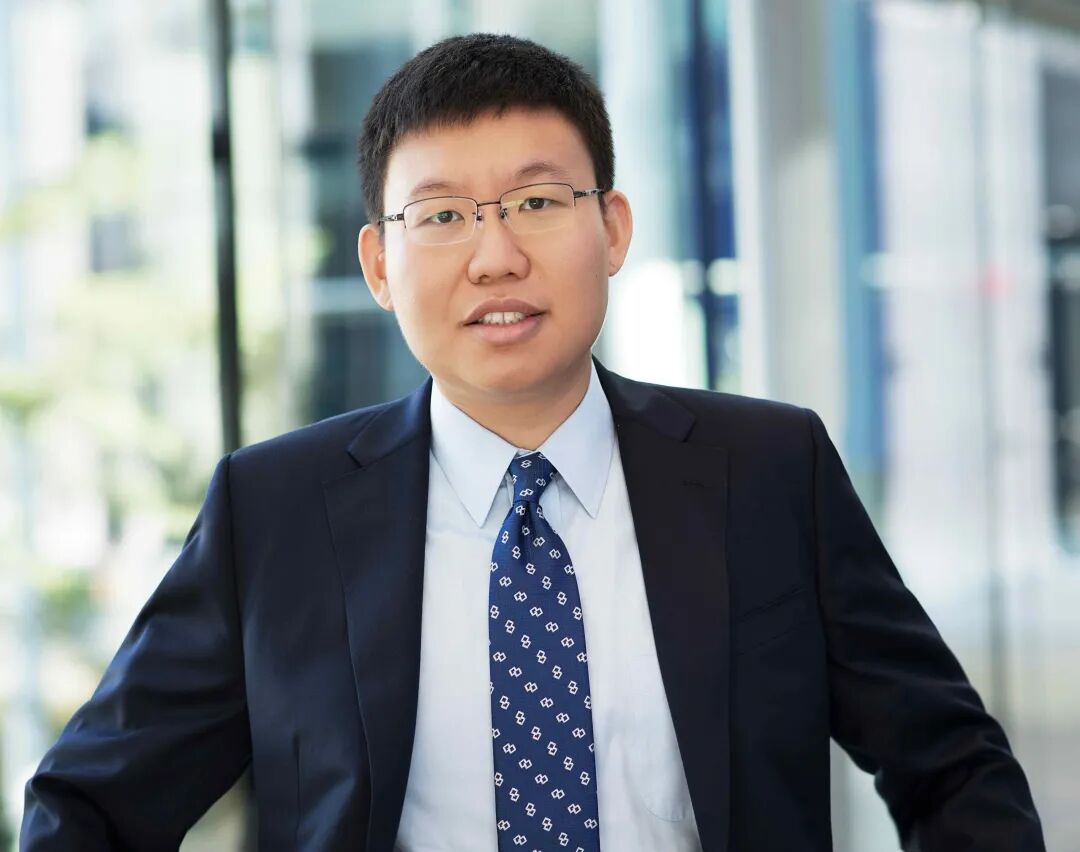
学者简介:
Song Ma is a Professor of Finance and Entrepreneurship at Yale School of Management (SOM) and a Faculty Research Fellow at the National Bureau of Economic Research (NBER). He is also an affiliated faculty member at Yale Law School Center for the Study of Corporate Law and Yale SOM Program on Entrepreneurship. Professor Ma’s main research interests are innovation economics, entrepreneurship, financial economics, AI, and big data. His research also spans to corporate strategy, industrial organization, antitrust, labor, and business law. His research has been featured in top academic journals such as the J ournal of Political Economy, Journal of Finance, Journal of Financial Economics, and Review of Financial Studies , and won numerous research awards.
马松教授是耶鲁大学管理学院金融与创业学教授、美国国家经济研究局(NBER)研究员,同时兼任耶鲁法学院公司法律研究中心及耶鲁管理学院创业项目的教研成员。马教授的主要研究领域包括创新经济学、创业学、金融经济学、人工智能与大数据。其研究还延伸至公司战略、产业组织、反垄断、劳动经济学及商法领域。他的研究成果发表在 Journal of Political Economy, Journal of Finance, Journal of Financial Economics, Review of Financial Studies 等顶级学术期刊,屡获科研奖项。
参考文献:
[1] Chen, X., Hu, A., & Ma, S. (2025). Banks’ Images: Evidence from Advertising Videos (SSRN Scholarly Paper No. 5425916). Social Science Research Network. https://doi.org/10.2139/ssrn.5425916
[2] Cunningham, C., Ederer, F., & Ma, S. (2021). Killer Acquisitions. Journal of Political Economy, 129(3), 649–702. https://doi.org/10.1086/712506
[3] Hu, A., & Ma, S. (2025). Persuading Investors: A Video-Based Study. The Journal of Finance, 80(5), 2639–2688. https://doi.org/10.1111/jofi.13471
| 责任编辑 | 阮天悦 秦雨 |
| 整理翻译 | 陈一凡 张诗怡 |
| 校对 | 马松 |