
徐熠教授谈AER2021创作心得 Yi Xu on AER (2021)
本文最初于 2021 年 11 月 13 日 发布于微信公众号 Impactful Research;2026 年 4 月 28 日 同步至本网站。
Originally published on the WeChat official account Impactful Research on 2021-11-13; mirrored to this website on 2026-04-28.

来源:央视网
作为这个系列的第四篇文章,我们很荣幸邀请到杜克大学徐熠教授分享他与陈钊教授、刘志阔教授和Juan Carlos Suárez Serrato教授的关于中国税收政策和研发创新的合作论文的创作历程。这篇文章于今年七月发表于经济学顶级期刊 American Economic Review ,截止本文刊发时间在Google Scholar的引用量已达到120次。
以下是徐熠教授分享的关于Notching R &D Investment with Corporate Income Tax Cuts in China **(AER 2021)** 这篇文章的创作历程。
Q: 您是怎样发现这一研究问题的?
Q: How did you identify this research question?
A: 2016年暑期,我应邀在复旦大学教授短期课程。期间,我见到了陈钊教授和刘志阔教授。聊天时,他们向我展示了中国制造企业研发投资的一个引人注目的特征——研发投入强度(R&D intensity)主要集中在了3%、4%和5%三个数值上。有趣的是,这些数值恰好是大、中、小企业获得高新技术企业认定的门槛。该项计划为被认定为高新技术企业的公司提供大幅所得税减免,所以数据中所展现出来的研发投入强度分布是非常合理的。考虑到中国的创新政策尤其是企业对政府创新政策的反应是很有趣的话题,我决定加入陈钊和志阔来一起思考这个问题。
A : During the summer of 2016 I gave a short course at Fudan University and had a chance to meet with Professors Zhao Chen and Zhikuo Liu. During our chat, they showed me a striking pattern of the R&D investment by Chinese manufacturing firms—their measure of R&D intensity are mostly clustered at a few values of 3%, 4%, and 5%. Interestingly, these are the thresholds that large, medium, and small firms need to qualify for the Chinese InnoCom Program. The program gives substantial corporate income tax cut for a firm with the InnoCom certification, so it makes a lot of sense that we observe these patterns in the data. The topic of Innovation Policy in China and in particular firm response is really fascinating so I decided to join Zhao and Zhikuo to think about it together.
A : 那次会面后不久,我回到美国并开始与我的同事、公共财政方面的专家Juan Carlos Suárez Serrato教授进行进一步的头脑风暴。Juan Carlos很快地指出了公共财政中运用“聚束(bunching)”方法的相关文献。尽管原始数据中呈现的特征在简单描述中国公司研发(R&D)“聚束(bunching)”现象上极有前景,我们并不想止步于此。于是,我们又花了几个月的时间才真正厘清研究问题。
A : Shortly after that meeting, I travelled back to the U.S and started to regularly further brainstorm with my colleague Juan Carlos Suárez Serrato who is an expert in Public Finance. Juan Carlos quickly pointed me to the relevant PF “bunching” methodology literature. However, while the raw data pattern is extremely promising, we do not want to simply write a descriptive paper about “bunching” of Chinese firm R&D. At the end, it took us another few months to really settle on a well-defined research question.
A : 我们团队首先尝试将企业研发活动的“聚束(bunching)”与大量有关研发和生产力的实证文献联系起来。我们认为,一旦弄清楚中国企业的生产力是否受到政策性研发的影响,我们至少可以开始讨论中国创新政策的“成本与收益”。
A : The research team’s first attempt is to connect the “bunching” of R&D to the large empirical literature of R&D and productivity. We think once we figure out whether Chinese firm’s productivity is affected by the policy-induced R&D, we can at least start to talk about the “cost-and-benefit” of the Chinese Innovation Policy.
A : 对“成本和收益”数值的初步估计看起来比一篇简单的“聚束(bunching)”论文更有价值。但是,有一个问题一直困扰着我们:这一政府创新补贴计划(高新技术企业认定)看起来是一项非常无效的政策——政府根据研发门槛,大幅减免针对企业利润的税收——与标准的研发税收抵免相比,大多数经济理论发现这样的安排会更扭曲。那么,中国政府决定采用这种方式的动机是什么?
A : The initial estimate of the “cost-and-benefit” number seems more valuable than a simple “bunching” paper, however, one question keeps bothering us: the InnoCom program looks like a very ineffective policy – the government gives the firms large tax cut on their profit based on a R&D threshold – most economic theories would find such an arrangement way more distortionary compared with a standard R&D tax credit. Why the Chinese government decided to use such a scheme?
A : 我们的进一步尝试是与更多的业界专家交谈,以了解研发政策在现实中的运作细节。有一次,我们甚至与帮助中小企业申请“高新技术企业”的中介机构进行了几次“卧底”对话。我们很快意识到,公司报告的研发支出可能与实际支出大相径庭。这确实有助于理解为什么中国政府决定发放认证证书而不是研发税收抵免——高新技术企业认定计划是将审计工作重点放在小部分达到门槛的公司身上,而研发税收抵免政策将涉及审计更多的公司,这可能会进一步削弱行政执法能力。
A : Our second attempt then involves talking to more industrial experts to figure out the details of how R&D policy works in reality. At one point, we even had a few “undercover” conversations with intermediaries who helped SMEs with “high-tech firm” applications. We soon realized that firms’ reported R&D expenditure could differ non-trivially from what they actually incur. This really helps to shed light on why the Chinese government decides to adopt certification program rather than R&D tax credit – instead of focusing their auditing effort on a small subset of firms who meet the threshold, a R&D tax credit policy would involve auditing much larger number of firms and could further weaken the administrative capacity of enforcement.
A : 在我们解决了这个困扰的核心问题之后,我们最终做好了启动整个课题的准备。我们建立了一个结构模型。在这一模型中,公司既投资了真实的研发活动,但同时也重新标记了部分非研发费用以符合政府计划的资格。该模型可以合理化数据呈现的“聚束(bunching)”规律,但更重要的是,该模型还将指导我们思考政府如何激励真实的研发活动以及如何影响公司生产力。
A : Once we had this central piece of the puzzle, we finally felt ready to launch our full-blown project. We write down a structural model of firms investing in real R&D but meanwhile also relabel part of their non-R&D expense to qualify for the government program. The model can rationalize the data bunching patterns, but more importantly, will also guide our thinking in terms of how governments incentivize real R&D and how it impacts firm productivity.
A : 总而言之,就像许多实证课题一样,我们的研究问题离不开团队的努力和漫长的深化过程。回想起来,令我们感到欣慰的是寻求对核心经济机制的更深入理解最终得到了回报。
A : To sum up, just like many empirical projects, our research question takes a team effort and a slow evolution process. In retrospect, we are glad that the search for a deeper understanding of the core economic mechanisms eventually pays off.
Q: 从您的角度看,这篇文章具有如此重大影响力的主要原因是什么?
Q: From your perspective, what are the main reasons that make this paper a high impact research?
A : 由于我们的论文刚刚在今年7月在AER上发表,我还不会称之为“高影响力研究”。但从引文的趋势来看,确实颇有希望。我们之所以希望也预计这项研究有影响力有以下几点原因。首先,中国一直是世界上最重要的新兴经济体之一。经济学界有兴趣了解其创新政策和增长轨迹。特别是对于如何解释中国专利数量激增和研发支出迅速增加的问题,学界一直存在着激烈的争论。我们的研究有助于一般受众通过详细的微观级数据来理解这些重要问题。其次,虽然大量研究探索了政府补贴对企业研发及其后续生产力的积极影响,但很少有人研究重新标记研发费用的问题。事实上,这种现象在新兴经济体和发达国家都存在。而且基于企业的策略性应对来比较创新政策的设计本身就是一个新颖而有趣的研究方向。最后,我们的论文还将影响研究人员在实证研究中运用广受欢迎的“聚束(bunching)”方法。最近,关于“聚束(bunching)”方法可以识别什么与它不能识别什么引发了讨论, 我们希望这一成果也有助于说明:将结构模型与“聚束(bunching)”方法相结合,能够有效衔接和厘清对各种简约式(reduced-form)估计结果的解释。
A : Our paper was just published at AER this past July, so I won’t call that a “high impact research” yet, but the citation trends do look promising. I think there are several reasons why we hope and expect the research to be influential. First, China has been one of the most important emerging economies in the world. The Economics research community has a genuine interest to understand its innovation policy and growth trajectory. In particular, there has been an active debate about how to interpret the exploding number of patents and the rapidly rising R&D expenditure in China. Our study helps the general audience to digest these important issues through the lens of detailed micro-level data. Second, while large number of studies have investigated the impact of government subsidy on firm R&D and its subsequent productivity benefit, few have looked into the issue of R&D relabeling. In fact, this phenomenon exists in both emerging economies and developed countries. Comparing the design of innovation policies under strategic firm response by itself is a novel and interesting research direction. Finally, our paper will also influence how researchers utilize the vastly popular “bunching” approach in empirical research. There has been recent methodological debate about what the “bunching” method could identify vs what it could not. Our work, hopefully, also contributes to this discussion by illustrating that: combining a structural model with the “bunching” method could help bridging and clarifying the interpretation of various reduced-form estimates.
Q: 在这篇文章写作与修改过程中最大的挑战是什么?
Q: What was the greatest challenge during the writing and revision of the paper?
A : 这个课题包含了多个话题,包括重新标记和研发政策。没有一位合作者对这些话题有过大量研究。我们的研究方法还包括各种简约式(reduced-form)和结构方法(structural methodology)。所有这些都意味着我们的论文需要说服来自不同背景的审稿人。我们不得不多次改写这篇论文,主要是为了探索如何突出文章内容的创新性。不可避免的是,最初几次投稿中也有几个质疑我们模型和估计策略的审稿人。我们非常严肃地对待所有负面的审稿意见,并在最初几次拒稿之后做了大量修改以表明稳健性。最终,我们得以说服AER的几位审稿人。
A : It is a project that covers topics, like relabeling and R&D policy, that none of the co-authors have written extensively about. Our research approach also encompasses various reduced-form and structural methodologies. These all mean that our paper needs to convince a mixed set of referees from very diverse background. We had to write the paper multiple times, mostly to experiment with how to highlight the novelty of our message. Inevitably, we also had a few suspicious referees for our modeling and estimation strategies in the initial submissions. We took all the complaints very seriously and made a lot of changes to provide robustness checks after the earlier rejections. Eventually we were able to turn around the few repeat referees at the AER.
Q: 您对于青年学者创作有影响力的高质量研究有什么建议?
Q: Do you have any advice for junior scholars on how to produce impactful high quality research?
A : (我对青年学者)有几个小建议。首先,开始一个新的课题总是令人兴奋的,但要完成有影响力的研究就需要我们不断挑战自己,不断拷问自己为什么读者应该关心这个课题。完成一个有影响力的研究通常需要多次反复才能逐渐突出论文的关键内容。其次,充分的耐心对产生高质量的研究非常重要。新课题往往需要我们掌握新的建模技能、处理新数据,并撰写多个版本的论文。故而, 毅力对于整个研究过程至关重要。最后,考虑到日益水涨船高的经济学论文发表标准,论文往往需要从各个方面都看起来无懈可击。所以,拥有具有互补技能并能够与你不断争论利弊的合作者是一件十分幸运的事。
A : There are a few quick suggestions. First, it is always exciting to start a new project, but to produce impactful research will need us to keep challenging ourselves. Keep asking yourself why the readers should care about the project. It often takes multiple iterations to sharpen the key message of the paper. Second, having sufficient amount of patience is really important to produce high quality research. New projects often need us to pick up new modeling skills, to work with new data, and to write many versions of the same paper. Perseverance is crucial for this whole process. Finally, the ever-rising standard of publishing in Economics requires a paper to be bullet-proof on multiple dimensions. Having co-authors who have complementary skill sets and who can keep debating about pros and cons with each other is a big blessing.
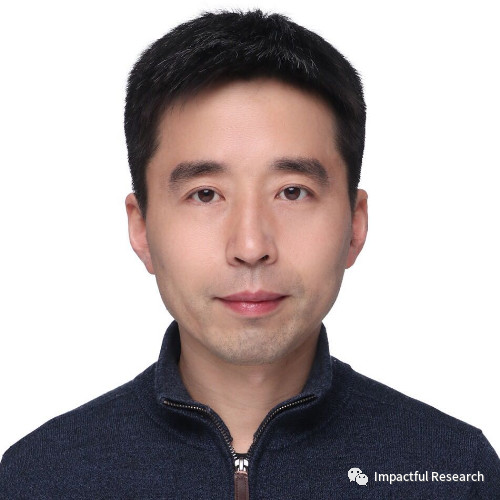
学者简介:徐熠是杜克大学经济系教授,美国国家经济研究局(NBER)研究员。徐熠教授的研究课题涵盖生产力、国际贸易和产业组织。他目前是Review of Economics and Statistics的联合主编、Rand Journal of Economics和 AEJ: Applied的副主编。他曾担任Journal of Development Economics的联合主编,以及Economic Journal、Journal of Industrial Economics、Journal of International Economics、Quantitative Economics和Review of Economics and Statistics的副主编。
Daniel Yi Xu is a Professor of Economics at Duke University and a faculty research associate of the National Bureau of Economic Research. Professor Xu’s research lies at the intersection of Productivity, International Trade, and Industrial Organization. He is currently the co-editor of the Review of Economics and Statistics and an associate editor of the Rand Journal of Economics and AEJ: Applied. He previously served as the co-editor of the Journal of Development Economics, and associate editor for the Economic Journal, the Journal of Industrial Economics, the Journal of International Economics, Quantitative Economics, and the Review of Economics and Statistics.
参考文献:
Chen, Zhao, Zhikuo Liu, Juan Carlos Suárez Serrato, and Daniel Yi Xu. 2021. “Notching R&D Investment with Corporate Income Tax Cuts in China.” American Economic Review , 111 (7): 2065-2100.
| 责任编辑 | 秦雨、韩亚婕、潘颖豪 |
| 校对 | 徐熠 |