
史丽燕教授谈JMP创作心得 Liyan Shi on Their Job Market Paper
本文最初于 2023 年 1 月 18 日 发布于微信公众号 Impactful Research;2026 年 4 月 28 日 同步至本网站。
Originally published on the WeChat official account Impactful Research on 2023-01-18; mirrored to this website on 2026-04-28.
来源:Google图文
从上个找工作的季节开始,我们开辟了一个新的专题,采访那些过去几年中市场上冉冉升起的新星,听他们分享一篇有影响力的“就业市场论文”背后的故事。
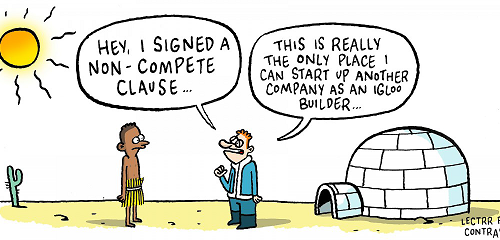
这个公众号的第六篇文章,我们邀请到史丽燕分享她的job market paper的创作历程和对青年学者及博士生的建议。史丽燕教授目前在卡内基梅隆大学Tepper商学院担任助理教授,她的job market paper “Optimal Regulation of Noncompete Contracts” 研究了竞业禁止雇佣合同的规定,评估了限制竞业禁止合同的最优政策,扩展了现有理论的假设,填补了工作搜寻框架在竞业禁止条款方面的理论空白,还补充了新的相关实证证据。
史丽燕主要从事宏观经济学、企业动态、劳动搜寻和契约理论的研究。她的其他论文研究了Covid-19的最优隔离和检测政策问题,信息不对称的竞争资产市场中的回购期权问题,以及具有道德风险、有限承诺和昂贵终止的动态一般均衡设定下的高管薪酬问题。
以下是史丽燕教授分享关于Optimal Regulation of Noncompete Contracts 这篇文章的创作历程。
#本期访谈主要问题
1. 你是怎样发现这一研究问题的?之前有过其它尝试吗?
2. 在这篇就业市场论文的写作与修改过程中,最大的挑战是什么?
3. 在您看来,能让这篇文章最终发表在 Econometrica 的主要原因是什么?
4. 您在去美国任教之前曾在欧洲工作过几年。您可以比较一下年轻经济学家在欧洲和美国的工作环境吗?
Q1:你是怎样发现这一研究问题的?之前有过其它尝试吗?
Q1:How did you find the research idea? Any other trials before seizing this idea?
我非常愿意和大家分享我的故事,这其中有许多尝试和失败。希望这个故事能激励到那些正在寻找感兴趣的研究课题的博士生们。
It is a story I’d very much like to share. It was a lot of trial and error and experimentation. And I hope it is an encouraging story for any Ph.D. student out there who is searching to find exciting new ideas to work on but doesn’t immediately find one.
我很晚才开始写我的就业市场论文,大概是博士学习第五年的后半段。在此之前我尝试了很多项目,但是都中途放弃了。刚读研究生的时候,我用一种姑且称之为基于文献的“组合”方法来研究问题。我会读一篇关于A的论文,然后是一篇关于B的论文,这些论文可能是我上课看到的。然后,找出这些论文里所有的要点,尝试把它们拼在一起。但这样我难免会只想出一些循规蹈矩的题目,比如“A和B”或者“A,B和C”。总体来说一些衍生型的研究课题。我当时对企业动态、创新和知识产权很感兴趣,有一段时间我在这些话题上尝试了大量的排列组合,但它们都很快夭折,因为我没办法回答我导师和研讨会听众们提出的基础问题:你的问题是什么?为什么它很重要?更重要的是,我对这些项目并未感到兴奋,也不确信自己能做成功,所以我一直在改变和放弃项目。
I started working on my job market paper very late in my Ph.D. studies, sometime during the second half of my fifth year as a grad student. There was a long list of unfinished projects that I had worked on and abandoned. In my early graduate student days, I approached research with a method, let’s call it the literature-based “combinatory” method, for lack of a better name. I would read a paper on A and another paper on B, probably from classes I was taking, work out all the nuts and bolts in these papers, and then try to put the two together. I would also inevitably come up with unimaginative titles like “A and B” or even “A, B, and C.” Overall, something marginal and derivative. I was interested in topics on firm dynamics, innovation, and intellectual property rights, and for a while I made numerous combinatory attempts on these topics. These projects would die a very early death, because I struggled to answer the basic questions from my very wise advisors or seminar audiences: What is the question you are after? Why is it important? The real struggle was that I wasn’t so excited and convinced about these projects, so I kept changing and tossing out projects.
当我又在一个学生研讨会上展示了我的组合项目之后,我的一位教授建议我先把手头的工作放一放,停止钻研文献,而是只阅读报纸,寻找一些我真正感兴趣能触动我的东西。 于是,那个周末,我整理了一叠《经济学人》,坐下来,准备把每一期都好好读一读,从头读到尾。出乎意料的是,才读到第二期,我便读到了一篇关于美国市场流动性下降和讨论竞业禁止条款(一种限制员工在一段时间内从事其它工作的条款)作用的深度报道。当我读这篇文章的时候,我发现那些之前我一直试图连接的点都被连接了起来,一篇论文就这样在我的脑海里形成了。这篇论文成为了我的就业市场论文。其实它几乎就是我一直想写的那篇文章,只不过我没办法根据现有的文献来提出问题,从而找到一个好角度来切入。
After another student seminar in which I presented a project with a combinatory idea, a professor of mine suggested that I should put aside what I was busy with, stop digging into the literature, and instead just read the newspapers and find something that speaks to me. So, that weekend I sat down with my stack of The Economist issues and decided I would flip through every issue from cover to cover. To my surprise, it was only in the second issue I read an in-depth report on the declining market fluidity in the U.S. and discussions on the role of noncompete clauses, a type of clauses that restrict employees from taking other jobs for some period of time. As I was reading the article, I saw all the dots I have been trying to connect being connected and a paper forming in my head. That became my job market paper. It is more or less the same paper that I’ve been trying to write all along. It’s just that I couldn’t find a good angle to crack it by posing questions based on the existing literature.
我觉得通过阅读文献,我们能学到很多东西。特别是当学生的时候,我学到了很多方法和工具,学会了如何写论文。但是它可能不是新想法、问题和灵感的最佳来源,至少它并不完整,应该与其它来源相辅相成,这些来源展示了大量的问题供我们研究。 作为学者,我们相对于报道经济问题的记者的优势就在于我们能将问题规范化,并提供严谨的答案。
I think we learn a great deal from reading papers. Particularly as a student, I learned about methods and tools, and I learned how to write papers. But it may not be the best source to find new ideas, questions, and inspirations. At least it is not the complete source and would be best complemented with other sources which present a wealth of issues for us to investigate. The advantage we as researchers have over journalists reporting on economic issues is being able to formalize the problem and provide a rigorous answer.
大概也是读《经济学人》关于竞业禁止条款的文章的那段时间,我还在看美国家庭电视台(HBO)播出的电视剧《硅谷》。这是一部关于一群硅谷科技创业年轻人的喜剧,它以诙谐幽默的方式描绘了很多复杂的经济商业问题。第二季大结局有一个很大的悬念(剧透提醒!),涉及竞业禁止条款。剧里的主人公Richard曾在一家科技巨头工作,在空闲时间发明了一种革命性、颠覆性的算法,然后他辞掉了工作去开了一家新的创业公司。但Richard的前雇主将他告上了法庭,声称Richard曾用过公司的电脑来编写他的算法,因此,根据Richard的雇佣合同,这份代码的知识产权是属于公司的。就在我们的主角要输掉官司的时候,仲裁人注意到Richard的合同里有一条竞业禁止条款,这违反了加州明令禁止竞业禁止条款的法律,也让这份合同本身丧失了法律效益。于是局势逆转,那个雇主对于知识产权的任何要求都被法庭拒绝了。可能在我开始认真把竞业禁止和知识产权作为研究问题来研究之前,关于这些话题的戏剧性刻画就已经燃起我对竞业禁止条款的兴趣和好奇心了。
Around the same time as reading The Economist article, I had been watching an HBO show Silicon Valley. It is a comedy series about a bunch of Silicon Valley tech startup guys and takes a witty, comical spin in portraying many complicated economic and business issues. The second season finale has a big cliffhanger (spoil alert!) involving noncompete clauses. The hero of the story, Richard, had worked for a tech giant, created in his spare time a revolutionary disruptive algorithm, and quit his job to build a new startup. Richard’s ex-employer took him to court and claimed that Richard had at one point used the company computer to code his algorithm, which, according to his employment contract, entitles the company to the ownership of the underlying I.P. As our hero was about to lose the battle, the plot reversed when the arbitrator noticed a noncompete clause in Richard’s employment contract, which violates California’s ban on these clauses. As such, it would make the entire contract void and unenforceable and deny the employer any potential claims to the I.P. ownership. This dramatic depiction of noncompete and the I.P. battle probably had ignited my interest and curiosity in noncompete clauses before I started to take a serious stab at it as a research question.
Q2:在这篇就业市场论文的写作与修改过程中,最大的挑战是什么?
Q2:What was the greatest challenge during the writing of the paper (as a job market paper)?
大体思路我很快就想明白了,微调关键要素和问题也很容易:竞业禁止条款在阻止劳动者获得更好的工作方面是不好的,但却很有利于保护企业投资。这就产生了关于竞业禁止的优劣比较以及是否应该进行监管的分歧。
The general idea became clear immediately. It was also quite easy to fine-tune the key elements and issues: Noncompete clauses are bad in preventing workers from taking on better jobs, but they can be good in protecting firm investments. That lies the disagreement about the merits of noncompetes and whether they should be regulated.
但这里也不乏挑战。第一个挑战是解决理论问题:为什么雇主要制定竞业禁止条款?是强制执行的吗?执行竞业禁止似乎不是一个好主意,它只是烧钱,为什么雇主不制定更明智的合同?如果员工是自愿签署这些合同,是否有政策干预的空间?当我去细读实际的合同和实践时,我发现这些合同比最初我看到的要明智得多。 一些合同规定了买断期权,雇员或者新雇主可以支付一定的费用来消除竞业禁止的限制。即使没有明确规定买断期权,当事各方也有可能之后来谈判买断。所以买断成为了我的模型中竞业禁止条款如何起效的一个机制。
There was also no lack of challenges. The first challenge is tackling the theory: Why are employers writing noncompete clauses? Are they enforced? Why are employers not writing smarter contracts because enforcing noncompetes doesn’t seem to be such a good idea since it is just “burning money?” Is there scope for policy intervention if employees willingly sign these contracts? As I looked into the actual contracts and practices, I found that the contracts are much smarter than they initially appeared to be. Some contracts specify a buyout option, which the employee or the new employer could pay a fee to eliminate the noncompete restriction. Even when the buyout option is not explicitly specified, it is possible that the parties involved can come together and negotiate a buyout afterward. So buyout became an important element of how noncompete clauses work in my model.
我记得有一天,我向一位来加州大学洛杉矶分校(UCLA,就是我念博士的地方)的研讨会发言的学者介绍我关于竞业禁止的想法,并解释买断是如何运作的。他说:“噢,你在说内马尔!” 我对足球一无所知,他的话把我搞糊涂了。在他解释了内马尔从巴萨转会到巴黎圣日耳曼的2亿多欧元转会费之后,我想:噢,还真是内马尔!许多次类似这样的、或和我的导师或和别人的对话,促使我更深入地思考这个问题 ,涉及到的话题从破损产品设计、专利保护、婚姻法到体育经济学。这真的很有趣!
I remember one day, I told my noncompete idea and explained how buyout works to a seminar speaker who came to give a talk at UCLA, where I was doing my Ph.D. studies. He said: oh, it is Neymar! Ignorant of the world of soccer, I was completely lost by his comment. After he explained Neymar’s 200 million euro or so transfer fee for moving from Barcelona to Paris Saint-Germain, I thought: oh yeah, it is Neymar! Many conversations like this with my advisors and others pushed me to think deeper about the issue , relating to topics ranging from damaged goods product design, patent protection, and marriage law to sports economics. This part was just so much fun!
与此同时,我阅读了很多关于契约理论和组织经济学的论文以及一些法律学者的论文,尝试自学契约理论。我在相关问题上找到了很多可借鉴的见解。 例如,当下游企业终止现有合同并转向新的供应商时,上下游企业之间通常会在合同里规定一个损害赔偿。Aghion和Bolton写过一篇非常有意思的文章,名为 “Contracts as a Barrier to Entry” ,是关于损害赔偿如何为新供应商制造进入壁垒的(Aghion and Bolton,1987)。我借鉴了这篇文章并将其应用于竞业禁止条款。
At the same time, I read many contract theory and organization economics papers, as well as papers by legal scholars, and tried to teach myself contract theory. I found many rich insights on related issues to build on. For example, contracts between upstream and downstream firms often specify damage payments when a downstream firm terminates the existing contract and switches to a new supplier. Aghion and Bolton (1987) wrote an amazingly insightful paper on how the damage payments create a barrier to the entry of new suppliers, titled “Contracts as a Barrier to Entry,” which I borrowed and applied to noncompete clauses.
第二个挑战是数据。我们可能从报纸或者朋友们的经历里听说很多关于竞业禁止的轶事。马里兰大学的教授Evan Starr在竞业禁止条款方面做了大量的实证工作,他率先对竞业禁止协议进行了调查,并发现它们非常普遍。也有人手工收集了公开披露的上市公司的高管合同。但是,关于谁签署了竞业禁止条款和具体条款的全面数据仍然有限。我就想,为什么不用人工智能和自然语言处理的工具来搜集和阅读合同呢? 因此,我收集了大量的合同样本,这样我们就能知道哪位企业高管受到竞业禁止的约束,以及约束的期限有多长。
The second challenge is data. There are many anecdotal stories of noncompetes from newspapers and friends. Evan Starr from Maryland, who has done so much empirical work on noncompete clauses, had pioneered surveys on noncompete agreements and found them to be very prevalent. There is also work with hand-collected contract data for executives in public-listed firms. But still, there is limited comprehensive data on exactly who signed noncompete clauses and the exact terms. I thought why don’t I scrap the executive contracts and use machine learning and natural language processing tools to read the contracts? So I did and collected a large sample of contracts, which allows us to know which executive is subject to a noncompete and for how long.
Q3:在您看来,能让这篇文章最终发表在 Econometrica 的主要原因是什么?
Q3:From your perspective, what are the main reasons that this paper could finally get published at Econometrica?
我猜是尽最大可能的去解决上述的挑战,以及把理论模型和数据放在一起来回答一个与政策非常相关的问题吧。
I guess finding ways to tackle the challenges above? Putting theory model and data together to address a question that is very relevant to policy?
竞业禁止条款本身存在很大政策法规上的争议。这些合同的反竞争效应越来越多受到关注。 比如,美国联邦贸易委员会最近提议禁止几乎所有的竞业禁止合同。同时,我们对于这些合同的理解还是有限,存在空缺,我的研究试图填补一些空缺。
There has been a lot of policy discussion and debate about noncompete clauses. There is a growing concern about their anticompetitive effects. For example, the Federal Trade Commission recently proposed a new rule that would ban almost all noncompete agreements. At the same time, there is a gap in our understanding of these clauses. My paper tries to fill some of the gap.
Q4:您在去美国任教之前曾在欧洲工作过几年。您可以比较一下年轻经济学家在欧洲和美国的工作环境吗?
Q4:You spent a few years in Europe before working in the United States. Would you like to compare the working environment for junior economists in Europe and US?
我认为在做研究方面没有什么不同。 在我转到卡耐基梅隆大学做现在的工作之前,我在罗马的埃诺迪金融与经济研究所(EIEF)工作了几年。对我来说,这两个地方都很好,有很棒的同事和导师。
There is really no difference that I see in terms of doing research. I worked at the Einaudi Institute for Finance and Economics (EIEF) in Rome for a few years before moving to my current job at Carnegie Mellon University. Both are great places for me, amazing colleagues and mentors, and to stay well connected.
我想这个公众号的读者可能非常熟悉诸多美国大学工作的吸引力。或许我可以分享一些我在欧洲的工作经验,或许还有一些相对来说大家不太熟知的在欧洲工作的好处。 当我在EIEF的时候,每年我教半门硕士课程,大概20多个小时,这远远低于美国大学的标准教学负荷。作为一个刚工作的年轻学者,这让我可以非常专注于我的研究项目。不少欧洲国家提供税收优惠来吸引高技能人才,例如,意大利为移居该国的研究人员提供了非常慷慨的免税政策,以防止“人才流失”问题。这些政策提高了欧洲教职工作的薪酬竞争力。
I think the readers of this blog probably may know very well all the appeals of university jobs in the U.S. Perhaps I could share a bit about my experience working in Europe and maybe the less well-known benefits of some of the European jobs. While I was at EIEF, every year, I taught half a course for a small selective group of master’s students for about twenty-something hours, much lower than the standard U.S. teaching load. As a junior just starting out, I had very little other responsibility that took time away from my research projects. Many European countries provide tax incentives to attract highly skilled talents. For example, Italy has a very generous tax exemption for researchers moving there to prevent the “brain drain” problem. These policies have helped to bring the compensation for European jobs to be more competitive.

学者简介:
史丽燕教授目前在卡内基梅隆大学Tepper商学院担任经济学助理教授,同时在经济政策研究中心(CEPR)担任研究员。此前,她于2009年在北京大学取得本科学位,2010年在牛津大学取得硕士学位,2018年在加州大学洛杉矶分校取得博士学位。她的研究领域包括宏观经济学、企业动态、劳动搜寻和契约理论。
参考文献:
Shi, Liyan. “Optimal Regulation of Noncompete Contracts.” Econometrica, forthcoming.
Aghion, Philippe, and Patrick Bolton. “Contracts as a Barrier to Entry.” The American Economic Review 77.3 (1987): 388-401.
| 责任编辑 | 秦雨 |
| 整理翻译 | 庞乃琛 |
| 校对 | 史丽燕 |