
杨立岩教授分享如何做出好的研究 Liyan Yang on Doing Good Research
本文最初于 2024 年 3 月 25 日 发布于微信公众号 Impactful Research;2026 年 4 月 28 日 同步至本网站。
Originally published on the WeChat official account Impactful Research on 2024-03-25; mirrored to this website on 2026-04-28.
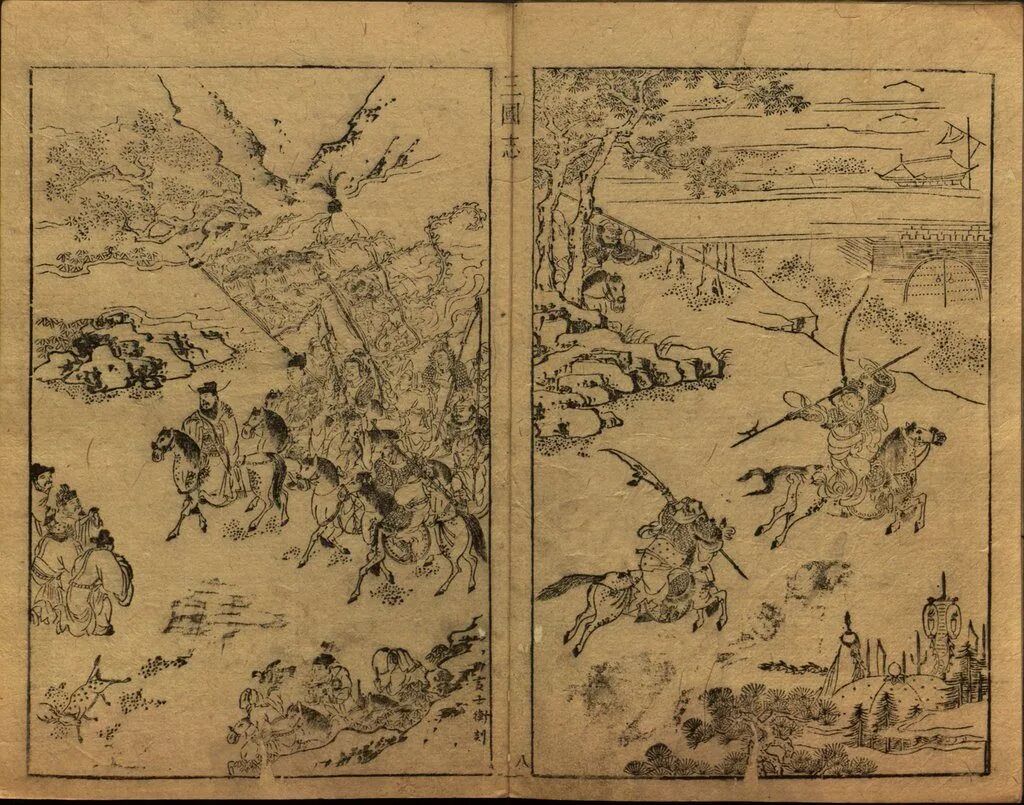
来源:Google图文
这个公众号的第二十篇文章,我们很荣幸邀请到多伦多大学的杨立岩教授分享博士期间以及工作后论文的创作经验。
以下是杨立岩教授分享的创作心得和经验。
本文正文内容约六千字,全文阅读需约二十分钟
#本期访谈主要问题
1. 关于金融市场和信息这一领域的研究兴趣是如何产生的
2. 如何做科研&两篇文章 (JF (2015) & JFE (2019)) 的创作过程
3. 跨领域的阅读学习对研究的影响
4. 对论文的审稿过程和对青年学者的建议
Q1:您关于金融市场和信息这一领域的研究兴趣是如何产生的?
Q1: How did you develop your research interests in financial market and information?
这有一定的偶然性,我在清华读书的时候遇到了很多国外的优秀老师来做特聘教授,尤其是洪永淼老师,我去听了他们的课,发现还挺有趣的,觉得做的东西很严格。在洪永淼老师和田国强老师的鼓励下就去国外读了PhD。
There is certainly a random element in this development. When I was studying at Tsinghua, there were many excellent scholars who were invited from abroad as distinguished visiting professors, especially Professor Yongmiao Hong. I attended their lectures and were fascinated by those lectures, in particular, the rigorous ways of delivering the materials. Encouraged by Prof. Hong and Prof. Guoqiang Tian, I went abroad to pursue a PhD.
我当时最初想跟着洪老师做计量经济学。但说实话我当时并不知道做什么,因为我对每门课都挺感兴趣的。我记得在清华的时候,有一次田国强老师微观课的考试,他说我卷子答错了,我说我没写错,田老师说这个题都用了三十年了,答案肯定没问题。最后他发现是答案错了。田老师和我后来就根据这个题目发了一篇文章发到 Economic Theory[1]上去了。所以当时我感觉我可能可以做经济学理论,觉得这个东西很好玩儿,我喜欢那些有框架的东西,尽管这个框架不一定得是对的,但它告诉你一种方法论,让你对这个世界有所认识。 去到康奈尔之后,我上课感到逻辑性最强的就是David Easley的课,我感觉我当时就喜欢一些逻辑性很自洽的东西。
Initially, I intended to study econometrics research under Prof. Hong’s supervision. However, I was unsure of my path at the time as I was interested in almost all subjects. I recall a moment at Tsinghua when Prof. Tian graded an assignment in advanced microeconomics exam. He insisted I had answered wrongly, but truly believed that my answer was correct. Eventually, it turned out that the solution manual was wrong. Prof. Tian and I later developed a paper based on that question and published it in Economic Theory. This experience made me realize my interests in economic theory. I found it intellectually stimulating and enjoyable. I was drawn to frameworks, even though they might not always be entirely correct, they provide a methodological approach that enhances our understanding of the world. At Cornell, I found the content at David Easley’s courses to be the most internally logical. I discovered my penchant for logically consistent concepts.
三年级的时候,我想去做金融,David就建议我去把金融学所有的课都上一遍,尤其是MBA的课,这个确实有用,而且最好是做教学助理(Teaching Assistant),这样子下来就知道金融学的思维方式是什么样的。 洪老师也建议我去听David的建议,多上点课。我就上了所有的课,包括MBA的课、PhD的课,有一个好处是,每个金融PhD的课都要写一个课程论文,这些最后成了我找工作的时候的文章组合。
In my third year at the PhD program, when I expressed my interests finance, David suggested that I take finance courses in the Johnson school, especially those offered in MBA program. He emphasized the importance of becoming a Teaching Assistant at the finance program, which proved immensely beneficial. This allowed me to grasp the mindset underlying financial studies. Prof. Yongmiao Hong and Professor Ming Huang also endorsed David’s advice, encouraging me to take as many courses as possible. Consequently, I enrolled in various courses, including those in the MBA and the PhD programs. One significant advantage was that each finance PhD course required a term paper, which eventually formed the basis of my job application portfolio.
我一开始是研究行为金融的,我听了很多课之后,感到黄明老师的风格最适合我,他的课是逻辑自洽的,我喜欢逻辑性强的事物。当时,我毕业论文其实是研究行为金融,不是研究信息的。我研究信息是因为上Maureen O’Hara的课要写一个课程论文,那个时候我写了一个关于信息的文章。我在博士三年级的时候确定自己做金融,到五年级去找工作,把自己的课程论文都放在一起做成一个组合。当时去面试的时候,有的学校的面试官问我到底是研究什么的。记得有所学校还画了一个坐标,横坐标资产定价、公司金融,纵坐标实证理论,让我给自己找一个定位。其实我感到自己就是在经济系里学了一套方法论,然后用之来研究不同的金融问题而已。
Initially, my focus was on behavioral finance. After attending various courses, I found Prof. Ming Huang’s teaching style to be the most compatible with my preferences. His classes were logically coherent, which resonated with my inclination towards logical consistency. Interestingly, my graduate thesis initially delved into behavioral finance rather than information studies. It was during Maureen O’Hara’s class that I started to explore information economics, prompted by the requirement to write a term paper. By my third year of doctoral studies, I had decided to specialize in finance. As I approached my fifth year, the time for job search was close and I complied my term papers into a job application portfolio. During interviews, some school’s interviewers asked me about my specific research focus. I recall one instance where a school even drew a coordinate system, with asset pricing and corporate finance on the horizontal axis and empirical theory on the vertical axis, asking me to position myself. In reality, I felt I had acquired a methodological toolkit in the economics department, which I applied to various financial issues.
还有一件事,我当时都找到工作了,却还没有一篇独作的文章,我其中的一个导师Larry Blume让我写一篇独作文章才能毕业,当时我就写了一个市场选择的文章[2](最后通过了Larry的要求后,还是和David合作一起发到 Journal of Economic Theory 上了)。所以我怎么开始研究信息的呢?我前三年没什么文章发表,那个时候也挺困惑的。当时读了很多和信息有关的文章,并且关注的很多现象都和信息有联系,那段时间就发展兴趣到金融市场上去了。
There’s another noteworthy event: despite having secured job offers, I hadn’t authored a single standalone paper. Larry Blume (one of my supervisors) insisted that I write one before graduating, so I penned an article on market selection (after meeting Larry’s requirement, David and I collaborated to publish it in Journal of Economic Theory). So, how did I transition to studying information then? In my first three years, with no publications, I was quite perplexed. However, I delved into numerous articles related to information and noticed how many phenomena were intricately linked to it in this period, sparking my interest in financial market.
总结一下,我的选择很大程度上是碰碰撞撞过来的,但背后也有它的逻辑线,就是我喜欢一个有框架的东西。 资产定价是个有框架的东西,信息也是一个有完整框架的东西。这个路径可能有点儿像现在的AI一样,有个大致的方向,然后在这个方向上不断地偏离和学习。
To sum up, my trajectory was largely a result of trial and error, but there was a logical thread underlying it: my preference for structured frameworks. Asset pricing provides such a framework, as does information. This journey somewhat resembles the process of AI today, with a broad direction guiding continual deviation and learning within that framework.
洪老师是我在学术上的领路人,他在很多大事儿都给我很重要的指导,也提携了很多学生和后辈,是一个人生导师。 我认识洪老师的时候他早就功成名就了,但洪老师就想着多帮点人,多培养一些学生。其他很多老师都给过我很多切实的帮助和指导,例如田国强老师、黄明老师、樊丽明老师、黄少安老师等。
Professor Hong was my academic mentor, offering critical advice in many significant moments of my career and nurturing numerous students and juniors in his life. He served as a life mentor. When I met Prof. Hong, he was already a renowned figure in academia and he remained committed to assisting others and cultivating students. Many other professors also provided me with substantial support and guidance, including Prof. Guoqiang Tian, Prof. Ming Huang, Prof. Liming Fan, and Prof. Shao’an Huang.
Q2:您是如何做科研?您的两篇文章 (JF (2015) & JFE (2019)) 的创作过程是怎么样的?
Q2:How do you do research? What was the writing process like for your two articles (JF (2015) & JFE (2019))?
如何做研究这个问题很多人都谈过了。不同的人肯定有不同的答案。通常来说,做研究大致有三个路子:第一个是读文献(literature-driven) ,看看别人都在干什么,这样相对比较安全,即你去回答这个问题为什么重要,但是发表的门槛比较高;第二个是看大家对哪些话题感兴趣 ,哪个显示问题很重要,迫切需要解决(topic-driven);第三个就是有个自己的agenda,就是脑子里有个自己大致的蓝图 ,知道自己该做哪一方面的东西,或者文献里缺哪一块,现实中哪块重要的问题和自己的agenda相匹配。
The question of how to conduct research has been discussed by many scholars. Different individuals undoubtedly have different opinions. Generally speaking, there are three main approaches to conducting research:
The first approach is literature-driven , where one examines existing literature to understand what others are doing. This approach is relatively safe as it is connected to a topic that is of interests to many academics, but the threshold for publication is also higher.
The second approach is topic-driven , where one identifies topics of interest and urgency, focusing on addressing pressing issues.
The third approach involves having a personal agenda, where one has a rough blueprint in mind. This agenda guides the research direction, ensuring that it aligns with one’s interests and fills gaps in the existing literature or addresses important real-world problems.
举几个例子,一个是和Itay Goldstein合作的关于反馈效应(feedback effect)的文章[3],即关于金融市场如何影响实体经济。这个听上去很简单,但是文献中争论还很多,这一块文献还是很稀缺的,因为它还只存于概念,在现实中很难找到直接证据。我在这方面做了一些理论的文章,做演讲的时候经常碰到的问题会是关于“管理者从市场中获取信息”的反馈渠道,比如公司A准备收购公司B,这是一个投资,但是消息宣告之后股价下跌了,公司A就会反思是不是自己的决定不对,这就是一种反馈效应。做这个领域的人认为这个是很自然的反馈效应的证据,但是很多人不这么想,他们会质疑“内部人士从外部人士获取信息”这件事儿,认为内部人士的信息就应该多于外部人,好奇这些内部人为啥学,学了什么。所以实证的文献里缺一个实锤的证据,我就一直想做这个。我一开始想先做问卷调查,去问搞实体经济的人是否从金融市场里学习信息,学什么样的信息,怎么学。但我看了看在美国做问卷的文章,发现回收率很低,例如发四千份收回四百份,这就存在很大的选择性误差。所以我就在清华访问的时候和刘碧波老师聊,正好他在和中国证监会合作,在做调研,证监会也很关注这个话题,关心金融市场是不是影响实体经济的。我们就2019年开始做,2022年又去做了一轮。这个例子就是说我知道现在这一块文献有一个空缺,而且我也计划要做这一块的研究,所以我做了这个研究去填补这个空缺。
Here are a few examples in my own experience: One is the article I collaborated on with Itay Goldstein concerning the feedback effect, which explores how financial markets influence the real economy. While this topic might seem straightforward, there remain active debates in the literature. It’s because the feedback concept exists largely in theory, and it’s challenging to find solid empirical evidence in reality. In my theoretical articles on this topic, I often encounter questions during presentations regarding the feedback channels through which managers acquire information from the market. For instance, when Company A prepares to acquire Company B and the stock price drops after the announcement, Company A may reassess its decision, demonstrating a feedback effect. Some scholars in this field view this fact as natural evidence of feedback effects, but others may question the idea of insiders acquiring information from outsiders, assuming that insiders should always possess more information than outsiders. They may wonder what insiders are learning and why they learn in the first place. Consequently, there is a lack of conclusive evidence in empirical literature, prompting me to pursue this area further. Initially, I considered conducting surveys on company managers to inquire whether individuals involved in the real economy learn information from financial markets, what kind of information they acquire, and how they acquire it. However, after reviewing survey-based articles in the United States and noticing low response rates, such as distributing 4,000 surveys and receiving only 400 back, I recognized significant selection bias. Hence, while visiting Tsinghua, I discussed this idea with Professor Bibo Liu, who happened to be collaborating with the China Securities Regulatory Commission (CSRC) on research related to this topic. The CSRC was particularly interested in whether financial markets affect the real economy. We commenced our investigation in 2019 and conducted another round in 2022. This example illustrates how I identified a gap in the existing literature, planned to do a research, and consequently employed this research to fill the gap.
再一类是说,我做信息,涉及到很多的层面,一个是市场,一个是实体,市场里有参与者和监管者,参与者有两类,一类是流动性供给者,一类是流动性需求者,也可以分成知情交易者和噪音交易者,这就是一个完整的框架。这就很适合研究金融市场,研究监管的东西。所以我平时没事也去看看SEC的主页(U.S. Securities and Exchange Commission),看看里面有什么新问题,或者我去参会的时候关注一下相关的问题,我知道我的框架能够帮助解决这个问题。举一个例子就是,我和合作者追踪了一段时间SEC主页关于内幕交易的讨论。内部人士肯定也是需要交易的,为了这个问题,北美就有一个交易前计划(pre-trade plan),即准备这个计划的时候没有信息(Material Nonpublic Information, MNPI),比如你准备五个月或者五年之后要交易。但是这个计划也有争议,被认为可能会成为一种保护伞。SEC就想研究两件事,一件是揭露,一件是你不能写一个计划就马上退档,得等一段时间。这个争论了好几年,2022年开始执行这个政策了。我开始做的时候还没人关注这件事情,就写了这个文章[4]。现实中有个事情正在发生,我所熟悉的框架能够帮助理解这件事情。
Another approach, for example, let’s say my research on information. It involves the multifaceted aspects of information, spanning markets and entities. Within markets, there are participants and regulators, with participants categorized into liquidity providers and liquidity demanders. These participants can further be classified into informed traders and noise traders, forming a comprehensive framework. This framework is highly conducive to studying financial markets and regulatory issues. Hence, I sometimes browse the U.S. Securities and Exchange Commission (SEC) website to stay updated on new developments. Additionally, I pay close attention to relevant topics during conferences, knowing that the above framework can help address some issues of interests to others. For instance, my collaborators and I tracked discussions on the SEC website regarding disclosure of insider trading regulations. Insiders certainly engage in trading activities, and in North America, there is a pre-trade plan requirement aimed at addressing this issue. This plan involves preparing trades without having access to Material Nonpublic Information (MNPI), such as planning trades 5 months or 5 years in advance. However, this plan has faced controversy, with concerns that it might serve as a loophole. The SEC has recently implemented two changes: disclosure requirements and cooling-off period. This discussion persisted for several years until the policy was implemented in 2022. When I initially began researching this topic, it wasn’t receiving much attention. The example is to demonstrate that this real-world occurrence aligned with my familiar framework, enabling a deeper understanding of the issue.
再说从文献出发这个思路,Larry不是一定让我写一篇独作文章嘛,我想我要找个题目。我当时做行为金融,当时研究处置效应(disposition effect),那个实际上是一个文献驱动的,都是关于前景理论(prospect theory)的。我找工作的时候,90%的面试都会问到我假设里面全是前景导向的投资者(prospect-theory investor),他们就问如果这里有传统的理性投资者(rational investor),结果会怎么样。当时一个猜测是结果会被削弱,但是不会被颠覆。我发现这个问题大家都感兴趣,这就是个典型的市场选择(market selection)的问题,把两拨人放在一起看谁对市场的影响大,所以就写了一个这样的论文。
Continuing with the approach involving literature-driven, as Larry insisted on me writing a solo-authored paper, I needed to navigate an idea. At that time, I was writing a paper on the disposition effect, which is essentially literature-driven and revolves around prospect theory. During my job search, about 90% of the questions were about the assumption of prospect-theory investors in my research. Interviewers often asked how the results would differ if traditional rational investors were included. One speculation was that the results would be weakened but not overturned. I noticed the broad interest in this question, which epitomized a typical market selection issue—comparing the impact of two groups on the market. Consequently, I wrote a paper to address this question.
刚才你提到的那两篇论文,共同点就是关于不确定性的两个维度。 第一个文章是Itay找我聊的,那个点子是他想的,我们2015年发的[5]。他当时和我聊了一个想法,关于不确定性降低效应(uncertainty reduction effect),现实中有很多这种两个维度的东西,我们就写了一篇文章;第二篇[6]是我的点子,2019年发的,那篇文章其实是我和Itay合作的第一篇论文,当时他还是Wharton的一个助理教授,他来康奈尔的研讨会做报告,我当时是个博士生,有机会去约了和他的一对一聊天。我当时对宏观感兴趣,我知道Itay是做反馈效应和公司金融的,这个点子让我想到了关于中央银行透明度(central bank transparency)的文献。
Regarding the two papers you mentioned, they both involve two dimensions of uncertainty. The first article was initiated by Itay during our conversation, and we published it in 2015. He brought up the idea of the uncertainty reduction effect, which resonated with many real-world scenarios involving two dimensions of uncertainty. Hence, we wrote a paper exploring this concept. The second article, published in 2019, was my idea. It was actually the first paper I collaborated on with Itay when he was still an assistant professor at Wharton. He presented at a seminar at Cornell, and as a doctoral student, I seized the opportunity to schedule a one-on-one discussion with him. At the time, I was interested in macroeconomics, and I knew Itay’s expertise lay in feedback effects and corporate finance. This idea brings to mind the literature on central bank transparency.
Q3:您觉得是不是跨领域的阅读学习对您的研究还是挺重要的?
Q3: Do you think cross-disciplinary reading and studying is important for your research?
对,我认为我还受益挺多的。我从经济学中学到一个方法论,并将它应用到了不同的领域。我上David的决策理论(Decision Theory)的课,这个课对我后来一些文章[7]的建模很有帮助。虽然我上课跌跌撞撞,但是总归是功不唐捐的。你一开始上课就是夯实基础,很多东西一开始学的时候不知道怎么用,到后来才知道有用。
Yes, I believe I benefited a great deal. I acquired a methodological toolkit from economics and applied it across various fields. Taking David’s Decision Theory course proved particularly beneficial for modeling some of my later articles. Despite struggling through the course initially, it wasn’t in vain. Building a solid foundation from the start is essential; many concepts may seem abstract at first, but their utility becomes apparent over time.
不光是经济,历史,甚至小说都有用。 我写过一个文章,讲rational information leakage[8]。那个文章的想法其实和《三国演义》的一个桥段很像。那篇文章我们发现内部人士会把信息故意泄露给一个什么信息都没有的人。这个文章的运作机制其实和荀彧说的“驱虎吞狼”非常像[9]:你把信息透露给一个人,让他帮忙搞别的竞争者。
Not only economics but also history and even fiction can be useful. I once wrote an article on rational information leakage. Interestingly, the idea behind that article bears a resemblance to a scene in “Romance of the Three Kingdoms.” In our paper, we discovered that insiders intentionally leak information to someone who appears to have no information at all. The mechanism behind this article is quite similar to the strategy of “driving tigers and devouring wolves,” as proposed by Cao Cao’s chief advisor, Xun Yu: a well-informed trader leaks information to someone, who in turn trades on this private information and scaring away other competitors, which in turn benefiting the initial trader who leaks information.
Q4:您对论文的审稿过程和对青年学者有什么建议吗?
Q4: Do you have any advice on the review and revision process or for young scholars?
我一直是主张简洁(parsimonious)的,在能说清楚事情的前提下,模型越简单越好。 但是发表的时候,编辑和审稿人有共同的东西,但也有一些异质的东西,他们有自己的taste,这个带来了很多的不确定性。相同的是,从理论的角度来讲,这篇文章读了之后需要能让人家学到一些新的东西。但是不同的编辑和审稿人的领域不同,同样的东西对不同的人感受不一样。
On the one hand, I’ve always advocated for parsimony—keeping models as simple as possible while still effectively conveying the essence of the matter. Admittedly, when it comes to publication, editors and reviewers share some commonalities but also possess individual tastes, introducing a lot of randomness in the publication process. On one hand, theoretically, an article should make readers learn something new upon reading it. However, different editors and reviewers come from different backgrounds, and so the same content may resonate differently with different individuals.
另一方面,关于接地气的问题,尤其是做应用理论的,很多人主张要和实证相关,不管是具体的应用还是提供一个motivation。这也不一定不对,但我做审稿人的话,有最好,没有的话,理论足够新颖的话也挺好的。
On the other hand, regarding empirical relevance, especially when working on applied theory, many researchers argue for the importance of empirical relevance, whether through specific applications or through providing motivation. This perspective certainly has some truth in it. However, speaking from the standpoint of a reviewer, having empirical relevance is preferable, but if it’s absent, a theory that is sufficiently novel can still have a lot of value.
关于模型多么复杂的事情,复杂确实有时候是加分的,但这个复杂必须是必要的复杂,相当于展示建模的能力,我感觉现在金融的文章还是挺注重新颖的理论的(意料之外,情理之中,即 ex-ante surprising but ex-post intuitive)。对年轻人的建议可能就是,多多交流,广纳评论,尽量完善成熟了再去投,毕竟期刊的录取率太低了。我一开始也不明白为什么有的审稿人说模型简单有的审稿人说模型复杂,或者同一个审稿人的意见完全相反,我是后来才逐渐明白的。所以年轻人不懂审稿人意思的时候可以多和前辈多交流,我做金融之后发现大家都和前辈合作,我现在知道合作有很大的好处,你会潜移默化地学习,当然,也要留意独立研究的问题。
When it comes to how complex a model should be, complexity can be a plus only when it is necessary. I feel that in finance, articles still place a considerable emphasis on novel theory—something ex-ante surprising but ex-post intuitive. My two-cents advice to junior researchers would be to engage in more communication, gather feedback widely, and strive to refine their work before submission, considering the low acceptance rates of journals. Initially, I was perplexed by why some reviewers preferred simpler models while others favored complexity, or why the same reviewer would offer completely contradictory opinions. It was something I gradually learn to understand later on. Therefore, when young researchers are unsure of reviewers’ intentions, they should communicate more with their seniors. In my experience in finance, I’ve observed that collaboration with seniors is very helpful. I now recognize the significant benefits of collaboration; you learn implicitly through osmosis, of course, it’s essential to remain mindful of the importance of independent research as well.
[1] Tian, G., and L. Yang. “Theory of negative consumption externalities with applications to the economics of happiness.” Economic Theory 39 (2009): 399-424.
[2] Easley, D., and L. Yang. “Loss aversion, survival and asset prices.” Journal of Economic Theory 160.12 (2015): 494-516.
[3] Goldstein, I., B. Liu, and L. Yang. “Market feedback: Evidence from the horse’s mouth.” Rotman School of Management Working Paper No. 3874756 (2021).
[4] Deng, J., H. Pan, H. Yan, and L. Yang. “Disclosing and Cooling-Off: An Analysis of Insider Trading Rules.” Rotman School of Management Working Paper No. 4249189 (2024).
[5] Goldstein, I., and L. Yang. “Information diversity and complementarities in trading and information acquisition.” Journal of Finance 70.4 (2015): 1723-1765.
[6] Goldstein, I., and L. Yang. “Good disclosure, bad disclosure.” Journal of Financial Economics 131.1 (2019): 118-138.
[7] Easley, D., M. O’Hara, and L. Yang. “Opaque trading, disclosure, and asset prices: Implications for hedge fund regulation.” Review of Financial Studies 27.4 (2014): 1190-1237.
[8] Indjejikian, R., H. Lu, and L. Yang. “Rational information leakage.” Management Science 60.11 (2014): 2762-2775.
[9] 曹操利用“挟天子以令诸侯”的政治优势,一方面派人给袁术通气,说刘备想夺取袁术的南郡,另一方面以天子名义下诏书,让刘备讨伐袁术,只要双方打起来,“吕布必生异心”。这个计谋直接改变了曹操、刘备、吕布、袁术四方势力的格局,让当时实力本不够强大的曹操,兵不血刃便得以削弱对手,奠定了其统一北方的基础。
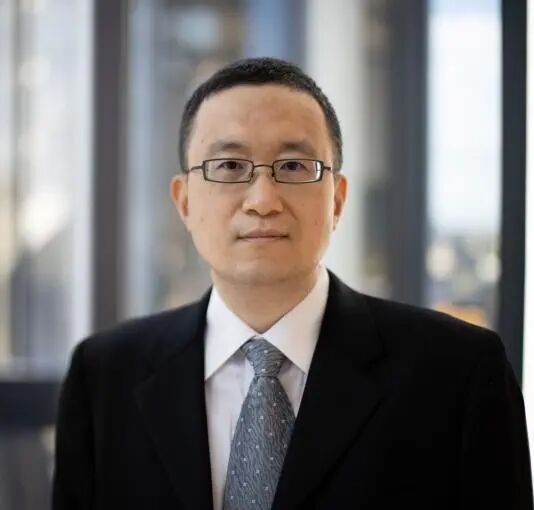
学者简介:
杨立岩,康奈尔大学经济学博士,其主要研究领域为金融市场、资产定价和行为金融。杨立岩教授目前担任 Journal of Financial Markets 和 Journal of Economic Dynamics and Control 的联合主编(co-editor),同时担任 Journal of Economic Theory 和 Management Science 的副主编(Associate Editor)。他是以下机构的会士(Fellow):加拿大央行、美国会计学会、康奈尔金融科技中心以及阿里巴巴罗汉堂。其学术成果发表在众多国际学术期刊,如 Journal of Economic Theory 、 Journal of Financial Economics 、 Journal of Finance 、 Review of Financial Studies 和《经济研究》等。其学术研究获得众多科研奖项,例如2023 Bank of Canada Fellowship, 2016 JFQA William F. Sharpe Award for Scholarship in Financial Research, the 2016 Bank of Canada’s Governor’s Award, 2015 Roger Martin Award for Excellence in Research等。
参考文献:
Deng, J., H. Pan, H. Yan, and L. Yang. “Disclosing and Cooling-Off: An Analysis of Insider Trading Rules.” Rotman School of Management Working Paper No. 4249189 (2024).
Easley, D., and L. Yang. “Loss aversion, survival and asset prices.” Journal of Economic Theory 160.12 (2015): 494-516.
Easley, D., M. O’Hara, and L. Yang. “Opaque trading, disclosure, and asset prices: Implications for hedge fund regulation.” Review of Financial Studies 27.4 (2014): 1190-1237.
Goldstein, I., and L. Yang. “Information diversity and complementarities in trading and information acquisition.” Journal of Finance 70.4 (2015): 1723-1765.
Goldstein, I., and L. Yang. “Good disclosure, bad disclosure.” Journal of Financial Economics 131.1 (2019): 118-138.
Goldstein, I., B. Liu, and L. Yang. “Market feedback: Evidence from the horse’s mouth.” Rotman School of Management Working Paper No. 3874756 (2021).
Indjejikian, R., H. Lu, and L. Yang. “Rational information leakage.” Management Science 60.11 (2014): 2762-2775.
Tian, G., and L. Yang. “Theory of negative consumption externalities with applications to the economics of happiness.” Economic Theory 39 (2009): 399-424.
| 责任编辑 | 李明、秦雨、阮天悦 |
| 整理翻译 | 庞乃琛 |
| 校对 | 杨立岩 |